前言
这是我在梳理另一篇关于SpringSecurity OAuth2完整文章的时候关注到的一个对象,那么下面我们来深入看看这个AuthorizationCodeServices对象!
介绍
我们知到授权服颁发Token我们可以存储在授权服中,也可以存储在MySQL中,当然也可以存储在Redis中,这个我们是通过TokenStore来实现的,这个我这里就不做重点介绍了,但是授权服中不止给第三方办法Token,当我们在做授权码认证的时候我们还向客户端颁发了一个授权码!那么AuthorizationCodeServices对象就是关于这个授权码颁发后怎么存储的对象!AuthorizationCodeServices这个对象我们是配置在授权服配置中的AuthorizationServerEndpointsConfigurer中,也就是如下代码
@Configuration
@EnableAuthorizationServer
public class AuthorizationServerConfig extends AuthorizationServerConfigurerAdapter {

	@Autowired
    private AuthorizationCodeServices authorizationCodeServices;

	@Bean
    public AuthorizationCodeServices authorizationCodeServices() { //设置授权码模式的授权码如何 存取,这里采用内存方式
        return new InMemoryAuthorizationCodeServices();
    }

	@Override
    public void configure(AuthorizationServerEndpointsConfigurer endpoints) {//配置令牌的访问端点和令牌服务
        endpoints
                .authorizationCodeServices(authorizationCodeServices)//授权码服务
                .authenticationManager(authenticationManager)//认证管理器
                .tokenServices(tokenService())
                .allowedTokenEndpointRequestMethods(HttpMethod.GET, HttpMethod.POST)
        ;
    }
}
一般我们刚开始搭建授权服务的时候,都是采用基于授权服内存的,注意这里指的内存不是Redis,就是存储在JAVA程序中的!刚开始基于授权服内存主要是方便前期编写代码,让我们更加关注授权服的核心流程实现,而不是刚开始就引入MySQL、Redis这些第三方中间件!这里我为什么会写这篇文章呢,主要就是在我编写AuthorizationServerEndpointsConfigurer的配置的时候,发现即使我这里不配置authorizationCodeServices,也能实现授权码模式,嘿,这我就不乐意了,源码调试起来!
默认实现InMemoryAuthorizationCodeServices
有理有据!我加上端点,检测AuthorizationServerEndpointsConfigurer中的值变化!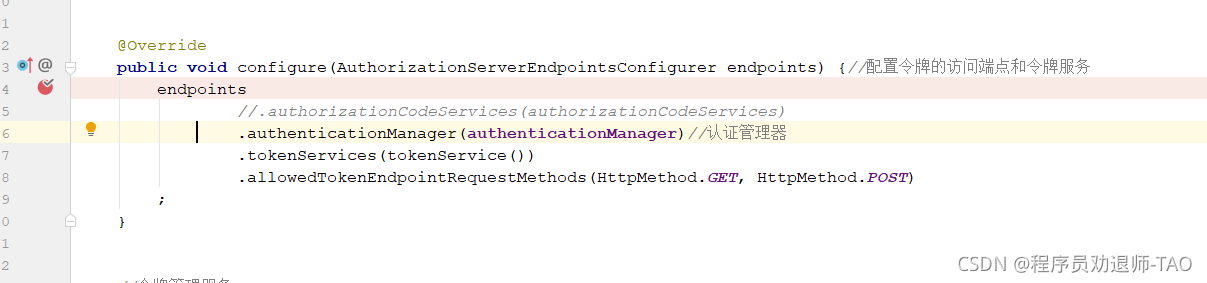
Debug启动!!!
断点
程序走完configure方法后AuthorizationServerEndpointsConfigurer中的authorizationCodeServices还是null,于是我们继续跟进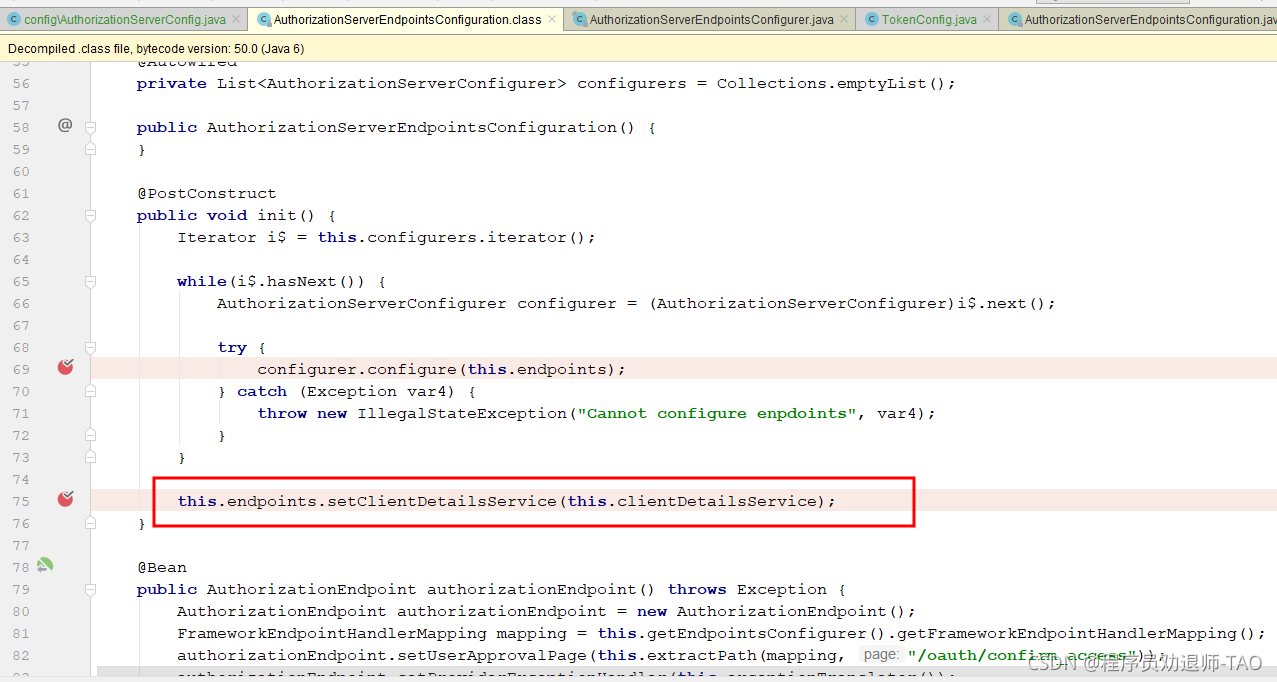
当程序走完这行代码,检测到authorizationCodeServices还是null,那么我们直接查看endpoints属性!
endpoints属性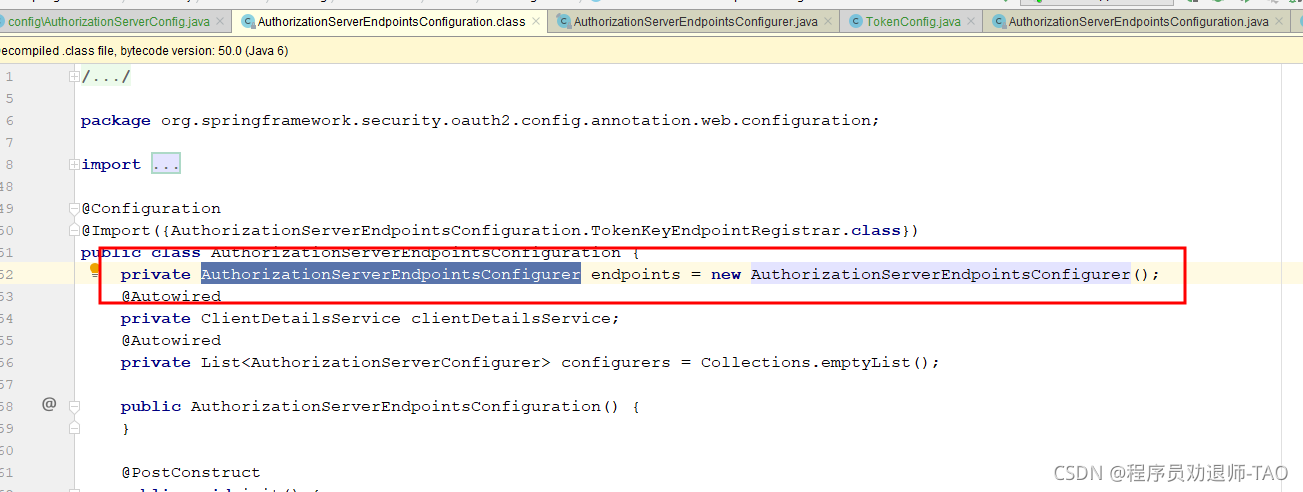
AuthorizationServerEndpointsConfigurer这个对象,我们看看!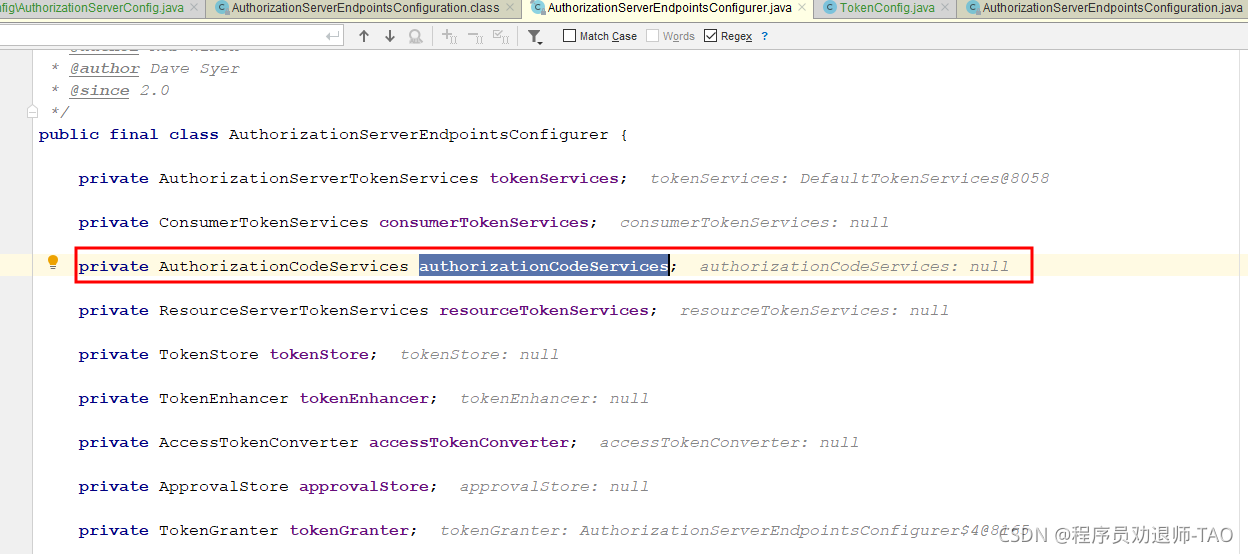
这里authorizationCodeServices还是null,那么有这个属性,肯定就有赋值的地方,我们找一下!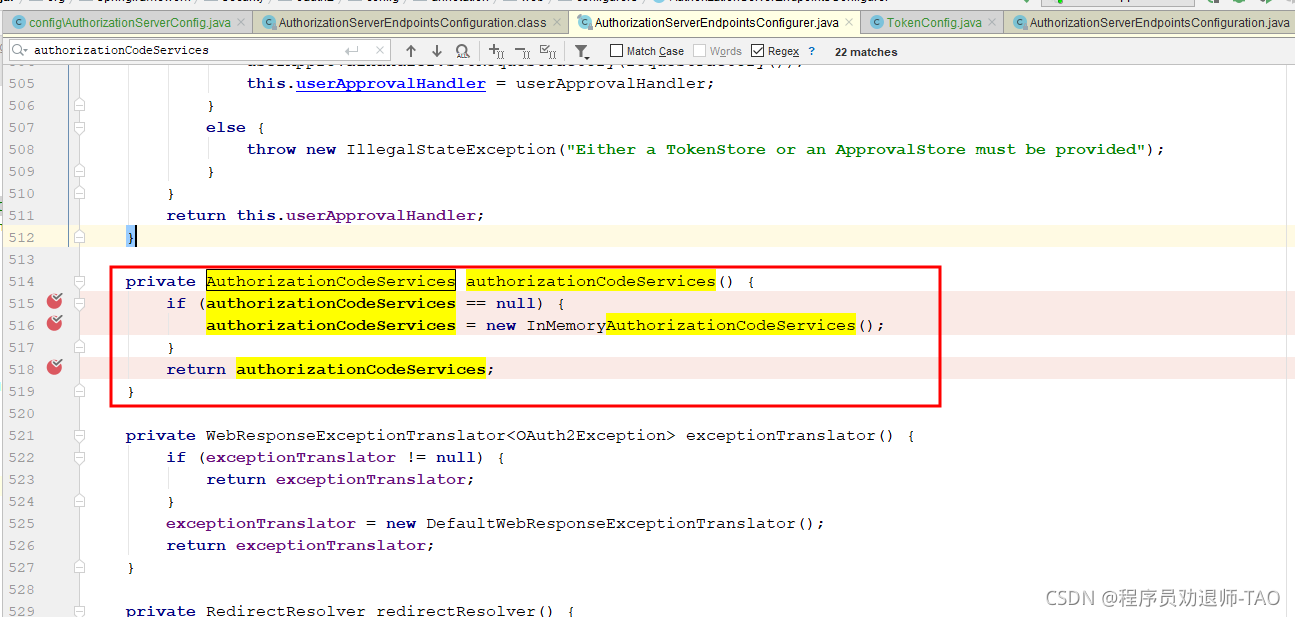
核心代码就是这行,也就是说我们如果自己不配置AuthorizationCodeServices,那么默认实现就是InMemoryAuthorizationCodeServices,有理有据!
关于AuthorizationCodeServices的实现方式,上面有提到Redis,MySQL,那么我们乘着这个机会都学习下吧!
AuthorizationCodeServices配置MySQL存储
数据库表准备
CREATE TABLE `oauth_code` (
  `create_time` timestamp(0) NOT NULL DEFAULT CURRENT_TIMESTAMP,
  `code` varchar (255) CHARACTER SET utf8 COLLATE utf8_general_ci NULL DEFAULT NULL,
  `authentication` blob NULL,
  INDEX `code_index` (`code`) USING BTREE
) ENGINE = InnoDB CHARACTER SET = utf8 COLLATE = utf8_general_ci ROW_FORMAT = Compact ;
这是存储授权码的表!
导入数据源
导入MySQL数据源,如果项目中有用到MyBatis或者MP的话就不需要导入数据源,只需要导入数据库驱动即可!如果没有用到MyBatis或者MP那么就需要导入数据源!
		<!--数据库驱动-->
		<dependency>
            <groupId>mysql</groupId>
            <artifactId>mysql-connector-java</artifactId>
        </dependency>

		<!--mybatis-plus或者mybatis都行-->
        <dependency>
            <groupId>com.baomidou</groupId>
            <artifactId>mybatis-plus-boot-starter</artifactId>
            <version>3.2.0</version>
        </dependency>

		<!--如果没有mybatis或者mp那么就需要手动导入数据源,DataSource无法注入-->
		<dependency>
            <groupId>org.springframework.boot</groupId>
            <artifactId>spring-boot-starter-jdbc</artifactId>
        </dependency>
关于其他MySQL配置文件的我就不多说了,和平常一样!
配置JDBC存储
	@Autowired
    private AuthorizationCodeServices authorizationCodeServices;

	@Bean
    public AuthorizationCodeServices authorizationCodeServices(DataSource dataSource) {
        return new JdbcAuthorizationCodeServices(dataSource);//设置授权码模式的授权码如何存取
    }

	@Override
    public void configure(AuthorizationServerEndpointsConfigurer endpoints) {//配置令牌的访问端点和令牌服务
        endpoints
                .authorizationCodeServices(authorizationCodeServices)//配置授权码服务
                .authenticationManager(authenticationManager)//认证管理器-提供给登录使用
                .tokenServices(tokenService())
                .allowedTokenEndpointRequestMethods(HttpMethod.GET, HttpMethod.POST)
        ;
    }
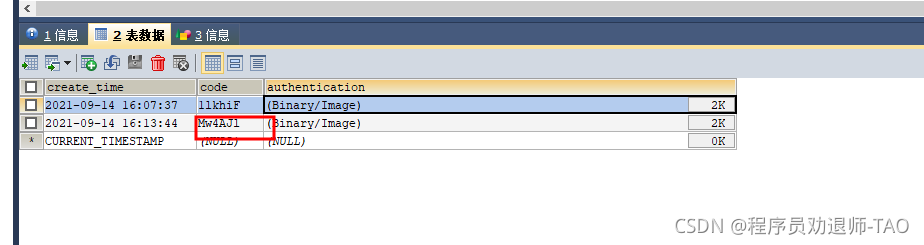
重启服务测试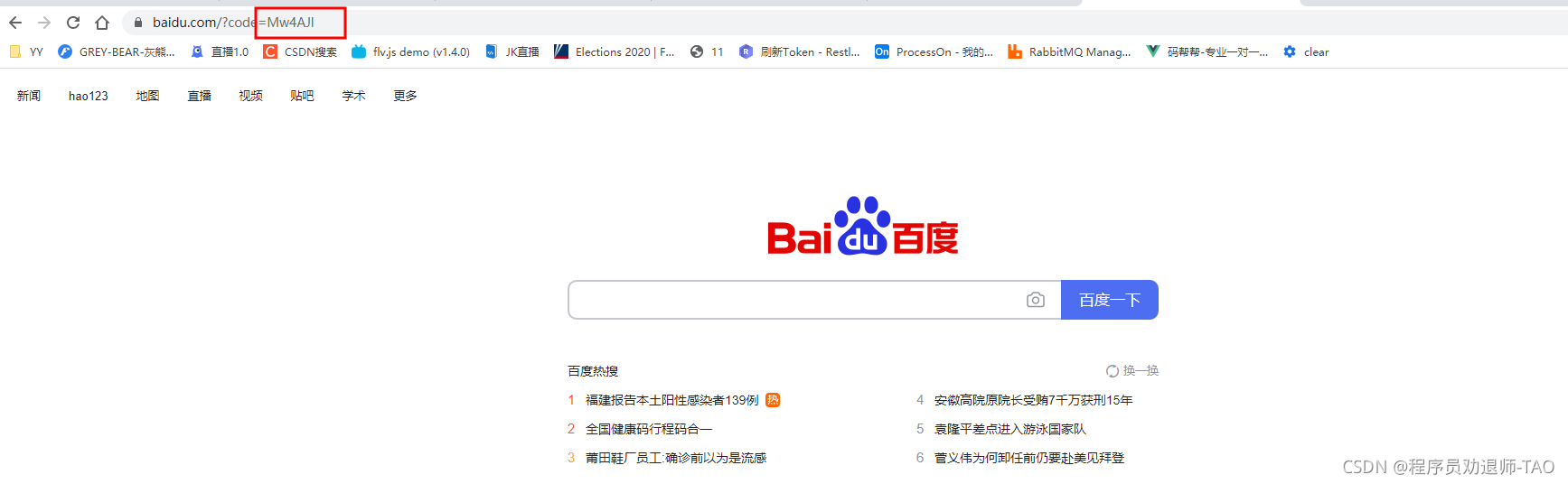
AuthorizationCodeServices基于Redis
导入Redis依赖
这个不管是RedisTemplate还是jedis都行,因为反正实现都是自己写的,哈哈!
		<!-- Redis 二者行-->
		<dependency>
            <groupId>org.springframework.boot</groupId>
            <artifactId>spring-boot-starter-data-redis</artifactId>
        </dependency>


        <dependency>
            <groupId>redis.clients</groupId>
            <artifactId>jedis</artifactId>
            <version>3.0.1</version>
        </dependency>
根据不同的依赖实现即可!
基于RedisTemplate实现
/**
 * @author TAO
 * @description: redis 基本操作 可扩展,基本够用了
 * @date 2021/4/17 19:26
 */
@Slf4j
@Service
public class RedisRepository {
    /**
     * Spring Redis Template
     */
    private RedisTemplate<String, Object> redisTemplate;

    public RedisRepository(RedisTemplate<String, Object> redisTemplate) {
        this.redisTemplate = redisTemplate;
    }

    /**
     * 获取链接工厂
     */
    public RedisConnectionFactory getConnectionFactory() {
        return this.redisTemplate.getConnectionFactory();
    }

    /**
     * 获取 RedisTemplate对象
     */
    public RedisTemplate<String, Object> getRedisTemplate() {
        return redisTemplate;
    }

    /**
     * 清空DB
     *
     * @param node redis 节点
     */
    public void flushDB(RedisClusterNode node) {
        this.redisTemplate.opsForCluster().flushDb(node);
    }

    /**
     * 添加到带有 过期时间的  缓存
     *
     * @param key   redis主键
     * @param value 值
     * @param time  过期时间(单位秒)
     */
    public void setExpire(final byte[] key, final byte[] value, final long time) {
        redisTemplate.execute((RedisCallback<Long>) connection -> {
            connection.setEx(key, time, value);
            return 1L;
        });
    }

    /**
     * 添加到带有 过期时间的  缓存
     *
     * @param key      redis主键
     * @param value    值
     * @param time     过期时间
     * @param timeUnit 过期时间单位
     */
    public void setExpire(final String key, final Object value, final long time, final TimeUnit timeUnit) {
        redisTemplate.opsForValue().set(key, value, time, timeUnit);
    }

    public void setExpire(final String key, final Object value, final long time) {
        this.setExpire(key, value, time, TimeUnit.SECONDS);
    }

    public void setExpire(final String key, final Object value, final long time, final TimeUnit timeUnit, RedisSerializer<Object> valueSerializer) {
        byte[] rawKey = rawKey(key);
        byte[] rawValue = rawValue(value, valueSerializer);

        redisTemplate.execute(new RedisCallback<Object>() {
            @Override
            public Object doInRedis(RedisConnection connection) throws DataAccessException {
                potentiallyUsePsetEx(connection);
                return null;
            }

            public void potentiallyUsePsetEx(RedisConnection connection) {
                if (!TimeUnit.MILLISECONDS.equals(timeUnit) || !failsafeInvokePsetEx(connection)) {
                    connection.setEx(rawKey, TimeoutUtils.toSeconds(time, timeUnit), rawValue);
                }
            }

            private boolean failsafeInvokePsetEx(RedisConnection connection) {
                boolean failed = false;
                try {
                    connection.pSetEx(rawKey, time, rawValue);
                } catch (UnsupportedOperationException e) {
                    failed = true;
                }
                return !failed;
            }
        }, true);
    }

    /**
     * 一次性添加数组到   过期时间的  缓存,不用多次连接,节省开销
     *
     * @param keys   redis主键数组
     * @param values 值数组
     * @param time   过期时间(单位秒)
     */
    public void setExpire(final String[] keys, final Object[] values, final long time) {
        for (int i = 0; i < keys.length; i++) {
            redisTemplate.opsForValue().set(keys[i], values[i], time, TimeUnit.SECONDS);
        }
    }


    /**
     * 一次性添加数组到   过期时间的  缓存,不用多次连接,节省开销
     *
     * @param keys   the keys
     * @param values the values
     */
    public void set(final String[] keys, final Object[] values) {
        for (int i = 0; i < keys.length; i++) {
            redisTemplate.opsForValue().set(keys[i], values[i]);
        }
    }


    /**
     * 添加到缓存
     *
     * @param key   the key
     * @param value the value
     */
    public void set(final String key, final Object value) {
        redisTemplate.opsForValue().set(key, value);
    }

    /**
     * 查询在以keyPatten的所有  key
     *
     * @param keyPatten the key patten
     * @return the set
     */
    public Set<String> keys(final String keyPatten) {
        return redisTemplate.keys(keyPatten + "*");
    }

    /**
     * 根据key获取对象
     *
     * @param key the key
     * @return the byte [ ]
     */
    public byte[] get(final byte[] key) {
        return redisTemplate.execute((RedisCallback<byte[]>) connection -> connection.get(key));
    }

    /**
     * 根据key获取对象
     *
     * @param key the key
     * @return the string
     */
    public Object get(final String key) {
        return redisTemplate.opsForValue().get(key);
    }

    /**
     * 根据key获取对象
     *
     * @param key             the key
     * @param valueSerializer 序列化
     * @return the string
     */
    public Object get(final String key, RedisSerializer<Object> valueSerializer) {
        byte[] rawKey = rawKey(key);
        return redisTemplate.execute(connection -> deserializeValue(connection.get(rawKey), valueSerializer), true);
    }

    /**
     * Ops for hash hash operations.
     *
     * @return the hash operations
     */
    public HashOperations<String, String, Object> opsForHash() {
        return redisTemplate.opsForHash();
    }

    /**
     * 对HashMap操作
     *
     * @param key       the key
     * @param hashKey   the hash key
     * @param hashValue the hash value
     */
    public void putHashValue(String key, String hashKey, Object hashValue) {
        opsForHash().put(key, hashKey, hashValue);
    }

    /**
     * 获取单个field对应的值
     *
     * @param key     the key
     * @param hashKey the hash key
     * @return the hash values
     */
    public Object getHashValues(String key, String hashKey) {
        return opsForHash().get(key, hashKey);
    }

    /**
     * 根据key值删除
     *
     * @param key      the key
     * @param hashKeys the hash keys
     */
    public void delHashValues(String key, Object... hashKeys) {
        opsForHash().delete(key, hashKeys);
    }

    /**
     * key只匹配map
     *
     * @param key the key
     * @return the hash value
     */
    public Map<String, Object> getHashValue(String key) {
        return opsForHash().entries(key);
    }

    /**
     * 批量添加
     *
     * @param key the key
     * @param map the map
     */
    public void putHashValues(String key, Map<String, Object> map) {
        opsForHash().putAll(key, map);
    }

    /**
     * 集合数量
     *
     * @return the long
     */
    public long dbSize() {
        return redisTemplate.execute(RedisServerCommands::dbSize);
    }

    /**
     * 清空redis存储的数据
     *
     * @return the string
     */
    public String flushDB() {
        return redisTemplate.execute((RedisCallback<String>) connection -> {
            connection.flushDb();
            return "ok";
        });
    }

    /**
     * 判断某个主键是否存在
     *
     * @param key the key
     * @return the boolean
     */
    public boolean exists(final String key) {
        return redisTemplate.hasKey(key);
    }


    /**
     * 删除key
     *
     * @param keys the keys
     * @return the long
     */
    public boolean del(final String... keys) {
        boolean result = false;
        for (String key : keys) {
            result = redisTemplate.delete(key);
        }
        return result;
    }

    /**
     * 对某个主键对应的值加一,value值必须是全数字的字符串
     *
     * @param key the key
     * @return the long
     */
    public long incr(final String key) {
        return redisTemplate.opsForValue().increment(key);
    }

    /**
     * redis List 引擎
     *
     * @return the list operations
     */
    public ListOperations<String, Object> opsForList() {
        return redisTemplate.opsForList();
    }

    /**
     * redis List数据结构 : 将一个或多个值 value 插入到列表 key 的表头
     *
     * @param key   the key
     * @param value the value
     * @return the long
     */
    public Long leftPush(String key, Object value) {
        return opsForList().leftPush(key, value);
    }

    /**
     * redis List数据结构 : 移除并返回列表 key 的头元素
     *
     * @param key the key
     * @return the string
     */
    public Object leftPop(String key) {
        return opsForList().leftPop(key);
    }

    /**
     * redis List数据结构 :将一个或多个值 value 插入到列表 key 的表尾(最右边)。
     *
     * @param key   the key
     * @param value the value
     * @return the long
     */
    public Long in(String key, Object value) {
        return opsForList().rightPush(key, value);
    }

    /**
     * redis List数据结构 : 移除并返回列表 key 的末尾元素
     *
     * @param key the key
     * @return the string
     */
    public Object rightPop(String key) {
        return opsForList().rightPop(key);
    }


    /**
     * redis List数据结构 : 返回列表 key 的长度 ; 如果 key 不存在,则 key 被解释为一个空列表,返回 0 ; 如果 key 不是列表类型,返回一个错误。
     *
     * @param key the key
     * @return the long
     */
    public Long length(String key) {
        return opsForList().size(key);
    }


    /**
     * redis List数据结构 : 根据参数 i 的值,移除列表中与参数 value 相等的元素
     *
     * @param key   the key
     * @param i     the
     * @param value the value
     */
    public void remove(String key, long i, Object value) {
        opsForList().remove(key, i, value);
    }

    /**
     * redis List数据结构 : 将列表 key 下标为 index 的元素的值设置为 value
     *
     * @param key   the key
     * @param index the index
     * @param value the value
     */
    public void set(String key, long index, Object value) {
        opsForList().set(key, index, value);
    }

    /**
     * redis List数据结构 : 返回列表 key 中指定区间内的元素,区间以偏移量 start 和 end 指定。
     *
     * @param key   the key
     * @param start the start
     * @param end   the end
     * @return the list
     */
    public List<Object> getList(String key, int start, int end) {
        return opsForList().range(key, start, end);
    }

    /**
     * redis List数据结构 : 返回列表 key 中指定区间内的元素,区间以偏移量 start 和 end 指定。
     *
     * @param key             the key
     * @param start           the start
     * @param end             the end
     * @param valueSerializer 序列化
     * @return the list
     */
    public List<Object> getList(String key, int start, int end, RedisSerializer<Object> valueSerializer) {
        byte[] rawKey = rawKey(key);
        return redisTemplate.execute(connection -> deserializeValues(connection.lRange(rawKey, start, end), valueSerializer), true);
    }

    /**
     * redis List数据结构 : 批量存储
     *
     * @param key  the key
     * @param list the list
     * @return the long
     */
    public Long leftPushAll(String key, List<String> list) {
        return opsForList().leftPushAll(key, list);
    }

    /**
     * redis List数据结构 : 将值 value 插入到列表 key 当中,位于值 index 之前或之后,默认之后。
     *
     * @param key   the key
     * @param index the index
     * @param value the value
     */
    public void insert(String key, long index, Object value) {
        opsForList().set(key, index, value);
    }

    private byte[] rawKey(Object key) {
        Assert.notNull(key, "non null key required");

        if (key instanceof byte[]) {
            return (byte[]) key;
        }
        RedisSerializer<Object> redisSerializer = (RedisSerializer<Object>) redisTemplate.getKeySerializer();
        return redisSerializer.serialize(key);
    }

    private byte[] rawValue(Object value, RedisSerializer valueSerializer) {
        if (value instanceof byte[]) {
            return (byte[]) value;
        }

        return valueSerializer.serialize(value);
    }

    private List deserializeValues(List<byte[]> rawValues, RedisSerializer<Object> valueSerializer) {
        if (valueSerializer == null) {
            return rawValues;
        }
        return SerializationUtils.deserialize(rawValues, valueSerializer);
    }

    private Object deserializeValue(byte[] value, RedisSerializer<Object> valueSerializer) {
        if (valueSerializer == null) {
            return value;
        }
        return valueSerializer.deserialize(value);
    }
}
redis配置这里就不逼逼了,自己看着办吧!
配置Redis存储
继承RandomValueAuthorizationCodeServices
@Service
public class RedisAuthorizationCodeServices extends RandomValueAuthorizationCodeServices {

    String AUTH_CODE_PREFIX = "yiyi:code:auth:";

    private final RedisRepository redisRepository;
    private final RedisSerializer<Object> valueSerializer;

    public RedisAuthorizationCodeServices(RedisRepository redisRepository) {
        this.redisRepository = redisRepository;
        this.valueSerializer = RedisSerializer.java();
    }

    /**
     * 将存储code到redis,并设置过期时间,10分钟
     */
    @Override
    protected void store(String code, OAuth2Authentication authentication) {
        redisRepository.setExpire(redisKey(code), authentication, 10, TimeUnit.MINUTES, valueSerializer);
    }

    @Override
    protected OAuth2Authentication remove(final String code) {
        String codeKey = redisKey(code);
        OAuth2Authentication token = (OAuth2Authentication) redisRepository.get(codeKey, valueSerializer);
        redisRepository.del(codeKey);
        return token;
    }

    /**
     * redis中 code key的前缀
     */
    private String redisKey(String code) {
        return AUTH_CODE_PREFIX + code;
    }
}
从新注入AuthorizationCodeServices为RandomValueAuthorizationCodeServices
	@Autowired
    private RandomValueAuthorizationCodeServices authorizationCodeServices;


	@Override
    public void configure(AuthorizationServerEndpointsConfigurer endpoints) {//配置令牌的访问端点和令牌服务
        endpoints
                .authorizationCodeServices(authorizationCodeServices)
                .authenticationManager(authenticationManager)//认证管理器
                .tokenServices(tokenService())
                .allowedTokenEndpointRequestMethods(HttpMethod.GET, HttpMethod.POST)
        ;
    }
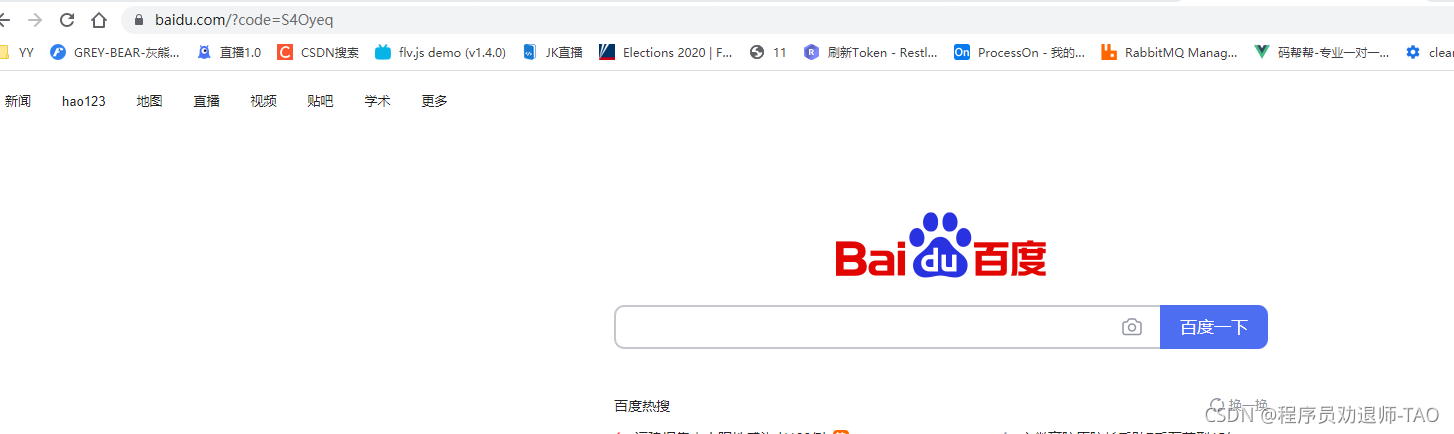
重启服务测试
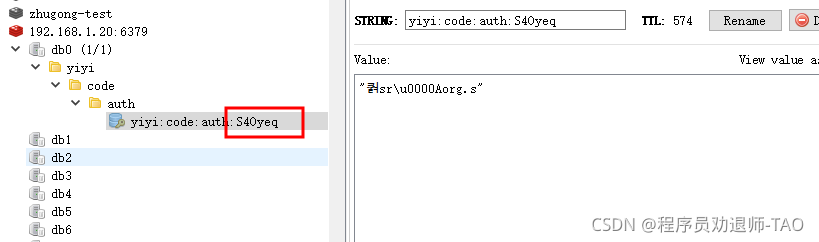
搞定