前言
阅读netty源码之前建议先了解下netty相关的线程模型,推荐Doug Lea的Scalable IO in Java。并且熟悉java NIO的基本使用。
启动流程
下面是一个常见的netty启动方法:
public static void main(String[] args) throws Exception {

        EventLoopGroup bossGroup = new NioEventLoopGroup(1);
        EventLoopGroup workerGroup = new NioEventLoopGroup(8);
        try {
            ServerBootstrap bootstrap = new ServerBootstrap();
            bootstrap.group(bossGroup, workerGroup)
                    .channel(NioServerSocketChannel.class)
                    .childHandler(new ChannelInitializer<SocketChannel>() {
                        @Override
                        protected void initChannel(SocketChannel ch) throws Exception {
                            ChannelPipeline pipeline = ch.pipeline();
                            //向pipeline加入解码器
                            pipeline.addLast("decoder", new StringDecoder());
                            //向pipeline加入编码器
                            pipeline.addLast("encoder", new StringEncoder());
                            //加入自己的业务处理handler
                            pipeline.addLast(new ServerHandler());
                        }
                    });
            ChannelFuture channelFuture = bootstrap.bind(8080).sync();
            channelFuture.channel().closeFuture().sync();
        } finally {
            bossGroup.shutdownGracefully();
            workerGroup.shutdownGracefully();
        }
    }
首先创建两个循环线程组:bossGroup和workerGroup 。这是netty中两个执行任务的循环线程组,bossGroup负责处理accept事件,workerGroup负责处理read\write事件。这里bossGroup为单线程,也是通常的做法,除非你想开启多个netty监听端口;workerGroup一般会创建多个线程来处理事件。循环线程组中的每个线程(EventLoop)内部都会有自己的多路复用器Selector,bossGroup内部的Selector处理客户端连接事件,然后把客户端连接过来的socket注册到workerGroup中某个线程的Selector上,并绑定read\write事件。
下面先看EventLoop的创建过程:
public NioEventLoopGroup(int nThreads) {
        this(nThreads, (Executor) null);
}
//这里会调用一些列构造方法以及父类的构造方法,最后来到父类MultithreadEventExecutorGroup的构造方法

protected MultithreadEventExecutorGroup(int nThreads, Executor executor,
                                            EventExecutorChooserFactory chooserFactory, Object... args) {
        if (nThreads <= 0) {
            throw new IllegalArgumentException(String.format("nThreads: %d (expected: > 0)", nThreads));
        }

        if (executor == null) {
            executor = new ThreadPerTaskExecutor(newDefaultThreadFactory());
        }
        //事件执行器,对应循环线程组中每一个循环线程,可以理解为真正干活的线程,这里为一个数组
        children = new EventExecutor[nThreads];

        for (int i = 0; i < nThreads; i ++) {
            boolean success = false;
            try {
                //依次为数组中的每个执行器创建循环线程
                children[i] = newChild(executor, args);
                success = true;
            } catch (Exception e) {
                // TODO: Think about if this is a good exception type
                throw new IllegalStateException("failed to create a child event loop", e);
            } finally {
                //创建失败则关闭之前创建的线程
                if (!success) {
                    for (int j = 0; j < i; j ++) {
                        children[j].shutdownGracefully();
                    }

                    for (int j = 0; j < i; j ++) {
                        EventExecutor e = children[j];
                        try {
                            while (!e.isTerminated()) {
                                e.awaitTermination(Integer.MAX_VALUE, TimeUnit.SECONDS);
                            }
                        } catch (InterruptedException interrupted) {
                            // Let the caller handle the interruption.
                            Thread.currentThread().interrupt();
                            break;
                        }
                    }
                }
            }
        }
        //创建循环线程组中的线程选择器,可以理解为负载均衡,netty会轮询选择group中的一个线程执行任务,当线程数为2的次幂和不是2的次幂是使用不同的策略,主要因为是2的次幂时可以用按位与替代取模
        chooser = chooserFactory.newChooser(children);

        final FutureListener<Object> terminationListener = new FutureListener<Object>() {
            @Override
            public void operationComplete(Future<Object> future) throws Exception {
                if (terminatedChildren.incrementAndGet() == children.length) {
                    terminationFuture.setSuccess(null);
                }
            }
        };

        for (EventExecutor e: children) {
            e.terminationFuture().addListener(terminationListener);
        }

        Set<EventExecutor> childrenSet = new LinkedHashSet<EventExecutor>(children.length);
        Collections.addAll(childrenSet, children);
        readonlyChildren = Collections.unmodifiableSet(childrenSet);
    }
这里主要看 children[i] = newChild(executor, args); 这个核心方法,一路调用来到
NioEventLoopGroup

protected EventLoop newChild(Executor executor, Object... args) throws Exception {
        //这里的SelectorProvider用来创建多路复用器Selector,因操作系统而易,linux对应epoll
        return new NioEventLoop(this, executor, (SelectorProvider) args[0],
            ((SelectStrategyFactory) args[1]).newSelectStrategy(), (RejectedExecutionHandler) args[2]);
    }
可以看到这里的循环线程为NioEventLoop,这个循环线程是EventLoopGroup中执行任务的核心类,netty主要的逻辑都在这个类及其父类中。
NioEventLoop 中维护了一个线程和任务队列,支持异步提交执行任务,线程启动时会调用 NioEventLoop 的 run 方法,执行 I/O 任务和非 I/O 任务:
I/O 任务,即 selectionKey 中 ready 的事件,如 accept、connect、read、write 等,由 processSelectedKeys 方法触发。
非 IO 任务,添加到 taskQueue 中的任务,如 register0、bind0 等任务,由 runAllTasks 方法触发。
看一下类图:
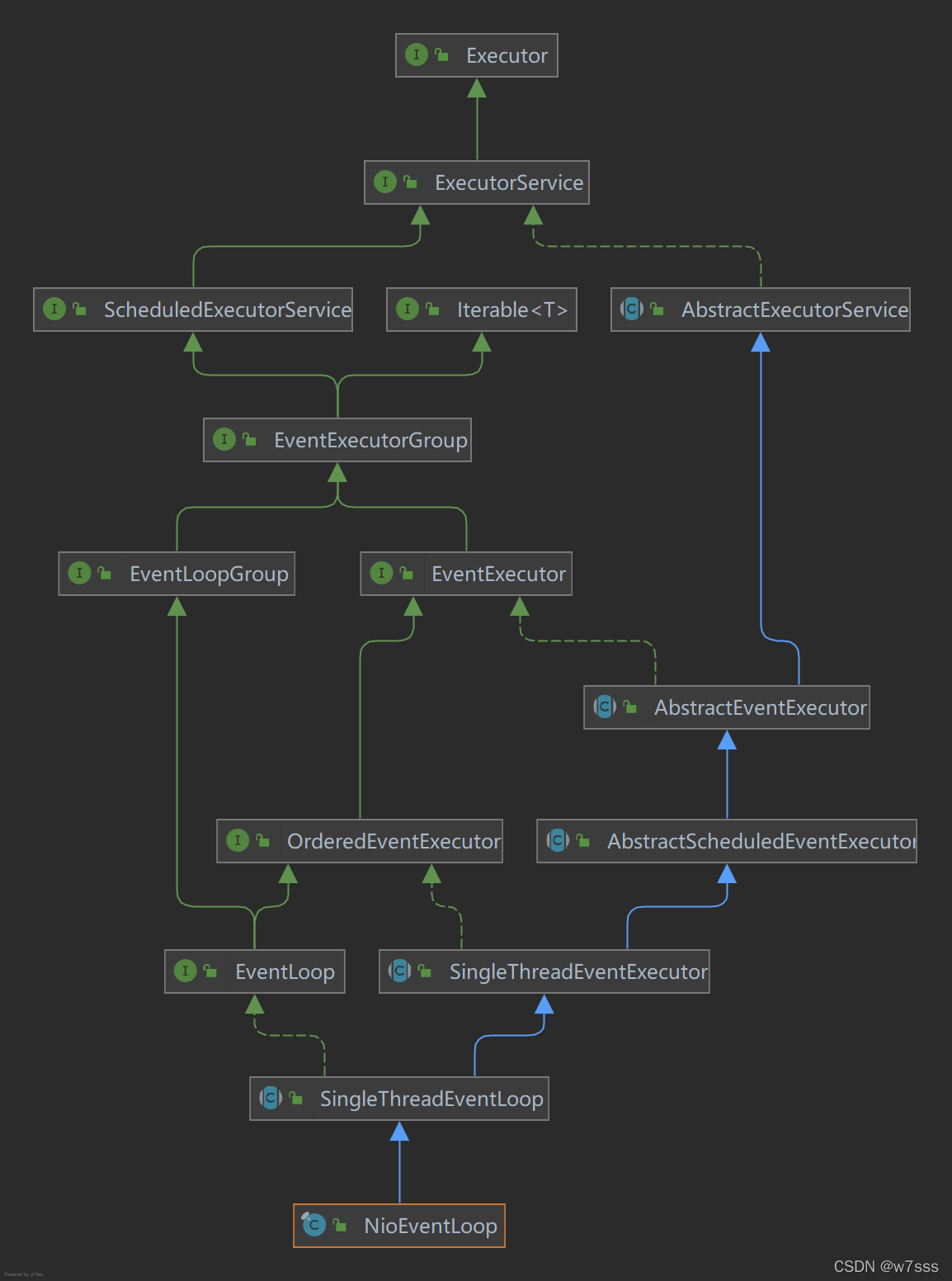
可以看到这个类继承了SingleThreadEventLoop,说明这是一个单线程的EventLoop,这也是netty高性能的一点,一个线程循环执行任务,没有上下文切换和资源竞争,类比redis的单线程模型。不过一般中间件在集成netty的时候都把这里的EventLoop当作是IO线程使用,EventLoop的handler接收客户端的读写事件,然后把任务放到业务线程池中执行。顶级接口为Executor,说明它可以像线程池一样工作,当然这是一个单线程的线程池。
NioEventLoop(NioEventLoopGroup parent, Executor executor, SelectorProvider selectorProvider,
                 SelectStrategy strategy, RejectedExecutionHandler rejectedExecutionHandler) {
        super(parent, executor, false, DEFAULT_MAX_PENDING_TASKS, rejectedExecutionHandler);
        if (selectorProvider == null) {
            throw new NullPointerException("selectorProvider");
        }
        if (strategy == null) {
            throw new NullPointerException("selectStrategy");
        }
        provider = selectorProvider;
        //创建多路复用器Selector
        final SelectorTuple selectorTuple = openSelector();
        //优化了的Selector,其实是对NIO Selector的包装,默认不会包装
        selector = selectorTuple.selector;
        //unwrappedSelector 为NIO原生selector
        unwrappedSelector = selectorTuple.unwrappedSelector;
        selectStrategy = strategy;
    }
这里还会调用数个父类的构造方法,看一个主要的:
SingleThreadEventExecutor

protected SingleThreadEventExecutor(EventExecutorGroup parent, Executor executor,
                                        boolean addTaskWakesUp, int maxPendingTasks,
                                        RejectedExecutionHandler rejectedHandler) {
        super(parent);
        this.addTaskWakesUp = addTaskWakesUp;
        //队列中最大等待任务数,默认为Integer.MAX
        this.maxPendingTasks = Math.max(16, maxPendingTasks);
        //每个NIOEventLoop对应的执行任务的执行器
        this.executor = ThreadExecutorMap.apply(executor, this);
        //内部阻塞队列,用来接收非IO任务,如注册channel
        taskQueue = newTaskQueue(this.maxPendingTasks);
        rejectedExecutionHandler = ObjectUtil.checkNotNull(rejectedHandler, "rejectedHandler");
    }


//看一下执行器的创建
ThreadExecutorMap
public static Executor apply(final Executor executor, final EventExecutor eventExecutor) {
        ObjectUtil.checkNotNull(executor, "executor");
        ObjectUtil.checkNotNull(eventExecutor, "eventExecutor");
        return new Executor() {
            @Override
            public void execute(final Runnable command) {
                executor.execute(apply(command, eventExecutor));
            }
        };
}
//其实就是做了一次包装,NIOEventLoop的执行器在执行execute方法时会把任务放到队列中,并开启当前循环线程,也就是开始netty主流程,即执行SingleThreadEventExecutor的run方法。
bossGroup和workerGroup创建完毕,接下来看ServerBootstrap创建和初始化:
public ServerBootstrap group(EventLoopGroup parentGroup, EventLoopGroup childGroup) {
        //父类方法,把bossGroup赋值给ServerBootstrap的group
        super.group(parentGroup);
        if (childGroup == null) {
            throw new NullPointerException("childGroup");
        }
        if (this.childGroup != null) {
            throw new IllegalStateException("childGroup set already");
        }
        //把workerGroup赋值给childGroup
        this.childGroup = childGroup;
        return this;
    }
public B channel(Class<? extends C> channelClass) {
if (channelClass == null) {
throw new NullPointerException("channelClass");
}
return channelFactory(new ReflectiveChannelFactory<C>(channelClass));
}这里的channel(NioServerSocketChannel.class)方法,通过参数class类拿到对应SocketChannel的构造方法,便于后面为ServerBootstrap创建channel。服务端对应的当然是NioServerSocketChannel。
public ServerBootstrap childHandler(ChannelHandler childHandler) {
        if (childHandler == null) {
            throw new NullPointerException("childHandler");
        }
        this.childHandler = childHandler;
        return this;
}
childHandler方法表示的是workerGroup中的channel的handler,也就是处理读写事件的handler。
最后:
bootstrap.bind(8080) //绑定端口,并开启netty服务
下面进入netty启动的主流程:
直接看doBind()方法:
private ChannelFuture doBind(final SocketAddress localAddress) {
        final ChannelFuture regFuture = initAndRegister();
        final Channel channel = regFuture.channel();
        if (regFuture.cause() != null) {
            return regFuture;
        }

        if (regFuture.isDone()) {
            // At this point we know that the registration was complete and successful.
            ChannelPromise promise = channel.newPromise();
            doBind0(regFuture, channel, localAddress, promise);
            return promise;
        } else {
            // Registration future is almost always fulfilled already, but just in case it's not.
            final PendingRegistrationPromise promise = new PendingRegistrationPromise(channel);
            regFuture.addListener(new ChannelFutureListener() {
                @Override
                public void operationComplete(ChannelFuture future) throws Exception {
                    Throwable cause = future.cause();
                    if (cause != null) {
                        // Registration on the EventLoop failed so fail the ChannelPromise directly to not cause an
                        // IllegalStateException once we try to access the EventLoop of the Channel.
                        promise.setFailure(cause);
                    } else {
                        // Registration was successful, so set the correct executor to use.
                        // See https://github.com/netty/netty/issues/2586
                        promise.registered();

                        doBind0(regFuture, channel, localAddress, promise);
                    }
                }
            });
            return promise;
        }
    }
这里几乎全部逻辑都在第一行代码,下面主要分析initAndRegister():
final ChannelFuture initAndRegister() {
        Channel channel = null;
        try {
            //创建nioServerSocketChannel
            channel = channelFactory.newChannel();
            //channel的初始化工作
            init(channel);
        } catch (Throwable t) {
            if (channel != null) {
                // channel can be null if newChannel crashed (eg SocketException("too many open files"))
                channel.unsafe().closeForcibly();
                // as the Channel is not registered yet we need to force the usage of the GlobalEventExecutor
                return new DefaultChannelPromise(channel, GlobalEventExecutor.INSTANCE).setFailure(t);
            }
            // as the Channel is not registered yet we need to force the usage of the GlobalEventExecutor
            return new DefaultChannelPromise(new FailedChannel(), GlobalEventExecutor.INSTANCE).setFailure(t);
        }
        //注册channel,即把channel注册到多路复用器Selector
        ChannelFuture regFuture = config().group().register(channel);
        if (regFuture.cause() != null) {
            if (channel.isRegistered()) {
                channel.close();
            } else {
                channel.unsafe().closeForcibly();
            }
        }

        return regFuture;
    }
这里有三个核心方法:
channelFactory.newChannel()
init(channel)
config().group().register(channel)
下面依次分析这三个方法:
channelFactory.newChannel()拿到之前缓存的构造方法创建NioServerSocketChannel:
public NioServerSocketChannel() {
        //newSocket创建nio原生channel
        this(newSocket(DEFAULT_SELECTOR_PROVIDER));
}


public NioServerSocketChannel(ServerSocketChannel channel) {
        //父类
        super(null, channel, SelectionKey.OP_ACCEPT);
        //channel相关配置属性,里面维护了jdk的nio channel
        config = new NioServerSocketChannelConfig(this, javaChannel().socket());
}

//最后到达
protected AbstractChannel(Channel parent) {
        this.parent = parent;
        id = newId();
        //netty自己实现的unsafe类,主要用来操作直接内存,注册channel等
        unsafe = newUnsafe();
        //创建ChannelPipeline
        pipeline = newChannelPipeline();
}
后面还会继续调用父类构造方法,这里详细看了,主要就是创建了每条channel对应的ChannelPipeline,并且设置socketChannel对ACCEPT事件感兴趣。
首先看下两个类的概念:
【ChannelHandlerContext】:
保存 Channel 相关的所有上下文信息,同时关联一个 ChannelHandler 对象。
【ChannelPipline】:
保存 ChannelHandler 的 List,用于处理或拦截 Channel 的入站事件和出站操作。
ChannelPipeline 实现了一种高级形式的拦截过滤器模式,使用户可以完全控制事件的处理方式,以及 Channel 中各个的 ChannelHandler 如何相互交互。
在 Netty 中每个 Channel 都有且仅有一个 ChannelPipeline 与之对应。
盗个图吧哈哈:
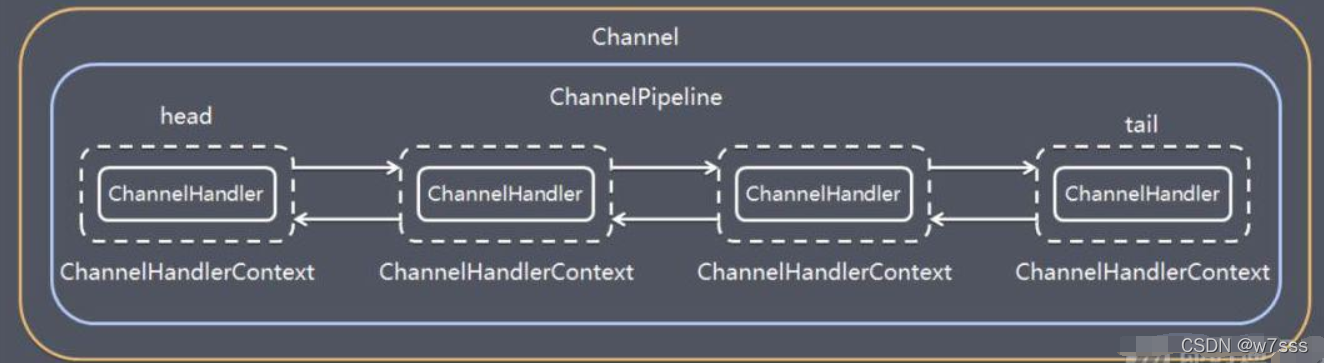
一个 Channel 包含了一个 ChannelPipeline,而 ChannelPipeline 中又维护了一个由 ChannelHandlerContext 组成的双向链表,并且每个 ChannelHandlerContext 中又关联着一个 ChannelHandler。
read事件(入站事件)和write事件(出站事件)在一个双向链表中,入站事件会从链表 head 往后传递到最后一个入站的 handler,出站事件会从链表 tail 往前传递到最前一个出站的 handler,两种类型的 handler 互不干扰。
创建channel之后,接下来看初始化操作init(channel):
void init(Channel channel) throws Exception {
        final Map<ChannelOption<?>, Object> options = options0();
        synchronized (options) {
            setChannelOptions(channel, options, logger);
        }

        final Map<AttributeKey<?>, Object> attrs = attrs0();
        synchronized (attrs) {
            for (Entry<AttributeKey<?>, Object> e: attrs.entrySet()) {
                @SuppressWarnings("unchecked")
                AttributeKey<Object> key = (AttributeKey<Object>) e.getKey();
                channel.attr(key).set(e.getValue());
            }
        }

        ChannelPipeline p = channel.pipeline();

        final EventLoopGroup currentChildGroup = childGroup;
        final ChannelHandler currentChildHandler = childHandler;
        final Entry<ChannelOption<?>, Object>[] currentChildOptions;
        final Entry<AttributeKey<?>, Object>[] currentChildAttrs;
        synchronized (childOptions) {
            currentChildOptions = childOptions.entrySet().toArray(newOptionArray(0));
        }
        synchronized (childAttrs) {
            currentChildAttrs = childAttrs.entrySet().toArray(newAttrArray(0));
        }
        /*以上操作主要时一些赋值操作,设置options,attrs,socket的一些参数相关*/


        //往pipeline中添加一个服务端channel对应handler,注意与childHandler的区别,这里为
        //ChannelInitializer,ChannelInitializer是一个特殊的handler,在注册channel时,
        //initChannel方法会被执行,并执行真正的添加handler的方法,完成使命后
        //ChannelInitializer会被删掉
        p.addLast(new ChannelInitializer<Channel>() {
            @Override
            public void initChannel(final Channel ch) throws Exception {
                final ChannelPipeline pipeline = ch.pipeline();
                ChannelHandler handler = config.handler();
                //这个handler 通常为null下面的if不会执行
                if (handler != null) {
                    pipeline.addLast(handler);
                }
                //把添加handler的任务添加到这个channel对应的eventloop中的队列中,等待执行
                //当然这时还不会执行,而是在注册channel的时候执行
                ch.eventLoop().execute(new Runnable() {
                    @Override
                    public void run() {
                        pipeline.addLast(new ServerBootstrapAcceptor(
                                ch, currentChildGroup, currentChildHandler, currentChildOptions, currentChildAttrs));
                    }
                });
            }
        });
    }
上面方法中的ServerBootstrapAcceptor是属于ServerSocketChannel的handler,又netty自行添加,SocketChannel的handler由程序员添加,就像一开始写的那样:
.childHandler(new ChannelInitializer<SocketChannel>() {
@Override
protected void initChannel(SocketChannel ch) throws Exception {
ChannelPipeline pipeline = ch.pipeline();
//向pipeline加入解码器
pipeline.addLast("decoder", new StringDecoder());
//向pipeline加入编码器
pipeline.addLast("encoder", new StringEncoder());
//加入自己的业务处理handler
pipeline.addLast(new ServerHandler());
}
});
这里不难猜到,ServerBootstrapAcceptor这个handler的作用其实就是注册netty客户端连过来的channel,也就是把客户端channel注册到workerGroup中的某个线程的Selector上。
最后看config().group().register(channel)这个方法,这是netty注册ServerSocketChannel方法:
会拿到一个eventloop,服务端通常只有一个,然后执行register方法:
public ChannelFuture register(Channel channel) {
        //把channel封装成Promise,可以理解为Future
        return register(new DefaultChannelPromise(channel, this));
}


public ChannelFuture register(final ChannelPromise promise) {
        ObjectUtil.checkNotNull(promise, "promise");
        //这里是真正的注册方法
        promise.channel().unsafe().register(this, promise);
        return promise;
}


public final void register(EventLoop eventLoop, final ChannelPromise promise) {
            if (eventLoop == null) {
                throw new NullPointerException("eventLoop");
            }
            if (isRegistered()) {
                promise.setFailure(new IllegalStateException("registered to an event loop already"));
                return;
            }
            if (!isCompatible(eventLoop)) {
                promise.setFailure(
                        new IllegalStateException("incompatible event loop type: " + eventLoop.getClass().getName()));
                return;
            }

            AbstractChannel.this.eventLoop = eventLoop;
            //判断是否在当前eventLoop 线程内,这里还是启动线程,当然不在,走else
            if (eventLoop.inEventLoop()) {
                register0(promise);
            } else {
                try {
                    //依然是把注册任务扔进eventLoop的队列中
                    eventLoop.execute(new Runnable() {
                        @Override
                        public void run() {
                            register0(promise);
                        }
                    });
                } catch (Throwable t) {
                    logger.warn(
                            "Force-closing a channel whose registration task was not accepted by an event loop: {}",
                            AbstractChannel.this, t);
                    closeForcibly();
                    closeFuture.setClosed();
                    safeSetFailure(promise, t);
                }
            }
}
这里说一下eventLoop中的单线程模型,每个eventLoop都会有一个线程在循环工作,这在后面netty工作主流程源码中会详细讲到,主要就是监听Selector,也就是epoll上的就绪队列(后面会讲到),如果客户端有事件到来就处理,我们把这些任务称作IO任务;除此之外还有非IO任务,也就是eventLoop队列中的任务,eventLoop终其一生都在不断的执行IO任务-->非IO任务-->IO任务-->...因此称作事件循环线程eventLoop。eventLoop.execute()不仅会把任务添加到等待队列中,还会开启当前eventLoop线程,开始循环工作:
public void execute(Runnable task) {
        if (task == null) {
            throw new NullPointerException("task");
        }

        boolean inEventLoop = inEventLoop();
        //添加任务到队列
        addTask(task);
        if (!inEventLoop) {
            //开启当前EventLoop线程
            startThread();
            if (isShutdown()) {
                boolean reject = false;
                try {
                    if (removeTask(task)) {
                        reject = true;
                    }
                } catch (UnsupportedOperationException e) {
                    // The task queue does not support removal so the best thing we can do is to just move on and
                    // hope we will be able to pick-up the task before its completely terminated.
                    // In worst case we will log on termination.
                }
                if (reject) {
                    reject();
                }
            }
        }

        if (!addTaskWakesUp && wakesUpForTask(task)) {
            wakeup(inEventLoop);
        }
    }
最后来到doStartThread()--->SingleThreadEventExecutor.this.run()开始eventLoop主流程
目前为止,netty启动源码差不多结束了,还差一个注册ServerSocketChannel没讲,下面看下注册逻辑,注册逻辑会在任务队列中等待执行:
private void register0(ChannelPromise promise) {
            try {
                // check if the channel is still open as it could be closed in the mean time when the register
                // call was outside of the eventLoop
                if (!promise.setUncancellable() || !ensureOpen(promise)) {
                    return;
                }
                boolean firstRegistration = neverRegistered;
                doRegister();
                neverRegistered = false;
                registered = true;

                // Ensure we call handlerAdded(...) before we actually notify the promise. This is needed as the
                // user may already fire events through the pipeline in the ChannelFutureListener.
                pipeline.invokeHandlerAddedIfNeeded();

                safeSetSuccess(promise);
                pipeline.fireChannelRegistered();
                // Only fire a channelActive if the channel has never been registered. This prevents firing
                // multiple channel actives if the channel is deregistered and re-registered.
                if (isActive()) {
                    if (firstRegistration) {
                        pipeline.fireChannelActive();
                    } else if (config().isAutoRead()) {
                        // This channel was registered before and autoRead() is set. This means we need to begin read
                        // again so that we process inbound data.
                        //
                        // See https://github.com/netty/netty/issues/4805
                        beginRead();
                    }
                }
            } catch (Throwable t) {
                // Close the channel directly to avoid FD leak.
                closeForcibly();
                closeFuture.setClosed();
                safeSetFailure(promise, t);
            }
        }
标记一下几个主要方法:
doRegister()
pipeline.invokeHandlerAddedIfNeeded()
pipeline.fireChannelRegistered();
首先看 doRegister():
protected void doRegister() throws Exception {
        boolean selected = false;
        for (;;) {
            try {
                //熟悉nio的小伙伴应该不陌生,这里就是注册java原生channel的地方
                //javaChannel()拿到ServerSocketChannel,注册到Selector上
                //这里的最后一个参数为attchment,传进去的是this,也就是当前netty自己实现
                //的Channel,通过k.attach(att),绑定到java的ServerSocketChannel
                //通过这个实现ServerSocketChannel到NioServerSocketChannel数据的流通
                selectionKey = javaChannel().register(eventLoop().unwrappedSelector(), 0, this);
                return;
            } catch (CancelledKeyException e) {
                if (!selected) {
                    // Force the Selector to select now as the "canceled" SelectionKey may still be
                    // cached and not removed because no Select.select(..) operation was called yet.
                    eventLoop().selectNow();
                    selected = true;
                } else {
                    // We forced a select operation on the selector before but the SelectionKey is still cached
                    // for whatever reason. JDK bug ?
                    throw e;
                }
            }
        }
    }
至于后面的两个方法,其实都不会执行,这涉及到Handler生命周期方法的执行,有下面一众方法:
*  handler的生命周期回调接口调用顺序:
*  handlerAdded -> channelRegistered -> channelActive -> channelRead -> channelReadComplete
*  -> channelInactive -> channelUnRegistered -> handlerRemoved
*
* handlerAdded: 新建立的连接会按照初始化策略,把handler添加到该channel的pipeline里面,也就是channel.pipeline.addLast(new LifeCycleInBoundHandler)执行完成后的回调;
* channelRegistered: 当该连接分配到具体的worker线程后,该回调会被调用。
* channelActive:channel的准备工作已经完成,所有的pipeline添加完成,并分配到具体的线上上,说明该channel准备就绪,可以使用了。
* channelRead:客户端向服务端发来数据,每次都会回调此方法,表示有数据可读;
* channelReadComplete:服务端每次读完一次完整的数据之后,回调该方法,表示数据读取完毕;
* channelInactive:当连接断开时,该回调会被调用,说明这时候底层的TCP连接已经被断开了。
* channelUnRegistered: 对应channelRegistered,当连接关闭后,释放绑定的workder线程;
* handlerRemoved: 对应handlerAdded,将handler从该channel的pipeline移除后的回调方法。
因为对应服务端的Handler是ServerBootstrapAcceptor,而它只有一个channelRead方法。对于客户端的Handler就要看自定义的实现了。对于ServerBootstrapAcceptor的channelRead方法,会在netty工作主流程源码中详细分析。
netty启动的核心源码到此结束,下一篇为netty架构的精髓:netty工作主流程源码。
ps:由于笔者水平有限,如有错误,请不吝指出!