- The Basic HTTP GET/response interaction
GET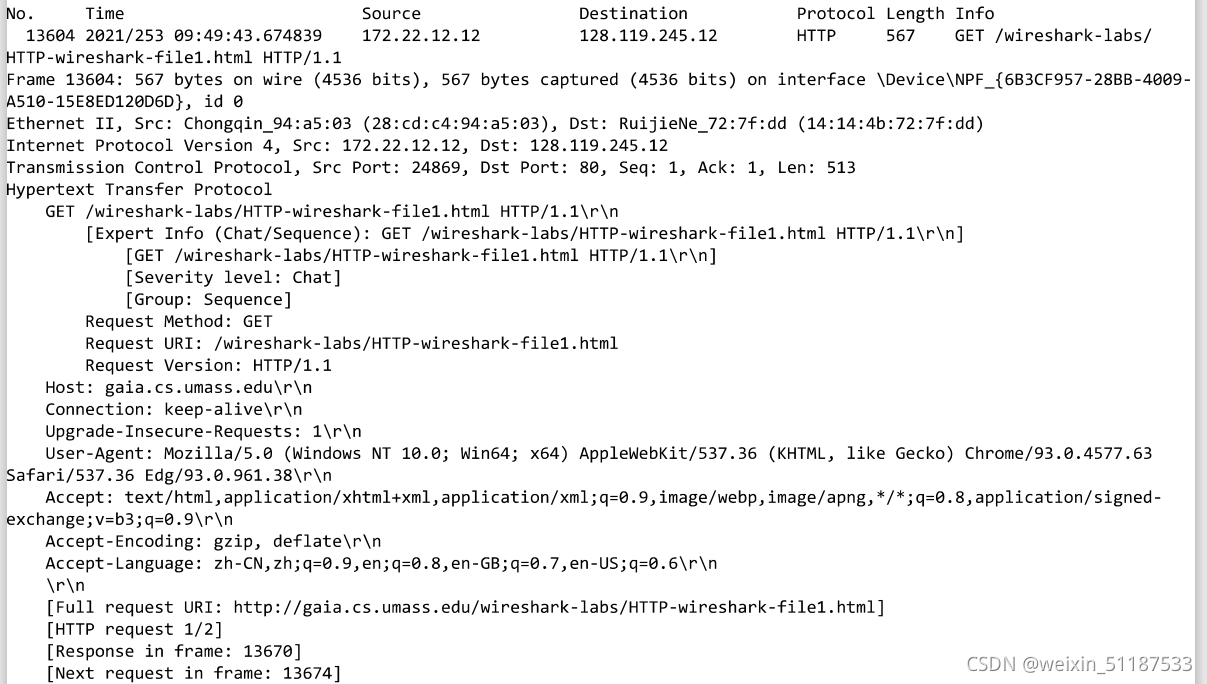
respond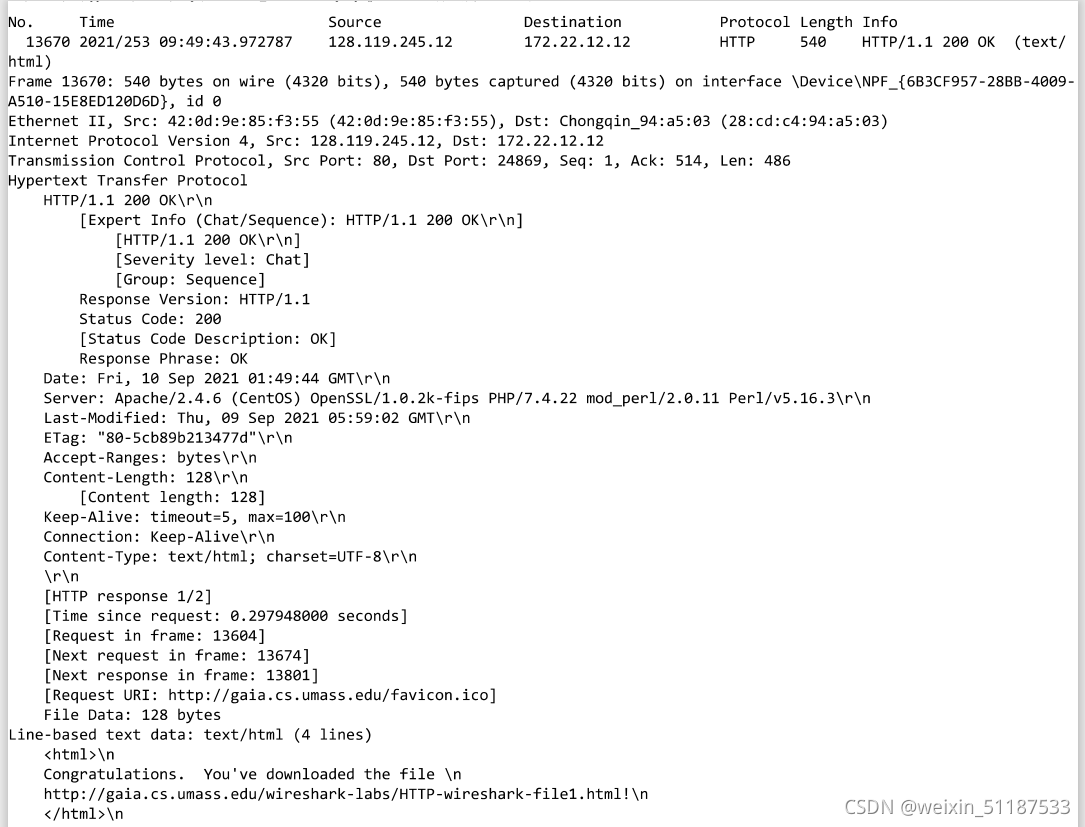
(1)Is your browser running HTTP version 1.0 or 1.1? What version of HTTP is the server running?
My browser is running HTTP version 1.1.
The server is running HTTP version 1.1.
(2) What languages (if any) does your browser indicate that it can accept to the server ?
My browser indicates that it can accept Chinese and English.
(3)What is the IP address of your computer? Of the gaia.cs.umass.edu server?
My computer’s IP address is 172.22.12.12
The gaia.cs.umass.edu server IP address is 128.119.245.12
(4)What is the status code returned from the server to your browser?
200 OK
(5) When was the HTML file that you are retrieving last modified at the server?
(6)How many bytes of content are being returned to your browser?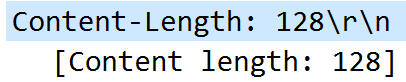
(7)By inspecting the raw data in the packet content window, do you see any headers within the data that are not displayed in the packet-listing window? If so, name one.
packet content window - show the detail of packet content.
packet list window - show the list of captured packet.
such as content-length
- The HTTP CONDITIONAL GET/response interaction
common GET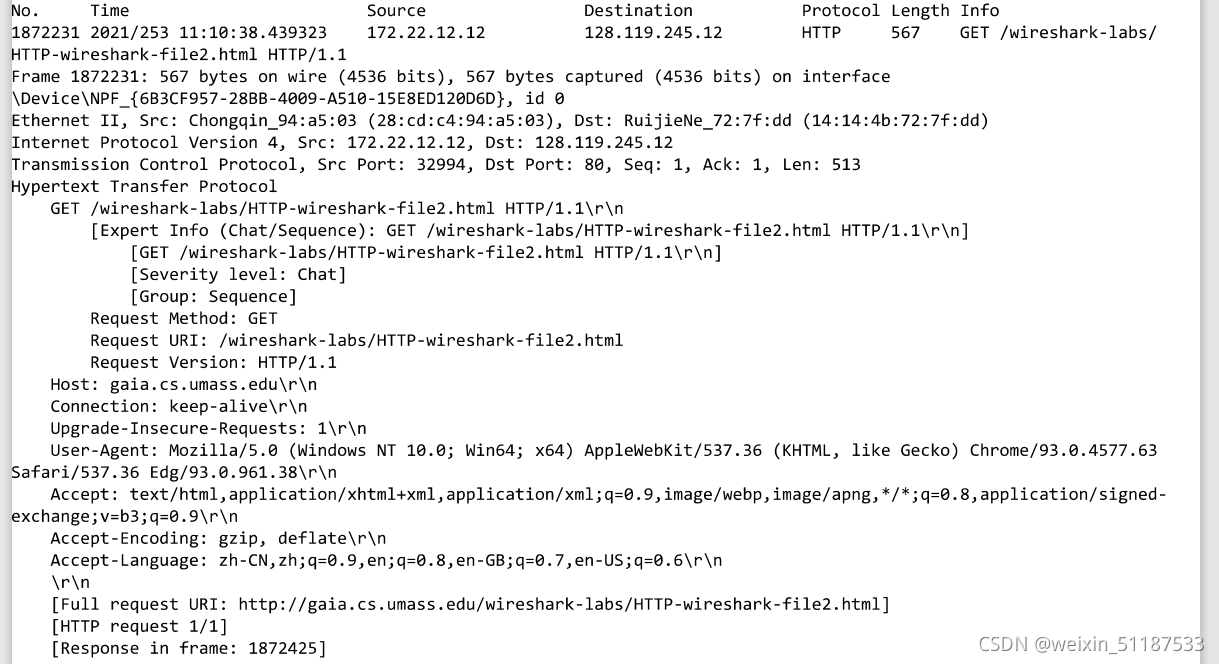
common respond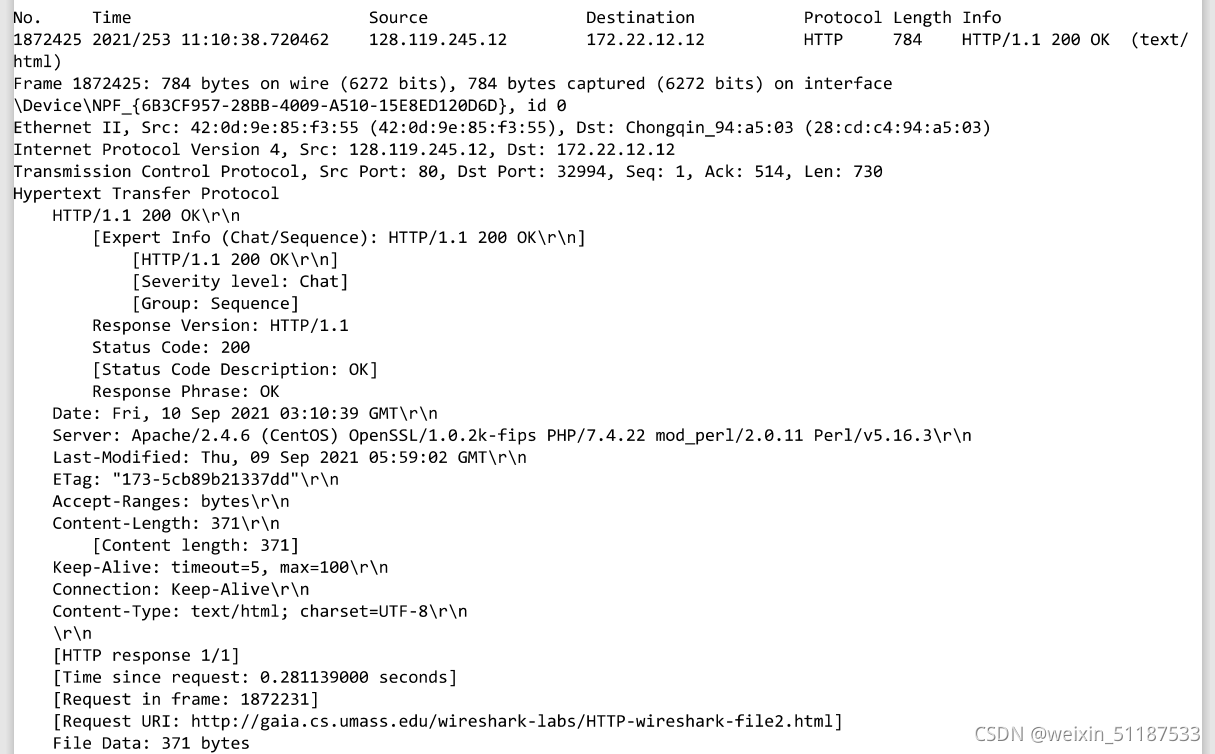

conditional GET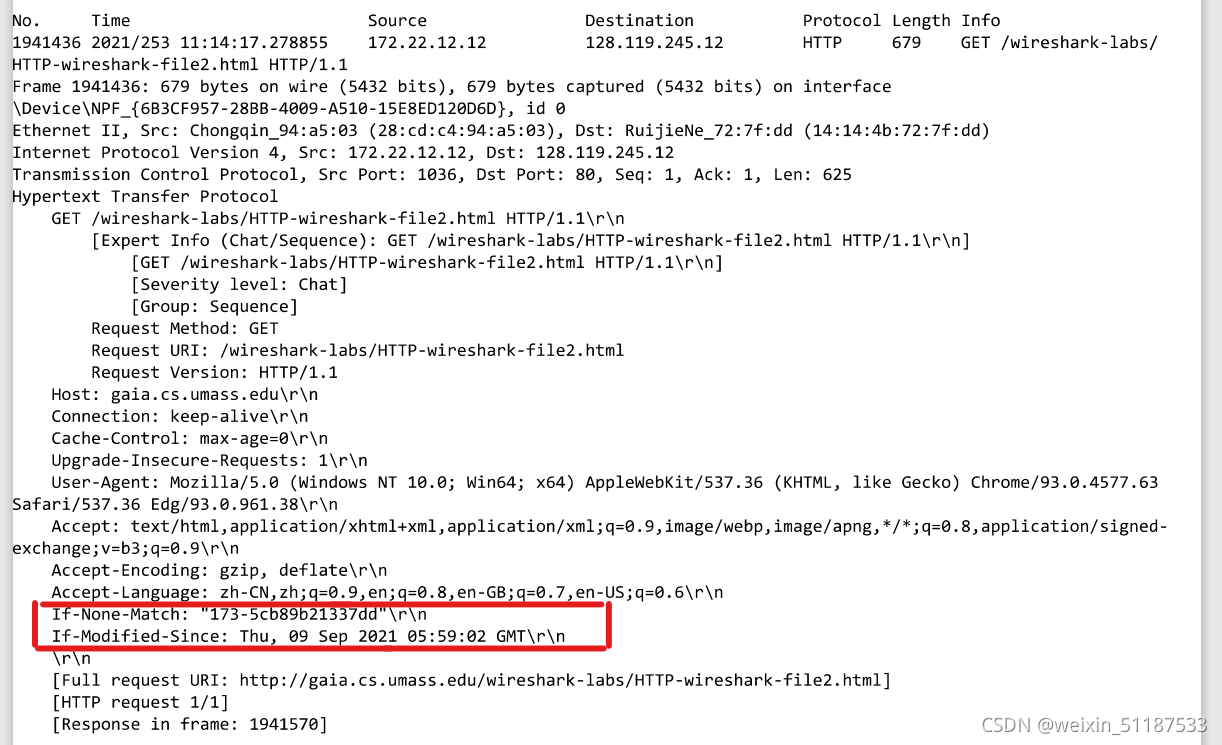
conditional respond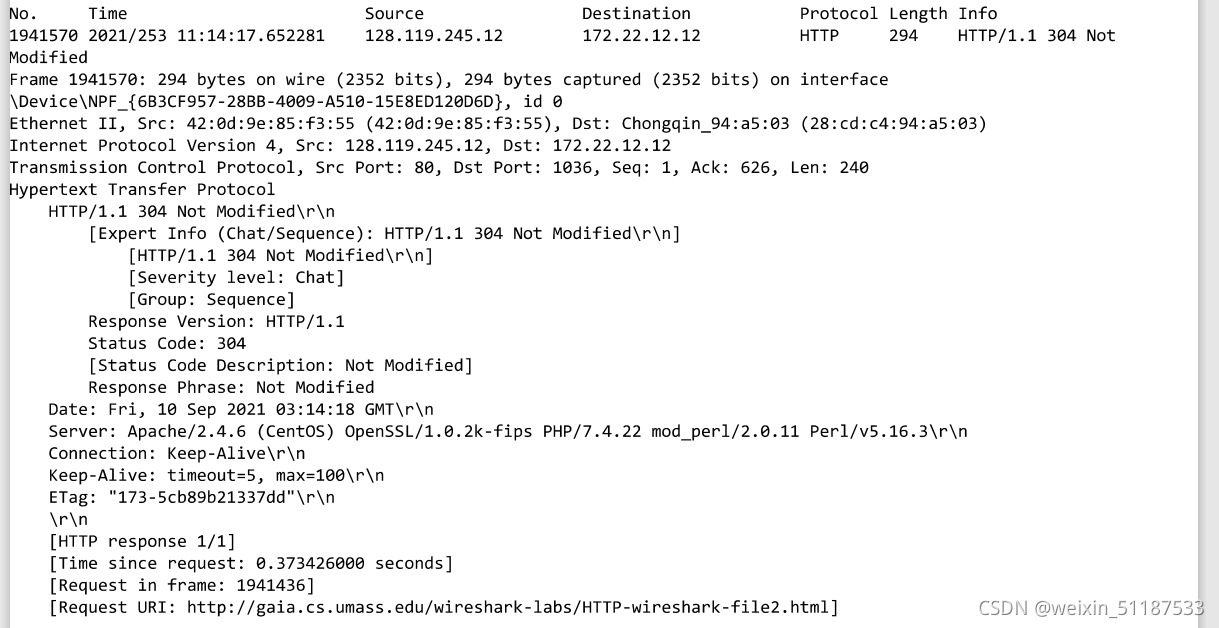
(8) Inspect the contents of the first HTTP GET request from your browser to the server. Do you see an “IF-MODIFIED-SINCE” line in the HTTP GET?
No,I don’t.
(9) Inspect the contents of the server response. Did the server explicitly return the contents of the file? How can you tell?
Yes,it did. I saw a row called Line-base text data.It show the contents of the file.
(10)Now inspect the contents of the second HTTP GET request from your browser to the server. Do you see an “IF-MODIFIED-SINCE:” line in the HTTP GET? If so, what information follows the “IF-MODIFIED-SINCE:” header?
Yes, I did.It is the same as the information follows “Last-Modified:” header from the first respond.
(11)What is the HTTP status code and phrase returned from the server in response to this second HTTP GET? Did the server explicitly return the contents of the file? Explain.
The HTTP status code and description is 304 Not Modified.
No,it did’t.Because the contents don’t modified since last time it have been sent to my computer .And my computer store a copy of the contents,so it don’t need a new one,which can help improve performance.
- Retrieving Long Documents
(12) How many HTTP GET request messages did your browser send? Which packet number in the trace contains the GET message for the Bill or Rights?
Two.One for the content of HTML,another for the icon of the page.
(13) Which packet number in the trace contains the status code and phrase associated with the response to the HTTP GET request?
packet 11140
(14) What is the status code and phrase in the response?
200 OK
(15) How many data-containing TCP segments were needed to carry the single HTTP response and the text of the Bill of Rights?
Four.
the HTML has 4500 byte,while TCP segment can carry 1460 byte,so it need (4500 / 1460 = 3.08 ) 4 packets.
6. HTML Documents with Embedded Objects
(16)How many HTTP GET request messages did your browser send? To which Internet addresses were these GET requests sent?
Three.IP address are 128.119.245.12 and 178.79.137.164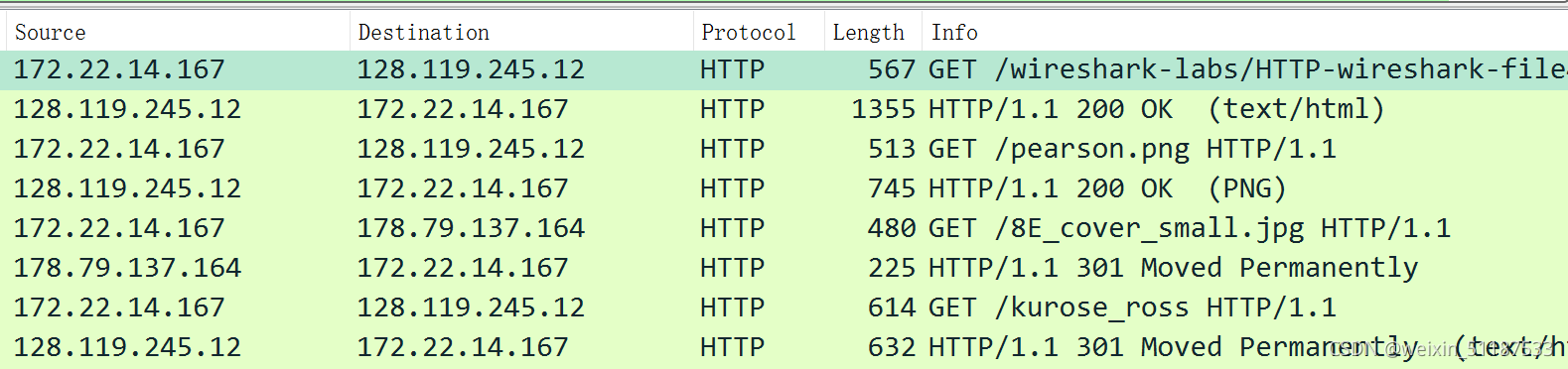
(17) Can you tell whether your browser downloaded the two images serially, or whether they were downloaded from the two web sites in parallel? Explain.
the packet send in parallel.
- HTTP Authentication
 (18) What is the server’s response (status code and phrase) in response to the initial HTTP GET message from your browser?
401 Unauthorized
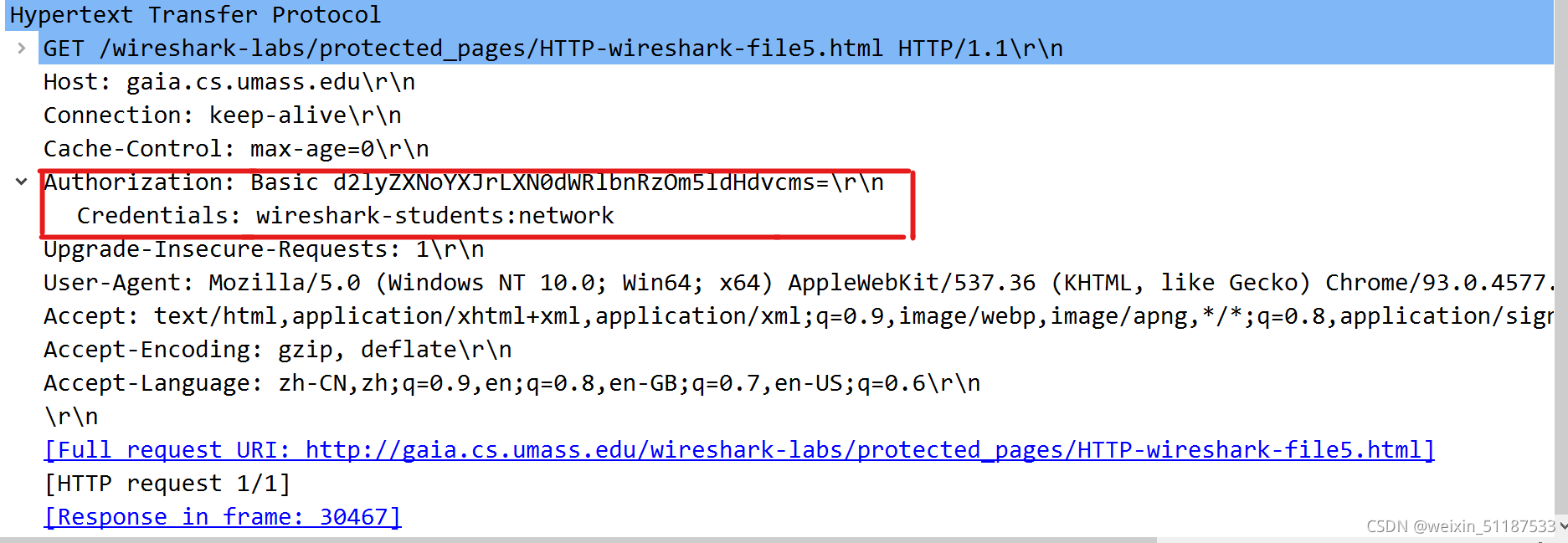
(19)When your browser’s sends the HTTP GET message for the second time, what new field is included in the HTTP GET message?