一、添加一个mapper.xml
<?xml version="1.0" encoding="UTF-8" ?>
<!DOCTYPE mapper
        PUBLIC "-//mybatis.org//DTD Mapper 3.0//EN"
        "https://mybatis.org/dtd/mybatis-3-mapper.dtd">
<mapper namespace="com.example.demo23.mapper.TestMapper">
    <select id="selectBlog" resultType="com.example.demo23.bean.Student">
        select * from table_test where id = #{id}
    </select>
</mapper>
二、再mybatis-config.xml中引入mapper
    <mappers>
        <mapper resource="test.xml"/>
    </mappers>
扩展:mybatis加载mapper的方式有四种:
package -> resource -> url -> class
三、通过sqlSessionFactory 操作查询:
        String resource = "mybatis-config.xml";
        InputStream inputStream = Resources.getResourceAsStream(resource);
        SqlSessionFactory sqlSessionFactory = new SqlSessionFactoryBuilder().build(inputStream);
        Object selectOne = sqlSessionFactory.openSession().selectOne("com.example.demo23.mapper.TestMapper.selectBlog",1L);
四、执行sql:源码
Object selectOne = sqlSessionFactory.openSession().selectOne("com.example.demo23.mapper.TestMapper.selectBlog",1L);进入selectOne方法
  public <T> T selectOne(String statement, Object parameter) {
    // Popular vote was to return null on 0 results and throw exception on too many.
    List<T> list = this.selectList(statement, parameter);
    if (list.size() == 1) {
      return list.get(0);
    }
    if (list.size() > 1) {
      throw new TooManyResultsException(
          "Expected one result (or null) to be returned by selectOne(), but found: " + list.size());
    } else {
      return null;
    }
  }
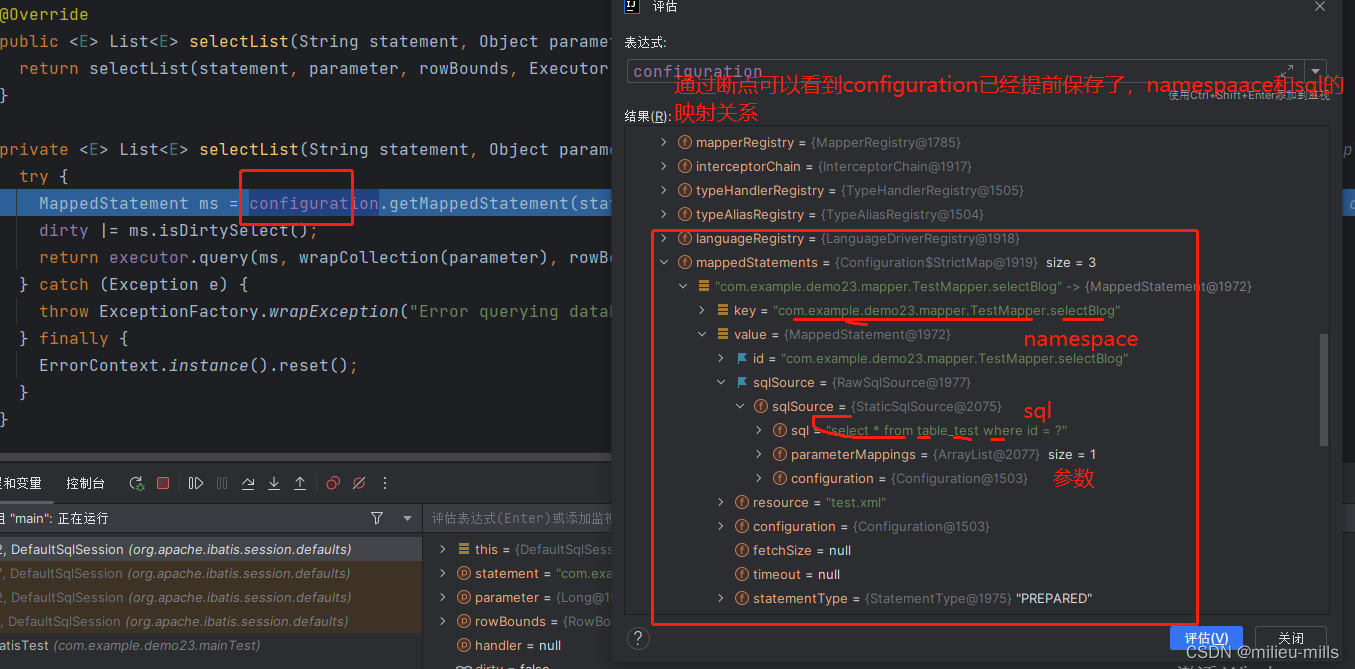
断点至:
private <E> List<E> selectList(String statement, Object parameter, RowBounds rowBounds, ResultHandler handler) {
  try {
    //从configuration中获取mapperStatement数据
    MappedStatement ms = configuration.getMappedStatement(statement);
    dirty |= ms.isDirtySelect();
    return executor.query(ms, wrapCollection(parameter), rowBounds, handler);
  } catch (Exception e) {
    throw ExceptionFactory.wrapException("Error querying database.  Cause: " + e, e);
  } finally {
    ErrorContext.instance().reset();
  }
}
执行表达式: configuration.getMappedStatement(statement)
,可以看到对应的statement保存的信息。
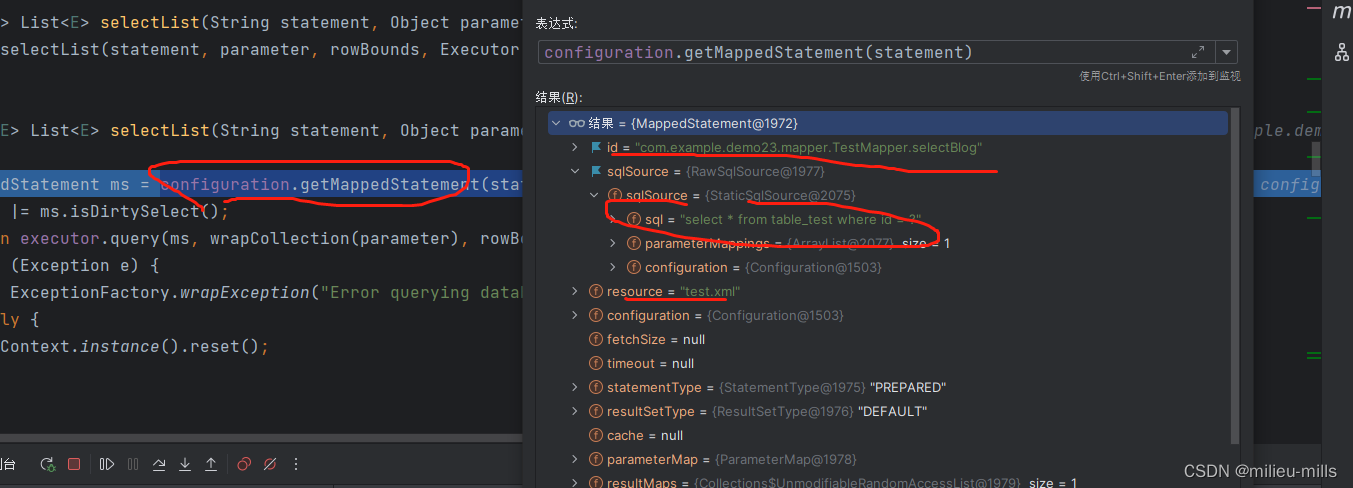
拿到ms对象后,交给:
executor.query(ms, wrapCollection(parameter), rowBounds, handler)
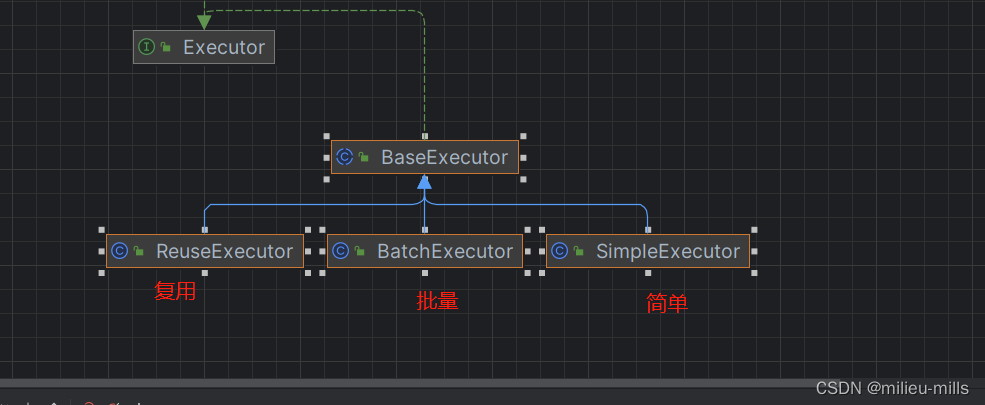
拓展:mybatid executor有几种执行器?通过接口类图可以看见有三中执行器
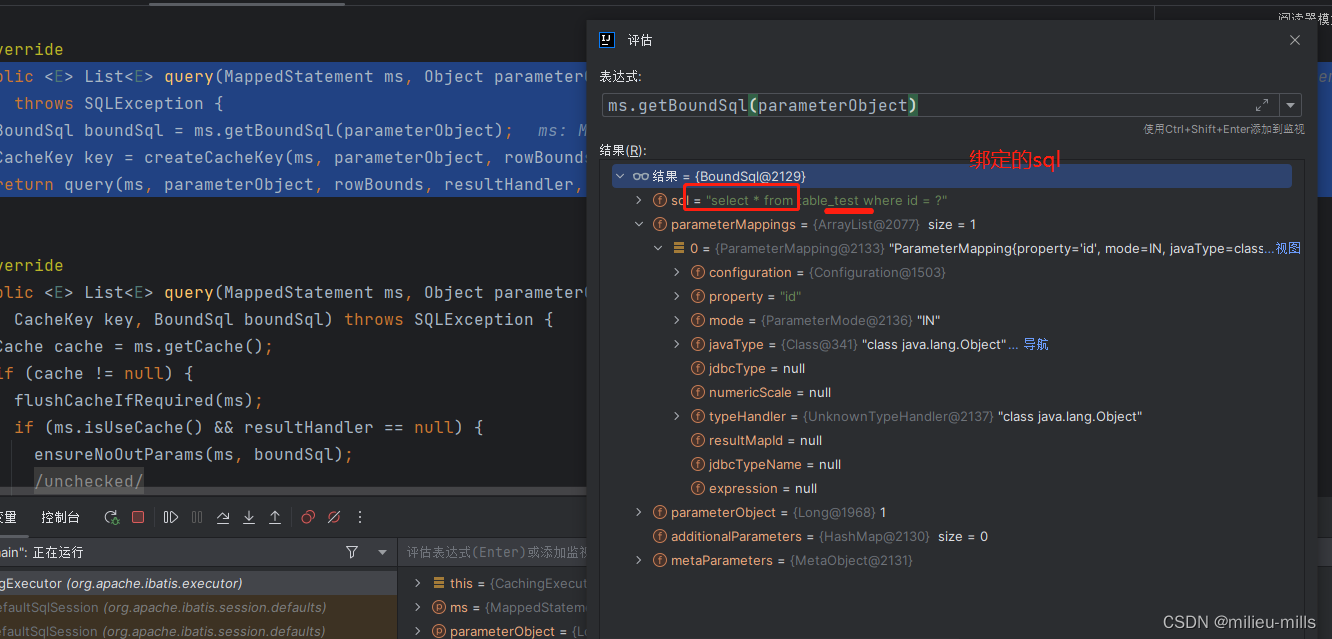
断点进入
public <E> List<E> query(MappedStatement ms, Object parameterObject, RowBounds rowBounds, ResultHandler resultHandler)
    throws SQLException {
  //从MappedStatement  获取当前绑定的sql
  BoundSql boundSql = ms.getBoundSql(parameterObject);
  CacheKey key = createCacheKey(ms, parameterObject, rowBounds, boundSql);
  return query(ms, parameterObject, rowBounds, resultHandler, key, boundSql);
}
拿到bondsql后继续执行:
  public <E> List<E> query(MappedStatement ms, Object parameterObject, RowBounds rowBounds, ResultHandler resultHandler,
      CacheKey key, BoundSql boundSql) throws SQLException {
//获取缓存
    Cache cache = ms.getCache();
//判断是否有缓存
    if (cache != null) {
      flushCacheIfRequired(ms);
      if (ms.isUseCache() && resultHandler == null) {
        ensureNoOutParams(ms, boundSql);
        @SuppressWarnings("unchecked")
        List<E> list = (List<E>) tcm.getObject(cache, key);
        if (list == null) {
          list = delegate.query(ms, parameterObject, rowBounds, resultHandler, key, boundSql);
          tcm.putObject(cache, key, list); // issue #578 and #116
        }
        return list;
      }
    }
    return delegate.query(ms, parameterObject, rowBounds, resultHandler, key, boundSql);
  }
执行doQuery
public <E> List<E> doQuery(MappedStatement ms, Object parameter, RowBounds rowBounds, ResultHandler resultHandler,
    BoundSql boundSql) throws SQLException {
  Statement stmt = null;
  try {
    Configuration configuration = ms.getConfiguration();
    StatementHandler handler = configuration.newStatementHandler(wrapper, ms, parameter, rowBounds, resultHandler,
        boundSql);
    stmt = prepareStatement(handler, ms.getStatementLog());
    return handler.query(stmt, resultHandler);
  } finally {
    closeStatement(stmt);
  }
}
查询数据
private <E> List<E> queryFromDatabase(MappedStatement ms, Object parameter, RowBounds rowBounds,
    ResultHandler resultHandler, CacheKey key, BoundSql boundSql) throws SQLException {
  List<E> list;
  localCache.putObject(key, EXECUTION_PLACEHOLDER);
  try {
    list = doQuery(ms, parameter, rowBounds, resultHandler, boundSql);
  } finally {
    localCache.removeObject(key);
  }
 //放入缓存中
  localCache.putObject(key, list);
  if (ms.getStatementType() == StatementType.CALLABLE) {
    localOutputParameterCache.putObject(key, parameter);
  }
  return list;
}
执行完毕。
版权声明:本文为qq_28834183原创文章,遵循CC 4.0 BY-SA版权协议,转载请附上原文出处链接和本声明。