Http客户端工具
| 文章目录 |
|---|
| Maven打包Jar + Http向Url发送Get请求_lijiamin-的CSDN博客 |
前段时间,我写了一个非常简陋的Get请求的代码用于刷CSDN的访客量,但是那个玩意并不能用于实际工作中,因为它里面并没有包含什么其他的参数,只是简简单单的发起请求,但是在这几天的工作中,我有幸接触到了这篇代码,现将它刨析一番并分享给大家
用途及分析
顾名思义,是一个HTTP客户端工具,能通过代码方式发起get、post、put、delete请求,里面有如下几个方法
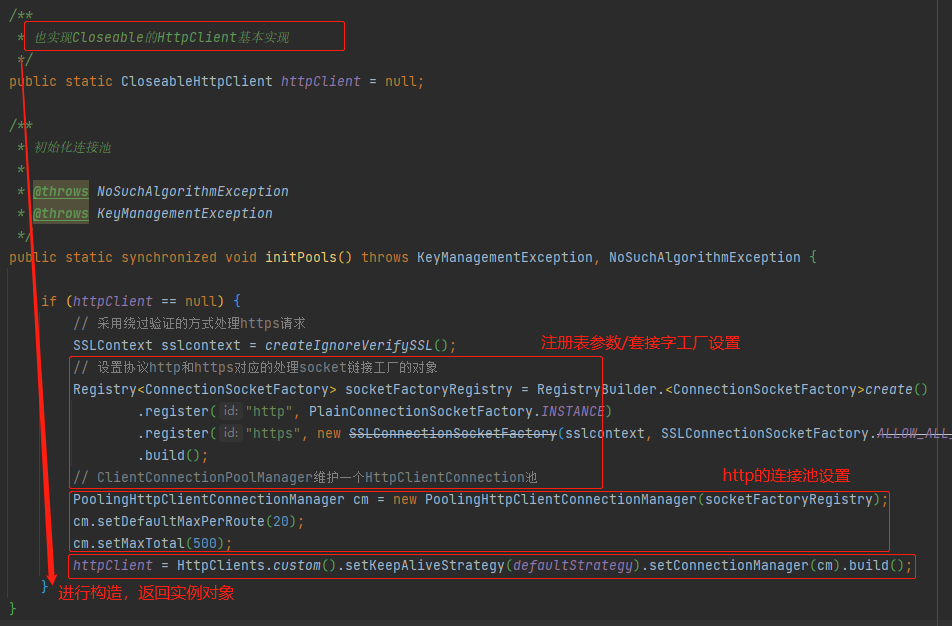
- 连接池初始化
- 连接保活(长连接)
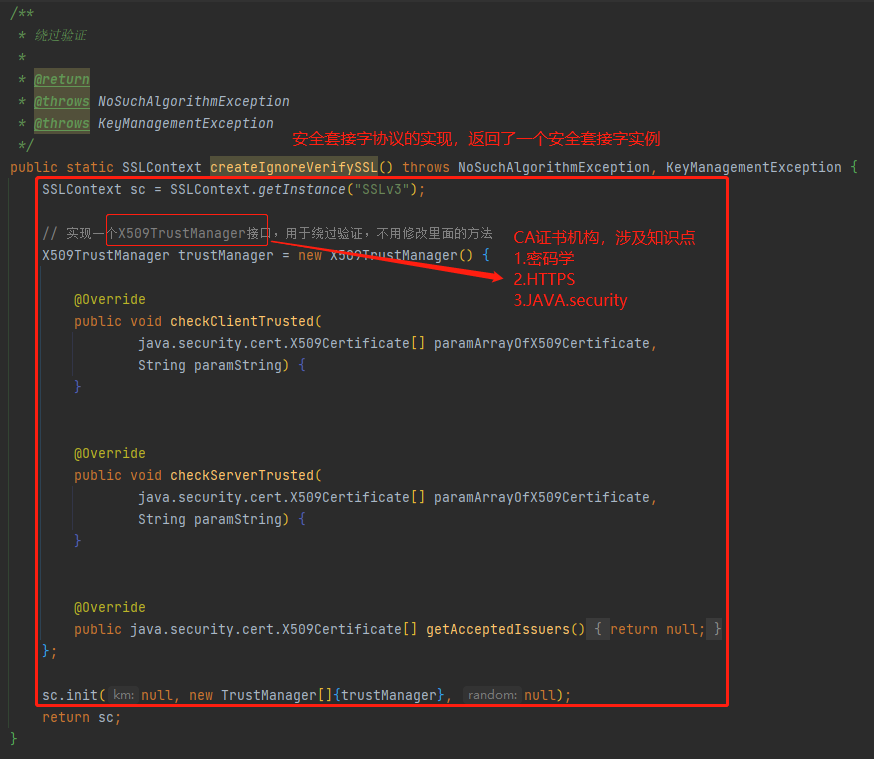
- SSL绕过验证
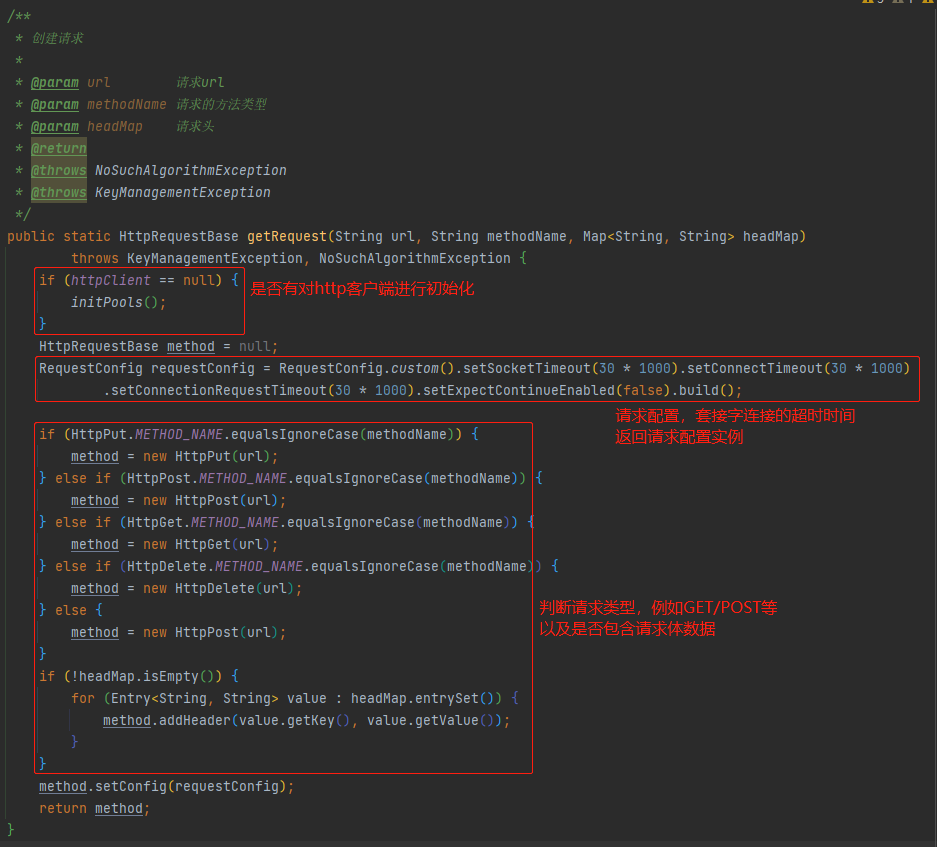
- 请求创建
- 执行请求(GET\POST\PUT\DELETE)
关于请求,我们需要同时考虑到HTTP/HTTPS的情况,HTTPS采用了SSL的安全加密
初始化的客户端,里面的传入实例defaultStrategy是HTTP长连接的配置
接下来开始创建请求
请求的执行我不太想写了,我去整其他东西了,完整的代码在下面
完整的代码段
使用方式
HttpClientPoolUtil.post(完整的请求地址, JSON字符串的请求数据, 请求头);
实际案例代码
public static void main(String[] args) throws Exception {
        String file = "D:\\Weather-local.txt";
        FileWriter fw = new FileWriter(file, true);
        while (true) {
            // 请求
            Map map = new HashMap<String, Object>();
            map.put("accept", "*/*");
            map.put("connection", "Keep-Alive");
            map.put("user-agent", "Mozilla/4.0 (compatible; MSIE 6.0; Windows NT 5.1; SV1)");
            map.put("Content-Type", "application/json;charset=utf-8");

            String strRes = HttpClientPoolUtil.get("http://t.weather.itboy.net/api/weather/city/101280601", map);
            // 写处理
            fw.append("当前时间:" + new Date() + "_____________" + strRes);
            fw.append("\n");
            fw.append("\n");
            fw.flush();
            System.out.println(new Date() + "----ok");
            Thread.sleep(900000);
        }
    }
原始代码
import org.apache.http.HeaderElement;
import org.apache.http.HeaderElementIterator;
import org.apache.http.HttpEntity;
import org.apache.http.HttpResponse;
import org.apache.http.client.config.RequestConfig;
import org.apache.http.client.methods.*;
import org.apache.http.client.protocol.HttpClientContext;
import org.apache.http.config.Registry;
import org.apache.http.config.RegistryBuilder;
import org.apache.http.conn.ConnectionKeepAliveStrategy;
import org.apache.http.conn.socket.ConnectionSocketFactory;
import org.apache.http.conn.socket.PlainConnectionSocketFactory;
import org.apache.http.conn.ssl.SSLConnectionSocketFactory;
import org.apache.http.entity.StringEntity;
import org.apache.http.impl.client.CloseableHttpClient;
import org.apache.http.impl.client.HttpClients;
import org.apache.http.impl.conn.PoolingHttpClientConnectionManager;
import org.apache.http.message.BasicHeaderElementIterator;
import org.apache.http.protocol.HTTP;
import org.apache.http.protocol.HttpContext;
import org.apache.http.util.EntityUtils;

import javax.net.ssl.SSLContext;
import javax.net.ssl.TrustManager;
import javax.net.ssl.X509TrustManager;
import java.nio.charset.StandardCharsets;
import java.security.KeyManagementException;
import java.security.NoSuchAlgorithmException;
import java.util.Map;
import java.util.Map.Entry;


public class HttpClientPoolUtil {

    /**
     * 也实现Closeable的HttpClient基本实现
     */
    public static CloseableHttpClient httpClient = null;

    /**
     * 初始化连接池
     *
     * @throws NoSuchAlgorithmException
     * @throws KeyManagementException
     */
    public static synchronized void initPools() throws KeyManagementException, NoSuchAlgorithmException {

        if (httpClient == null) {
            // 采用绕过验证的方式处理https请求
            SSLContext sslcontext = createIgnoreVerifySSL();
            // 设置协议http和https对应的处理socket链接工厂的对象
            Registry<ConnectionSocketFactory> socketFactoryRegistry = RegistryBuilder.<ConnectionSocketFactory>create()
                    .register("http", PlainConnectionSocketFactory.INSTANCE)
                    .register("https", new SSLConnectionSocketFactory(sslcontext, SSLConnectionSocketFactory.ALLOW_ALL_HOSTNAME_VERIFIER))
                    .build();
            // ClientConnectionPoolManager维护一个HttpClientConnection池
            PoolingHttpClientConnectionManager cm = new PoolingHttpClientConnectionManager(socketFactoryRegistry);
            cm.setDefaultMaxPerRoute(20);
            cm.setMaxTotal(500);
            httpClient = HttpClients.custom().setKeepAliveStrategy(defaultStrategy).setConnectionManager(cm).build();
        }
    }

    /**
     * Http connection keepAlive 设置
     */
    public static ConnectionKeepAliveStrategy defaultStrategy = new ConnectionKeepAliveStrategy() {
        @Override
        public long getKeepAliveDuration(HttpResponse response, HttpContext context) {
            HeaderElementIterator it = new BasicHeaderElementIterator(response.headerIterator(HTTP.CONN_KEEP_ALIVE));
            int keepTime = 30;
            while (it.hasNext()) {
                HeaderElement he = it.nextElement();
                String param = he.getName();
                String value = he.getValue();
                if (value != null && param.equalsIgnoreCase("timeout")) {
                    try {
                        return Long.parseLong(value) * 1000;
                    } catch (Exception e) {
                        e.printStackTrace();
                    }
                }
            }
            return keepTime * 1000;
        }
    };

    /**
     * 绕过验证
     *
     * @return
     * @throws NoSuchAlgorithmException
     * @throws KeyManagementException
     */
    public static SSLContext createIgnoreVerifySSL() throws NoSuchAlgorithmException, KeyManagementException {
        SSLContext sc = SSLContext.getInstance("SSLv3");

        // 实现一个X509TrustManager接口,用于绕过验证,不用修改里面的方法
        X509TrustManager trustManager = new X509TrustManager() {

            @Override
            public void checkClientTrusted(
                    java.security.cert.X509Certificate[] paramArrayOfX509Certificate,
                    String paramString) {
            }


            @Override
            public void checkServerTrusted(
                    java.security.cert.X509Certificate[] paramArrayOfX509Certificate,
                    String paramString) {
            }


            @Override
            public java.security.cert.X509Certificate[] getAcceptedIssuers() {
                return null;
            }
        };

        sc.init(null, new TrustManager[]{trustManager}, null);
        return sc;
    }

    /**
     * 创建请求
     *
     * @param url        请求url
     * @param methodName 请求的方法类型
     * @param headMap    请求头
     * @return
     * @throws NoSuchAlgorithmException
     * @throws KeyManagementException
     */
    public static HttpRequestBase getRequest(String url, String methodName, Map<String, String> headMap)
            throws KeyManagementException, NoSuchAlgorithmException {
        if (httpClient == null) {
            initPools();
        }
        HttpRequestBase method = null;
        RequestConfig requestConfig = RequestConfig.custom().setSocketTimeout(30 * 1000).setConnectTimeout(30 * 1000)
                .setConnectionRequestTimeout(30 * 1000).setExpectContinueEnabled(false).build();

        if (HttpPut.METHOD_NAME.equalsIgnoreCase(methodName)) {
            method = new HttpPut(url);
        } else if (HttpPost.METHOD_NAME.equalsIgnoreCase(methodName)) {
            method = new HttpPost(url);
        } else if (HttpGet.METHOD_NAME.equalsIgnoreCase(methodName)) {
            method = new HttpGet(url);
        } else if (HttpDelete.METHOD_NAME.equalsIgnoreCase(methodName)) {
            method = new HttpDelete(url);
        } else {
            method = new HttpPost(url);
        }
        if (!headMap.isEmpty()) {
            for (Entry<String, String> value : headMap.entrySet()) {
                method.addHeader(value.getKey(), value.getValue());
            }
        }
        method.setConfig(requestConfig);
        return method;
    }


    /**
     * 执行GET 请求
     *
     * @param url
     * @return
     */
    public static String get(String url, Map<String, String> headMap) throws Exception {
        HttpEntity httpEntity = null;
        HttpRequestBase method = null;
        String responseBody = "";
        try {
            if (httpClient == null) {
                initPools();
            }
            method = getRequest(url, HttpGet.METHOD_NAME, headMap);
            HttpContext context = HttpClientContext.create();
            CloseableHttpResponse httpResponse = httpClient.execute(method, context);
            httpEntity = httpResponse.getEntity();
            if (httpEntity != null) {
                responseBody = EntityUtils.toString(httpEntity, "UTF-8");
            }
        } catch (Exception e) {
            if (method != null) {
                method.abort();
            }
            throw e;
        } finally {
            if (httpEntity != null) {
                try {
                    EntityUtils.consumeQuietly(httpEntity);
                } catch (Exception e) {
                    throw e;
                }
            }
        }
        return responseBody;
    }

    /**
     * 执行http post请求 默认采用Content-Type:application/json,Accept:application/json
     *
     * @param url  请求地址
     * @param data 请求数据
     * @param data 请求头
     * @return
     */
    public static String post(String url, String data, Map<String, String> headMap) throws Exception {
        HttpEntity httpEntity = null;
        HttpEntityEnclosingRequestBase method = null;
        String responseBody = "";
        try {
            if (httpClient == null) {
                initPools();
            }
            method = (HttpEntityEnclosingRequestBase) getRequest(url, HttpPost.METHOD_NAME, headMap);
            method.setEntity(new StringEntity(data, StandardCharsets.UTF_8));
            HttpContext context = HttpClientContext.create();
            CloseableHttpResponse httpResponse = httpClient.execute(method, context);
            httpEntity = httpResponse.getEntity();
            if (httpEntity != null) {
                responseBody = EntityUtils.toString(httpEntity, "UTF-8");
            }

        } catch (Exception e) {
            if (method != null) {
                method.abort();
            }
            throw e;
        } finally {
            if (httpEntity != null) {
                try {
                    EntityUtils.consumeQuietly(httpEntity);
                } catch (Exception e) {
                    throw e;
                }
            }
        }
        return responseBody;
    }

    /**
     * 执行http put请求 默认采用Content-Type:application/json,Accept:application/json
     *
     * @param url  请求地址
     * @param data 请求数据
     * @param data 请求头
     * @return
     */
    public static String put(String url, String data, Map<String, String> headMap) throws Exception {
        HttpEntity httpEntity = null;
        HttpEntityEnclosingRequestBase method = null;
        String responseBody = "";
        try {
            if (httpClient == null) {
                initPools();
            }
            method = (HttpEntityEnclosingRequestBase) getRequest(url, HttpPut.METHOD_NAME, headMap);
            method.setEntity(new StringEntity(data, StandardCharsets.UTF_8));
            HttpContext context = HttpClientContext.create();
            CloseableHttpResponse httpResponse = httpClient.execute(method, context);
            httpEntity = httpResponse.getEntity();
            if (httpEntity != null) {
                responseBody = EntityUtils.toString(httpEntity, "UTF-8");
            }

        } catch (Exception e) {
            if (method != null) {
                method.abort();
            }
            throw e;
        } finally {
            if (httpEntity != null) {
                try {
                    EntityUtils.consumeQuietly(httpEntity);
                } catch (Exception e) {
                    throw e;
                }
            }
        }
        return responseBody;
    }

    /**
     * 执行DELETE 请求
     *
     * @param url
     * @return
     */
    public static String delete(String url, Map<String, String> headMap) throws Exception {
        HttpEntity httpEntity = null;
        HttpRequestBase method = null;
        String responseBody = "";
        try {
            if (httpClient == null) {
                initPools();
            }
            method = getRequest(url, HttpDelete.METHOD_NAME, headMap);
            HttpContext context = HttpClientContext.create();
            CloseableHttpResponse httpResponse = httpClient.execute(method, context);
            httpEntity = httpResponse.getEntity();
            if (httpEntity != null) {
                responseBody = EntityUtils.toString(httpEntity, "UTF-8");
            }
        } catch (Exception e) {
            if (method != null) {
                method.abort();
            }
            throw e;
        } finally {
            if (httpEntity != null) {
                try {
                    EntityUtils.consumeQuietly(httpEntity);
                } catch (Exception e) {
                    throw e;
                }
            }
        }
        return responseBody;
    }

}
结束
版权声明:本文为weixin_48518621原创文章,遵循CC 4.0 BY-SA版权协议,转载请附上原文出处链接和本声明。