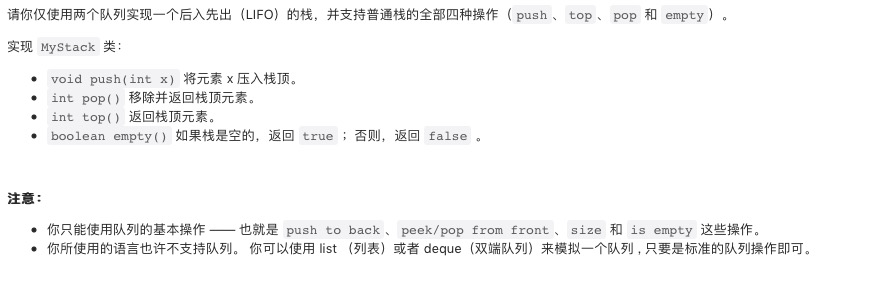
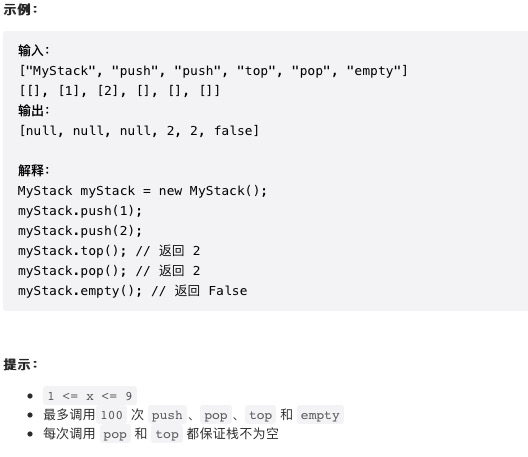
1. 题目介绍
2.思路
只是为了加深对栈的理解,没有实际的工程意义
2.1 两个队列来实现栈
队列模拟栈,其实一个队列就够了,那么我们先说一说两个队列来实现栈的思路。
队列是先进先出的规则,把一个队列中的数据导入另一个队列中,数据的顺序并没有变,并没有变成先进后出的顺序。
所以用栈实现队列, 和用队列实现栈的思路还是不一样的,这取决于这两个数据结构的性质。
但是依然还是要用两个队列来模拟栈,只不过没有输入和输出的关系,而是另一个队列完全用又来备份的!
用两个队列que1和que2实现队列的功能,que2其实完全就是一个备份的作用,把que1最后面的元素以外的元素都备份到que2,然后弹出最后面的元素,再把其他元素从que2导回que1。
2.2 一个队列来实现栈
一个队列在模拟栈弹出元素的时候只要将队列头部的元素(除了最后一个元素外) 重新添加到队列尾部,此时在去弹出元素就是栈的顺序了。
3.代码实现
3.1 两个队列实现(C++实现)
 class MyStack {
public:
    queue<int> que1;
    queue<int> que2; // 辅助队列,用来备份
    /** Initialize your data structure here. */
    MyStack() {

    }

    /** Push element x onto stack. */
    void push(int x) {
        que1.push(x);
    }

    /** Removes the element on top of the stack and returns that element. */
    int pop() {
        int size = que1.size();
        size--;
        while (size--) { // 将que1 导入que2,但要留下最后一个元素
            que2.push(que1.front());
            que1.pop();
        }

        int result = que1.front(); // 留下的最后一个元素就是要返回的值
        que1.pop();
        que1 = que2;            // 再将que2赋值给que1
        while (!que2.empty()) { // 清空que2
            que2.pop();
        }
        return result;
    }

    /** Get the top element. */
    int top() {
        return que1.back();
    }

    /** Returns whether the stack is empty. */
    bool empty() {
        return que1.empty();
    }
};

/**
 * Your MyStack object will be instantiated and called as such:
 * MyStack* obj = new MyStack();
 * obj->push(x);
 * int param_2 = obj->pop();
 * int param_3 = obj->top();
 * bool param_4 = obj->empty();
 */
3.2 一个队列实现(C++实现)
class MyStack {
public:
    queue<int> que;
    /** Initialize your data structure here. */
    MyStack() {

    }
    /** Push element x onto stack. */
    void push(int x) {
        que.push(x);
    }
    /** Removes the element on top of the stack and returns that element. */
    int pop() {
        int size = que.size();
        size--;
        while (size--) { // 将队列头部的元素(除了最后一个元素外) 重新添加到队列尾部
            que.push(que.front());
            que.pop();
        }
        int result = que.front(); // 此时弹出的元素顺序就是栈的顺序了
        que.pop();
        return result;
    }

    /** Get the top element. */
    int top() {
        return que.back();
    }

    /** Returns whether the stack is empty. */
    bool empty() {
        return que.empty();
    }
};
版权声明:本文为u014217137原创文章,遵循CC 4.0 BY-SA版权协议,转载请附上原文出处链接和本声明。