内容:
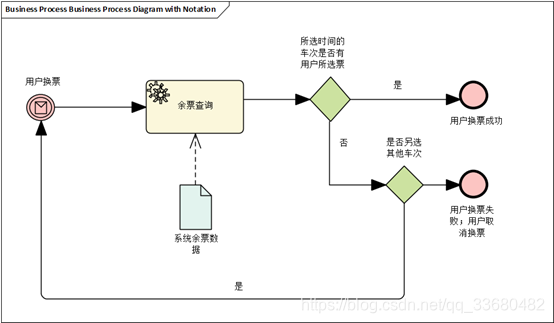
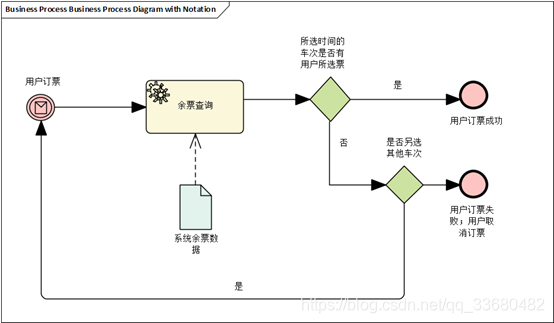
1. BPMN(Business Process Modelling Notations)
单词释义相关网站:
https://www.lucidchart.com/pages/bpmn
https://en.wikipedia.org/wiki/Business_Process_Model_and_Notation
单词释义:
Business Process Modelling Notations, are used to define the process on paper with the help of predefined shapes of UML.
(业务流程建模符号用于在UML的预定义形状的帮助下在纸上定义流程。)
单词拓展释义:
Business Process Modeling Notation (BPMN) is a flow chart method that models the steps of a planned business process from end to end. A key to Business Process Management, it visually depicts a detailed sequence of business activities and information flows needed to complete a process. Its purpose is to model ways to improve efficiency, account for new circumstances or gain competitive advantage. The method has been undergoing a standardization push in the past few years and is now often called by a slightly different name: Business Process Model and Notation, still using the BPMN acronym. (业务流程建模符号(BPMN)是一种流程图方法,它对一个计划中的业务流程的步骤从头到尾进行建模。它是业务流程管理的一个关键,它直观地描述了完成一个流程所需的业务活动和信息流的详细顺序,其目的是为提高效率、应对新情况或获得竞争优势的方法建模。在过去的几年里,该方法一直在进行标准化的推进,现在通常用一个略微不同的名称来称呼:业务流程模型和符号,仍然使用BPMN的缩写。)
项目相关内容:

2. Sequence diagram
单词释义相关网站:
https://www.lucidchart.com/pages/bpmn
https://en.wikipedia.org/wiki/Business_Process_Model_and_Notation
单词释义:
A sequence diagram shows object interactions arranged in time sequence. It depicts the objects involved in the scenario and the sequence of messages exchanged between the objects needed to carry out the functionality of the scenario. Sequence diagrams are typically associated with use case realizations in the Logical View of the system under development. Sequence diagrams are sometimes called event diagrams or event scenarios.
A sequence diagram shows, as parallel vertical lines (lifelines), different processes or objects that live simultaneously, and, as horizontal arrows, the messages exchanged between them, in the order in which they occur. This allows the specification of simple runtime scenarios in a graphical manner.
(顺序图显示了按时间顺序排列的对象交互。 它描述了场景中涉及的对象以及实现场景功能所需的对象之间交换的消息序列。 序列图通常与正在开发的系统的逻辑视图中的用例实现相关联。 顺序图有时也称为事件图或事件场景。
顺序图以平行的垂直线(生命线)显示同时存在的不同过程或对象,并以水平箭头显示在它们之间交换的消息(按消息出现的顺序)。 这允许以图形方式指定简单的运行时方案。)
单词拓展释义:
Sequence diagrams are a popular dynamic modeling solution in UML because they specifically focus on lifelines, or the processes and objects that live simultaneously, and the messages exchanged between them to perform a function before the lifeline ends. Along with our UML diagramming tool, use this guide to learn everything there is to know about sequence diagrams in UML. (序列图是UML中流行的动态建模解决方案,因为它们专门关注生命线或同时存在的流程和对象,并且它们之间交换的消息可以在生命线结束之前执行功能。 与我们的UML图表绘制工具一起,使用本指南学习有关UML中序列图的所有知识。)
项目相关内容:
无
3. Activity diagram
单词释义相关网站:
https://www.sciencedirect.com/topics/computer-science/activity-diagram
单词释义:
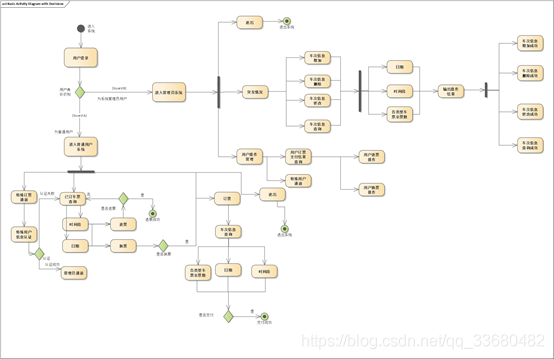
A diagram type in UML models the flow of actions in a system or in a component including data flows and areas of reponsibility where necessary. (UML中的图类型可以对系统或组件中的动作流进行建模,包括必要时的数据流和责任区域。)
单词拓展释义:
Activity diagrams have a more prominent place in SysML than they do in UML. Many system engineers are familiar with extended functional flow block diagrams (EFFBDs) and activity diagrams are semantically similar if visually distinct. SysML activity diagrams are significantly extended from their UML parent through the addition of flows that are continuous in value and continuous in time. Activity diagrams are semantically complete in the sense that they specify all the behavior of one or more elements.
(活动图在SysML中比在UML中具有更突出的位置。 许多系统工程师熟悉扩展功能流程图(EFFBD),并且活动图在外观上在语义上是相似的。 SysML活动图通过其值连续且时间连续的流的添加而从其UML父级显着扩展。 活动图在语义上是完整的,因为它们指定了一个或多个元素的所有行为。)
项目相关内容:
4. Behavioral Models
单词释义相关网站:
https://sparxsystems.com/enterprise_architect_user_guide/15.2/model_domains/behavioraldiagrams.html
单词释义:
A model describing the behavior of a system or component, e.g., by a state machine. (描述行为的模型系统或组件,例如通过状态机。)
单词拓展释义:
UML Behavioral Diagrams depict the elements of a system that are dependent on time and that convey the dynamic concepts of the system and how they relate to each other. The elements in these diagrams resemble the verbs in a natural language and the relationships that connect them typically convey the passage of time. For example, a behavioral diagram of a vehicle reservation system might contain elements such as Make a Reservation, Rent a Car, and Provide Credit Card Details. Experienced modelers will show the relationship to structural elements on these diagrams.
(UML行为图描述了依赖于时间的系统元素,这些元素传达了系统的动态概念以及它们之间的相互关系。 这些图中的元素类似于自然语言中的动词,并且连接它们的关系通常传达时间的流逝。 例如,车辆预订系统的行为图可能包含诸如进行预订,租车和提供信用卡详细信息之类的元素。 经验丰富的建模人员将在这些图中显示与结构元素的关系。)
项目相关内容:
无
5. Functional requirement
单词释义相关网站:
https://www.sciencedirect.com/topics/computer-science/functional-requirement
https://www.sciencedirect.com/topics/computer-science/functional-requirement
单词释义:
A requirement concerning a result of behavior that shall be provided by a function of a system (or of a component or service).
(由系统(或组件或服务)的功能提供的有关行为结果的要求。)
单词拓展释义:
A Functional Requirement (FR) is a description of the service that the software must offer. It describes a software system or its component. A function is nothing but inputs to the software system, its behavior, and outputs. It can be a calculation, data manipulation, business process, user interaction, or any other specific functionality which defines what function a system is likely to perform. Functional Requirements are also called Functional Specification.
In software engineering and systems engineering, a Functional Requirement can range from the high-level abstract statement of the sender’s necessity to detailed mathematical functional requirement specifications. Functional software requirements help you to capture the intended behaviour of the system.
(功能需求(FR)是对软件必须提供的服务的描述。 它描述了软件系统或其组件。 功能不过是软件系统的输入,其行为和输出。 它可以是计算,数据处理,业务流程,用户交互或定义系统可能执行的功能的任何其他特定功能。 功能需求也称为功能规范。
在软件工程和系统工程中,功能需求的范围可以从发送者必要性的高级抽象声明到详细的数学功能需求规范。 功能性软件要求可帮助您捕获系统的预期行为。)
项目相关内容:
无
6. BPM(Business Process Model)
单词释义相关网站:
https://tallyfy.com/business-process-modeling/
https://kissflow.com/bpm/business-process-modeling/
https://en.wikipedia.org/wiki/Business_process_modeling
单词释义:
Business Process Model, is used to define the process followed by the business. It is a high level design for the business process.
(业务流程模型,用于定义业务遵循的流程。 这是业务流程的高级设计。)
单词拓展释义:
Business process modeling (BPM) in business process management and systems engineering is the activity of representing processes of an enterprise, so that the current process may be analyzed, improved, and automated. BPM is typically performed by business analysts, who provide expertise in the modeling discipline; by subject matter experts, who have specialized knowledge of the processes being modeled; or more commonly by a team comprising both. Alternatively, the process model can be derived directly from events’ logs using process mining tools.
(业务流程管理和系统工程中的业务流程建模(BPM)是表示企业流程的活动,因此可以对当前流程进行分析,改进和自动化。 BPM通常由业务分析师执行,他们在建模领域提供专业知识; 由对建模过程具有专门知识的主题专家进行; 或更常见的情况是由同时包含这两者的团队组成。 或者,可以使用流程挖掘工具直接从事件日志中获取流程模型。)
项目相关内容:


7. Dataflow diagram
单词释义相关网站:
https://en.wikipedia.org/wiki/Data-flow_diagram
https://www.lucidchart.com/blog/data-flow-diagram-tutorial
单词释义:
A diagram modeling the functionality of a system or component by processes (also called activities), data stores and data flows. Incoming data flows trigger processes which then consume the received data, transform them, read/write persistent data held in data stores and then produce new data flows which may be intermediate results that trigger other processes or final results that leave the system.
(通过流程(也称为活动),数据存储和数据流为系统或组件的功能建模的图。 传入的数据流触发流程,这些流程随后将使用接收的数据,对其进行转换,读取/写入数据存储中保存的持久数据,然后生成新的数据流,这些数据流可能是触发其他流程的中间结果或离开系统的最终结果。)
单词拓展释义:
A data flow diagram (DFD) maps out the flow of information for any process or system. It uses defined symbols like rectangles, circles and arrows, plus short text labels, to show data inputs, outputs, storage points and the routes between each destination. Data flowcharts can range from simple, even hand-drawn process overviews, to in-depth, multi-level DFDs that dig progressively deeper into how the data is handled. They can be used to analyze an existing system or model a new one. Like all the best diagrams and charts, a DFD can often visually “say” things that would be hard to explain in words, and they work for both technical and nontechnical audiences, from developer to CEO. That’s why DFDs remain so popular after all these years. While they work well for data flow software and systems, they are less applicable nowadays to visualizing interactive, real-time or database-oriented software or systems.
(数据流程图(DFD)映射出任何流程或系统的信息流。 它使用已定义的符号(例如矩形,圆形和箭头)以及短文本标签来显示数据输入,输出,存储点和每个目标之间的路线。 数据流程图的范围从简单的甚至是手绘的过程概述,到深入的多层次DFD都将逐步深入研究数据的处理方式。 它们可用于分析现有系统或为新系统建模。 像所有最好的图表一样,DFD经常可以直观地“说”难以用语言解释的事物,并且适用于技术人员和非技术人员,从开发人员到首席执行官。 这就是为什么DFD在这些年来一直如此受欢迎。 尽管它们在数据流软件和系统上运行良好,但如今它们不适用于可视化交互式,实时或面向数据库的软件或系统。)
项目相关内容:
无
8. Entity-relationship diagram
单词释义相关网站:
https://www.lucidchart.com/pages/er-diagrams
单词释义:
A graphic representation of an entity-relationship model. Abbreviation: ERD .
(实体关系模型的图形表示。 缩写:ERD。)
单词拓展释义:
An Entity Relationship (ER) Diagram is a type of flowchart that illustrates how “entities” such as people, objects or concepts relate to each other within a system. ER Diagrams are most often used to design or debug relational databases in the fields of software engineering, business information systems, education and research. Also known as ERDs or ER Models, they use a defined set of symbols such as rectangles, diamonds, ovals and connecting lines to depict the interconnectedness of entities, relationships and their attributes. They mirror grammatical structure, with entities as nouns and relationships as verbs.
(实体关系(ER)图是一种流程图,它说明了系统中诸如人,对象或概念之类的“实体”如何相互关联。 ER图最常用于设计或调试软件工程,业务信息系统,教育和研究领域的关系数据库。 它们也称为ERD或ER模型,它们使用一组定义的符号(例如矩形,菱形,椭圆形和连接线)来描述实体,关系及其属性的互连性。 它们反映了语法结构,其中实体是名词,关系是动词。)
项目相关内容:
无
9. Entity-relationship model
单词释义相关网站:
https://en.wikipedia.org/wiki/Entity%E2%80%93relationship_model
https://opentextbc.ca/dbdesign01/chapter/chapter-8-entity-relationship-model/
单词释义:
A model of data that are relevant for a system, or of the data of an application domain.An ERM consists of a set of entity types that are each characterized by attributes and linked by relationships. Abbreviation: ERM, ER Model.
(与系统或应用程序域的数据相关的模型。ERM由一组实体类型组成,这些实体类型分别以属性为特征并通过关系进行链接。 缩写:ERM,ER模型。)
单词拓展释义:
An entity–relationship model (or ER model) describes interrelated things of interest in a specific domain of knowledge. A basic ER model is composed of entity types (which classify the things of interest) and specifies relationships that can exist between entities (instances of those entity types).
In software engineering, an ER model is commonly formed to represent things a business needs to remember in order to perform business processes. Consequently, the ER model becomes an abstract data model, that defines a data or information structure which can be implemented in a database, typically a relational database.
Entity–relationship modeling was developed for database and design by Peter Chen and published in a 1976 paper,with variants of the idea existing previously.Some ER models show super and subtype entities connected by generalization-specialization relationships,and an ER model can be used also in the specification of domain-specific ontologies.
(实体关系模型(或ER模型)描述了特定知识领域中相互关联的相关事物。 基本的ER模型由实体类型(对感兴趣的事物进行分类)组成,并指定实体之间可以存在的关系(这些实体类型的实例)。
在软件工程中,通常会形成一个ER模型来表示企业为了执行业务流程而需要记住的东西。 因此,ER模型成为抽象数据模型,它定义了可以在数据库(通常是关系数据库)中实现的数据或信息结构。
实体关系模型是由Peter Chen开发的,用于数据库和设计,并于1976年发表在论文上,具有以前存在的思想的变体。一些ER模型显示通过泛化-专业化关系连接的上级和子类型实体,可以使用ER模型 在特定领域本体的规范中也是如此。)
项目相关内容:
无
10. Completeness (of requirements)
单词释义相关网站:
https://www.sciencedirect.com/science/article/abs/pii/S0957417496000437
https://www.igi-global.com/dictionary/dealing-with-completeness-in-requirements-engineering/42447
单词释义:
- For a single requirement: The degree to which a requirement contains all necessary information
- For a requirements specification: The degree to which the specification contains all information which is necessary for developing a system that satisfies the stakeholders’ desires and needs.
(1.对于单个需求:需求包含所有必要信息的程度
2.对于需求规范:规范在多大程度上包含了开发满足利益相关者的需求和需求的系统所必需的所有信息。)
单词拓展释义:
Specifying requirements is one of the most critical activities in any systems development effort. It is extremely important that the requirements specified for a desired system are complete and consistent; users, however, experience great difficulty in doing that. The problem becomes especially acute when the intended system is very complex. In this paper, we propose a framework which employs expert agents to assist users in the requirements definition process. The approach is defined within the context of RAPID-WS, an object-oriented tool that supports the Air Force weapon systems requirements development process. We describe how an expert agent uses a knowledge base and a case base to assist a user in defining a complete and consistent set of system requirements. The agent generates a requirements hierarchy for the user to view and dynamically responds to any changes to requirements made by the user. By allowing control to switch freely back and forth between the user and the agent, the proposed approach provides a collaborative medium for requirements specification.
(在所有系统开发工作中,指定需求是最关键的活动之一。对于所需系统指定的要求是完整且一致的,这一点非常重要;但是,用户在执行该操作时遇到了很大的困难。当目标系统非常复杂时,该问题尤其严重。在本文中,我们提出了一个框架,该框架使用专家代理来协助用户进行需求定义过程。该方法是在RAPID-WS的上下文中定义的,RAPID-WS是一种支持空军武器系统需求开发过程的面向对象的工具。我们描述了专家代理如何使用知识库和案例库来帮助用户定义一套完整而一致的系统需求。代理生成需求层次结构供用户查看,并动态响应用户对需求所做的任何更改。通过允许控件在用户和代理之间自由地来回切换,所提出的方法提供了一种用于需求说明的协作介质。)
项目相关内容:
无
11. Context model
单词释义相关网站:
https://www.sciencedirect.com/topics/engineering/context-model
https://en.wikipedia.org/wiki/Context_model
单词释义:
A model describing a system in its context.
(在上下文中描述系统的模型。)
单词拓展释义:
A context model (or context modeling) defines how context data are structured and maintained (It plays a key role in supporting efficient context management). It aims to produce a formal or semi-formal description of the context information that is present in a context-aware system. In other words, the context is the surrounding element for the system, and a model provides the mathematical interface and a behavioral description of the surrounding environment.
It is used to represent the reusable context information of the components (The top level classes consist of Operating system, component container, hardware requirement and Software requirement).
A key role of context model is to simplify and introduce greater structure into the task of developing context-aware applications.
(上下文模型(或上下文建模)定义了上下文数据的结构和维护方式(它在支持有效的上下文管理中起着关键作用)。 它旨在产生对上下文感知系统中存在的上下文信息的正式或半正式描述。 换句话说,上下文是系统的周围元素,而模型则提供了周围环境的数学接口和行为描述。
它用于表示组件的可重用上下文信息(顶级类包括操作系统,组件容器,硬件要求和软件要求)。
上下文模型的关键作用是简化和引入更大的结构到开发上下文感知应用程序的任务中。)
项目相关内容:
无
12. Application domain
单词释义相关网站:
https://www.sciencedirect.com/topics/computer-science/application-domain
https://en.wikipedia.org/wiki/Application_domain#:~:text=An%20application%20domain%20is%20a,do%20not%20affect%20each%20other.
单词释义:
Those parts of the real world that are relevant for determining the context of a system.
(现实世界中与之相关的部分用于确定系统的上下文。)
单词拓展释义:
An application domain is a mechanism (similar to a process in an operating system) used within the Common Language Infrastructure (CLI) to isolate executed software applications from one another so that they do not affect each other. Each application domain has its own virtual address space which scopes the resources for the application domain using that address space.
(应用程序域是在公共语言基础结构(CLI)中使用的一种机制(类似于操作系统中的过程),用于将执行的软件应用程序彼此隔离,以使它们彼此不受影响。 每个应用程序域都有其自己的虚拟地址空间,该虚拟地址空间使用该地址空间来划分应用程序域的资源范围。)
项目相关内容:
无
13. Decision table
单词释义相关网站:
https://www.sciencedirect.com/topics/computer-science/decision-table
https://en.wikipedia.org/wiki/Decision_table
单词释义:
A tabular, systematic representation of a complex decision that depends on multiple criteria.
(以表格,系统的方式表示取决于多个标准的复杂决策。)
单词拓展释义:
Decision tables are a concise visual representation for specifying which actions to perform depending on given conditions. They are algorithms whose output is a set of actions. The information expressed in decision tables could also be represented as decision trees or in a programming language as a series of if-then-else and switch-case statements.
(决策表是简洁的视觉表示,用于指定根据给定条件执行哪些动作。 它们是算法,其输出是一组操作。 决策表中表示的信息也可以表示为决策树,也可以用编程语言表示为一系列if-then-else和switch-case语句。)
项目相关内容:
无
14. Class model
单词释义相关网站:
https://www.excelsoftware.com/classmodel
https://binaryterms.com/class-model.html
单词释义:
A model consisting of a set of classes and relationships between them. (由一组类及其之间的关系组成的模型。)
单词拓展释义:
Class model defines the structure of the entire system by identifying the static structure of objects in that system. A class model defines attributes and operations for the objects of each class and also the relationship between the objects in the systems.
A class model prepares the platform for the other two models i.e. the state model and interaction model. Class model is considered important as it represents the graphical representation of the entire system and helps in analysis while communicating with the customers.
The motive behind constructing the class model is to concentrate on those concepts of real world that are important from the application point of view. In this section, we will discuss the class model along with its elements like the objects, classes, links and association between the classes.
(类模型通过识别该系统中对象的静态结构来定义整个系统的结构。 类模型定义每个类的对象的属性和操作,以及系统中对象之间的关系。
类模型为其他两个模型(即状态模型和交互模型)准备了平台。 类模型被认为很重要,因为它代表了整个系统的图形表示形式,并有助于在与客户沟通时进行分析。
构造类模型的动机是集中于现实世界中从应用程序角度来看很重要的概念。 在本节中,我们将讨论类模型及其元素,例如对象,类,类之间的链接和关联。)
项目相关内容:
无
15. Maintainability
单词释义相关网站:
https://www.sciencedirect.com/topics/computer-science/maintainability
https://en.wikipedia.org/wiki/Maintainability
单词释义:
The ease with which a software system can be modified to correct faults or adapt the system to changing needs.
Maintainability may be stated as a quality requirement.
(可以轻松修改软件系统以纠正错误或使系统适应不断变化的需求。
可维护性可以说是质量要求。)
单词拓展释义:
In engineering, maintainability is the ease with which a product can be maintained in order to:
- correct defects or their cause,
- repair or replace faulty or worn-out components without having to replace still working parts,
- prevent unexpected working conditions,
- maximize a product’s useful life,
- maximize efficiency, reliability, and safety,
- meet new requirements,
- make future maintenance easier, or
- cope with a changed environment.
In some cases, maintainability involves a system of continuous improvement - learning from the past in order to improve the ability to maintain systems, or improve reliability of systems based on maintenance experience.
(在工程学中,可维护性是产品易于维护的目的,以便于: - 纠正缺陷或其原因,
- 修理或更换有故障或磨损的组件,而不必更换仍在工作的零件,
- 防止意外的工作条件,
- 最大限度地延长产品的使用寿命,
- 最大化效率,可靠性和安全性,
- 满足新的要求,
- 使将来的维护更加容易,或者
- 应对变化的环境。
在某些情况下,可维护性涉及一个持续改进的系统-从过去中学习,以提高维护系统的能力,或基于维护经验来提高系统的可靠性。)
项目相关内容:
无
16. Domain
单词释义相关网站:
https://en.wikipedia.org/wiki/Domain_model
https://www.ict.social/software-design/uml/uml-domain-model
单词释义:
A range of relevant things (for some given matter); for example, an application domain.
(一系列相关的事物(对于某些给定的事物); 例如应用程序域。)
单词拓展释义:
In software engineering, a domain model is a conceptual model of the domain[definition needed] that incorporates both behaviour and data. In ontology engineering, a domain model is a formal representation of a knowledge domain with concepts, roles, datatypes, individuals, and rules, typically grounded in a description logic.
(在软件工程中,领域模型是包含行为和数据的领域[所需定义]的概念模型。 在本体工程中,领域模型是知识领域的正式表示形式,具有概念,角色,数据类型,个人和规则,通常以描述逻辑为基础。)
项目相关内容:
无
17. Fault Tolerance
单词释义相关网站:
https://en.wikipedia.org/wiki/Fault_tolerance
https://www.imperva.com/learn/availability/fault-tolerance/#:~:text=Fault%20tolerance%20refers%20to%20the,more%20of%20its%20components%20fail.
单词释义:
A range of relevant things (for some given matter); for example, an application domain.
(一系列相关的事物(对于某些给定的事物); 例如应用程序域。)
单词拓展释义:
Fault tolerance is the property that enables a system to continue operating properly in the event of the failure of (or one or more faults within) some of its components. If its operating quality decreases at all, the decrease is proportional to the severity of the failure, as compared to a naively designed system, in which even a small failure can cause total breakdown. Fault tolerance is particularly sought after in high-availability or life-critical systems. The ability of maintaining functionality when portions of a system break down is referred to as graceful degradation.
(容错是使系统在某些组件发生故障(或其中的一个或多个故障)时能够继续正常运行的属性。 与单纯设计的系统相比,如果其运行质量完全下降,则下降与故障的严重程度成正比,在系统中,即使是很小的故障也可能导致整体故障。 在高可用性或对生命至关重要的系统中,尤其需要追求容错能力。 当系统的一部分发生故障时维护功能的能力称为正常降级。)
项目相关内容:
无
18. Customer requirements specification
单词释义相关网站:
http://www.ofnisystems.com/services/validation/user-requirement-specifications/
https://en.wikipedia.org/wiki/User_requirements_document
单词释义:
A coarse description of the required capabilities of a system from the customer’s perspective.Usually supplied by the customer.
(从客户的角度粗略描述系统所需的功能。通常由客户提供。)
单词拓展释义:
The user requirement(s) document (URD) or user requirement(s) specification (URS) is a document usually used in software engineering that specifies what the user expects the software to be able to do.
Once the required information is completely gathered it is documented in a URD, which is meant to spell out exactly what the software must do and becomes part of the contractual agreement. A customer cannot demand features not in the URD, while the developer cannot claim the product is ready if it does not meet an item of the URD.
The URD can be used as a guide to planning cost, timetables, milestones, testing, etc. The explicit nature of the URD allows customers to show it to various stakeholders to make sure all necessary features are described.
Formulating a URD requires negotiation to determine what is technically and economically feasible. Preparing a URD is one of those skills that lies between a science and an art, requiring both software technical skills and interpersonal skills.
(用户需求文档(URD)或用户需求规范(URS)是通常在软件工程中使用的文档,用于指定用户期望软件能够执行的操作。
一旦完全收集了所需的信息,便将其记录在URD中,这旨在准确说明软件必须执行的操作并成为合同协议的一部分。 客户不能要求URD中没有的功能,而开发人员如果不符合URD的要求,则不能声称产品已经准备就绪。
URD可以用作规划成本,时间表,里程碑,测试等的指南。URD的明确性质使客户可以将其展示给各个利益相关者,以确保描述了所有必要的功能。
制定URD需要进行协商以确定在技术和经济上可行的方案。 准备URD是介于科学和艺术之间的技能之一,需要软件技术技能和人际交往技能。)
项目相关内容:
无
19. Non-functional requirement
单词释义相关网站:
https://www.sciencedirect.com/topics/computer-science/non-functional-requirement
https://en.wikipedia.org/wiki/Non-functional_requirement
单词释义:
A quality requirement or a constraint.Performance requirements may be regarded as another category of non-functional requirements. In this glossary, performance requirements are considered to be a sub-category of quality requirements.Synonym: Extra-functional requirement.
(质量要求或约束。性能要求可以视为另一类非功能性要求。 在本词汇表中,性能要求被视为质量要求的子类别。同义词:额外功能要求。)
单词拓展释义:
In systems engineering and requirements engineering, a non-functional requirement (NFR) is a requirement that specifies criteria that can be used to judge the operation of a system, rather than specific behaviors. They are contrasted with functional requirements that define specific behavior or functions. The plan for implementing functional requirements is detailed in the system design. The plan for implementing non-functional requirements is detailed in the system architecture, because they are usually architecturally significant requirements.
(在系统工程和需求工程中,非功能需求(NFR)是一种需求,它指定了可用于判断系统操作的标准,而不是特定的行为。 它们与定义特定行为或功能的功能需求形成对比。 系统设计中详细说明了实现功能需求的计划。 在系统体系结构中详细说明了实现非功能性需求的计划,因为它们通常在体系结构上是重要的需求。)
项目相关内容:
无
20. Stereotype
单词释义相关网站:
https://en.wikipedia.org/wiki/Stereotype _(UML)
https://www.uml-diagrams.org/stereotype.html
https://sparxsystems.com/enterprise_architect_user_guide/15.2/model_domains/stereotypedlg.html
https://www.visual-paradigm.com/tutorials/how-to-create-stereotyped-model-element.jsp#:~:text=Stereotypes%20is%20extensibility%20mechanisms%20in,make%20the%20specification%20model%20comprehensible.&text=A%20stereotyped%20model%20type%20can%20appear%20in%20a%20project%20many%20times.
单词释义:
a notation allowing the extension of UML symbols. Some are defined within Profiles. Examples of predefined UML stereotypes are Actor, Exception, Powertype and Utility Structure diagram.
(允许扩展UML符号的符号。 其中一些在配置文件中定义。 预定义的UML构造型的示例包括Actor,Exception,Powertype和Utility Structure图。)
单词拓展释义:
A stereotype is one of three types of extensibility mechanisms in the Unified Modeling Language (UML), the other two being tags and constraints. They allow designers to extend the vocabulary of UML in order to create new model elements, derived from existing ones, but that have specific properties that are suitable for a particular domain or otherwise specialized usage. The nomenclature is derived from the original meaning of stereotype, used in printing. For example, when modeling a network you might need to have symbols for representing routers and hubs. By using stereotyped nodes you can make these things appear as primitive building blocks.
Graphically, a stereotype is rendered as a name enclosed by guillemets (« » or, if guillemets proper are unavailable, << >>) and placed above the name of another element. In addition or alternatively it may be indicated by a specific icon. The icon image may even replace the entire UML symbol. For instance, in a class diagram stereotypes can be used to classify method behavior such as «constructor» and «getter». Despite its appearance, «interface» is not a stereotype but a classifier.
One alternative to stereotypes, suggested by Peter Coad in his book Java Modeling in Color with UML: Enterprise Components and Process is the use of colored archetypes. The archetypes indicated by different-colored UML boxes can be used in combination with stereotypes. This added definition of meaning indicates the role that the UML object plays within the larger software system.
(构造型是统一建模语言(UML)中的三种类型的可扩展性机制之一,另外两种是标记和约束。它们允许设计人员扩展UML的词汇表,以创建从现有模型元素衍生而来的新模型元素,但这些元素具有适合特定领域或其他特殊用途的特定属性。术语源自印刷中使用的原型的原始含义。例如,在对网络建模时,可能需要具有用于表示路由器和集线器的符号。通过使用构造型节点,您可以使这些东西显示为原始构造块。
在图形上,构造型被呈现为用圆括号(«»包围的名称,或者,如果不可用,则<< >>)并放置在另一个元素的名称上方。另外或替代地,它可以由特定图标指示。图标图像甚至可以替换整个UML符号。例如,在类图中,构造型可用于对方法行为进行分类,例如«constructor»和«getter»。尽管外观,《界面》不是刻板印象,而是分类器。
彼得·科德(Peter Coad)在他的《用UML进行颜色中的Java建模:企业组件和过程》一书中提出的一种替代原型的方法是使用彩色原型。由不同颜色的UML框指示的原型可以与原型一起使用。附加的含义定义指示UML对象在较大的软件系统中扮演的角色。)
项目相关内容:
无
需求分析与建模读书心得
在这短暂的学习过程中,我和同我团队的另一个成员,都学到了一些关于需求分析与建模的模糊认识。在对于所选项目的思考当中,我个人对这个课程的知识,同他人比较的话,算略有欠缺,对于知识的掌握,也略显不足。
到了学期的中后期,由于所获知识和项目所需知识相挂钩的地方,在我看来,是很少的。所以更多的对于项目作业所要求的知识,可能更多的来自于对他人、小组成员的讨论和搜索引擎当中获得,学起来很吃力,获得的知识也很碎片化。
论课本的知识,也因为比较散而难以下咽,没法根据项目所需或者目前小组所需知识来获取,有时依旧需要借助搜索引擎来搞懂课本上的知识和获取自己小组所需的知识。
而对于该学科的知识的模糊认识以及不太系统性的学习,虽然在我不太成熟的目光看起来,对于我日后可能对该学科对标的职业所需知识的学习来说,可能用处有些微弱,即便有印象也因为起初的模糊在后面由于时间的推移而变得有些模糊,再从那样低起点起步,可能会更加吃力些许。而这只是我个人的不成熟的思考以及对该课程不太系统性学习的看法。
对小组项目的发展建议
对于小组项目的发展建议,我有以下几点建议:
一、在小组协同工作方面,我们两人虽说有磨合期,但由于沟通不畅以及对于小组在该节点所需做的事情上存在模糊定义,并且因为我个人的不成熟建议以及较为羸弱的团队精神,使得团队的正常项目推进情况以及课程上的作业书写,知识点的重吸收、再利用变得举步维艰,使得整体上的团队协同进度缓慢。所以我最小组的在这方面的建议,大多会是对我个人的建议,如更多的对于这个项目和小组进行相关的讨论以及对于行动的规划的探讨,以求在适当的时间内完成对于这个项目的相关作业要求以及进度要求,并且跟小组成员在这方面着重地进行探讨和改进,为后期项目的“落地”加点力。
二、在项目推进方面,因为小组对于这个项目的前期理解不太深刻,并由于知识储备的不足、小组协同方面的羸弱,导致进度的缓慢。因为对于项目的不熟悉加上对于真实项目开发流程的不熟悉,导致许多知识点没办法得到更好的理解,以至于后期的推进越发举步维艰,质量也出现下滑。所以我提议将同小组成员一起,对项目所需知识点进行更全面的巩固以及搜寻、总结,以求对于整个项目的进度实现实质性的突破,以及对于这个课程的更全面的学习。