[论文阅读笔记]2022_TKDE_A Survey on Accuracy-oriented Neural Recommendation: From Collaborative Filtering to Information-rich Recommendation
论文下载地址: https://ieeexplore.ieee.org/abstract/document/9693280/
发表期刊:TKDE
Publish time: 2022
作者及单位:
- Le Wu Member, IEEE, Xiangnan He Member, IEEE, Xiang Wang Member, IEEE, Kun Zhang Member, IEEE, and Meng Wang, Fellow, IEEE
数据集:
其他:
其他人写的文章
- TKDE2022 | 最新深度学习推荐系统综述:从协同过滤到信息增强的推荐系统 ------有论文的链接 github
简要概括创新点: 覆盖范围很全面
Abstract
- Influenced by the great success of deep learning in computer vision and language understanding, research in recommendation has shifted to inventing new recommender models based on neural networks. In recent years, we have witnessed significant progress in developing neural recommender models, which generalize and surpass traditional recommender models owing to the strong representation power of neural networks. In this survey paper, we conduct a systematic review on neural recommender models from the perspective of recommendation modeling with the accuracy goal, aiming to summarize this field to facilitate researchers and practitioners working on recommender systems. Specifically, based on the data usage during recommendation modeling, we divide the work into collaborative filtering and information-rich recommendation: (受计算机视觉和语言理解深度学习的巨大成功影响,推荐研究已转向基于神经网络的新推荐模型。近年来,我们在开发神经推荐模型方面取得了重大进展,由于神经网络强大的表示能力,它推广并超越了传统的推荐模型。在这篇综述文章中,我们从推荐模型的角度,以准确度为目标,对神经推荐模型进行了系统的回顾,旨在总结这一领域,以便于研究人员和实践者研究推荐系统。具体来说,根据推荐建模过程中的数据使用情况,我们将工作分为协同过滤和信息丰富的推荐:)
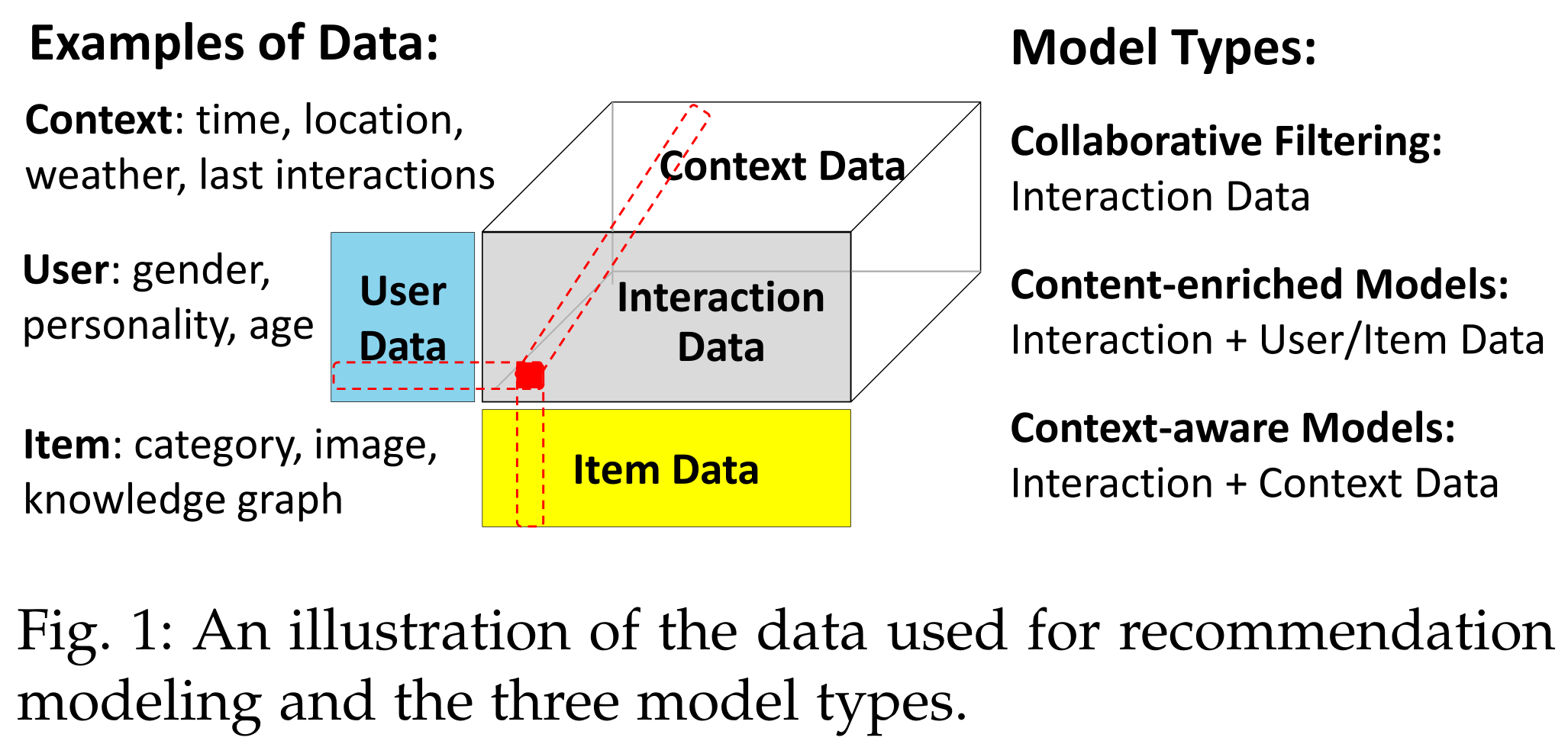
- (1) collaborative filtering, which leverages the key source of user-item interaction data; (协同过滤,利用用户项目交互数据的关键来源;)
- (2) content enriched recommendation, which additionally utilizes the side information associated with users and items, like user profile and item knowledge graph; and (内容丰富的推荐,它还利用了与用户和项目相关的辅助信息,如用户配置文件和项目知识图;和)
- (3) temporal/sequential recommendation, which accounts for the contextual information associated with an interaction, such as time, location, and the past interactions. After reviewing representative work for each type, we finally discuss some promising directions in this field (时间/顺序建议,用于说明与交互相关的上下文信息,例如时间、位置和过去的交互。在回顾了每种类型的代表性工作之后,我们最后讨论了该领域一些有前途的方向)
1 Intruduction
1.1 Differences with Existing Surveys.
1.2 How Do We Collect the Papers?
1.3 Scope and Organization of This Survey
2 COLLABORATIVE FILTERING MODELS
2.1 Representation Learning
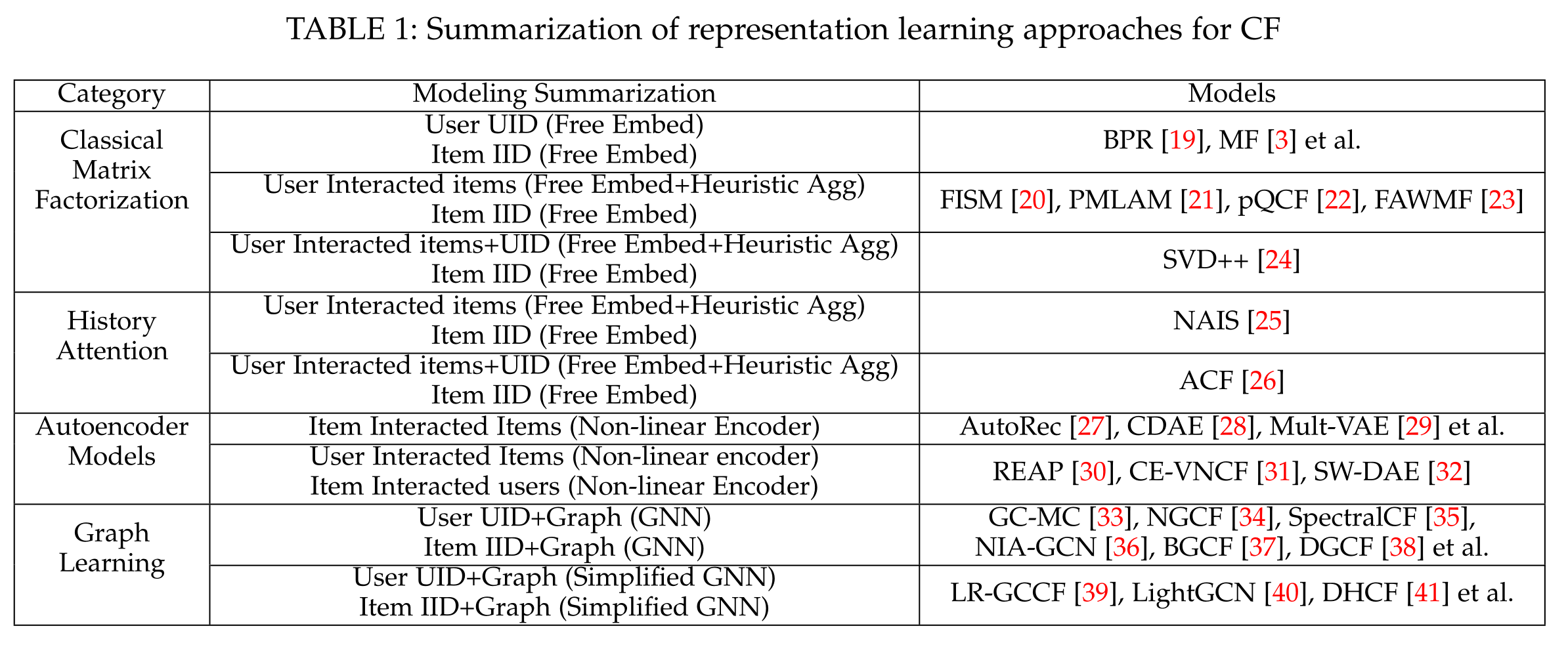
2.1.1 History Behavior Attention Aggregation Models
2.1.2 Autoencoder based Representation Learning
2.1.3 Graph based Representation Learning
2.2 Interaction Modeling
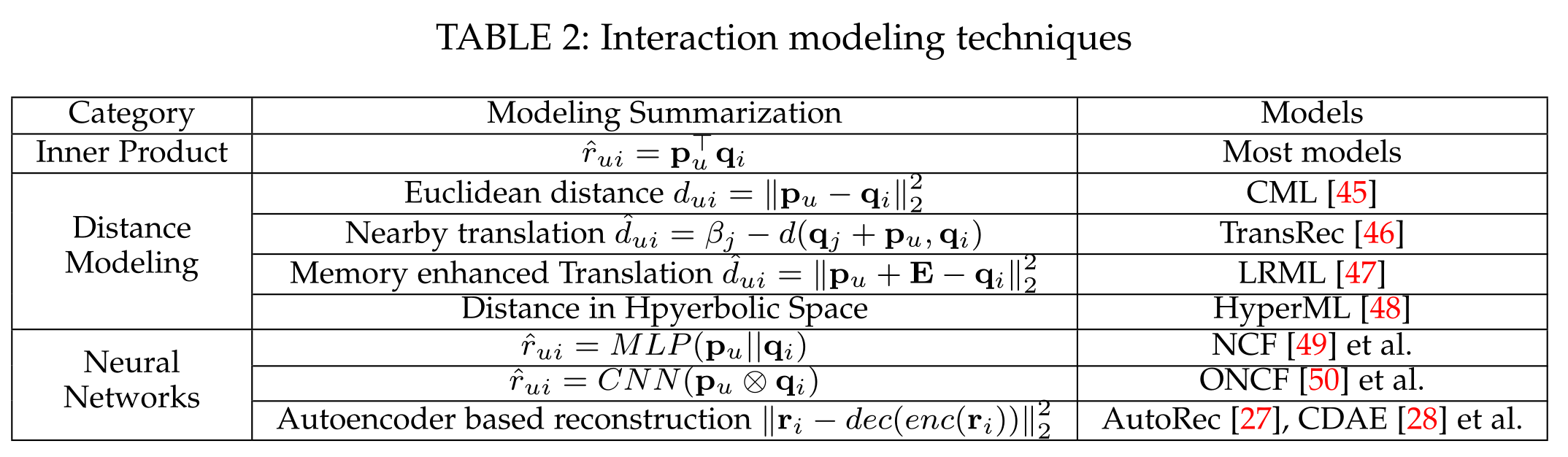
2.2.1 Distance based Metrics
2.2.2 Neural Network based Metrics
3 CONTENT-ENRICHED RECOMMENDATION
3.1 Modeling General Feature Interactions
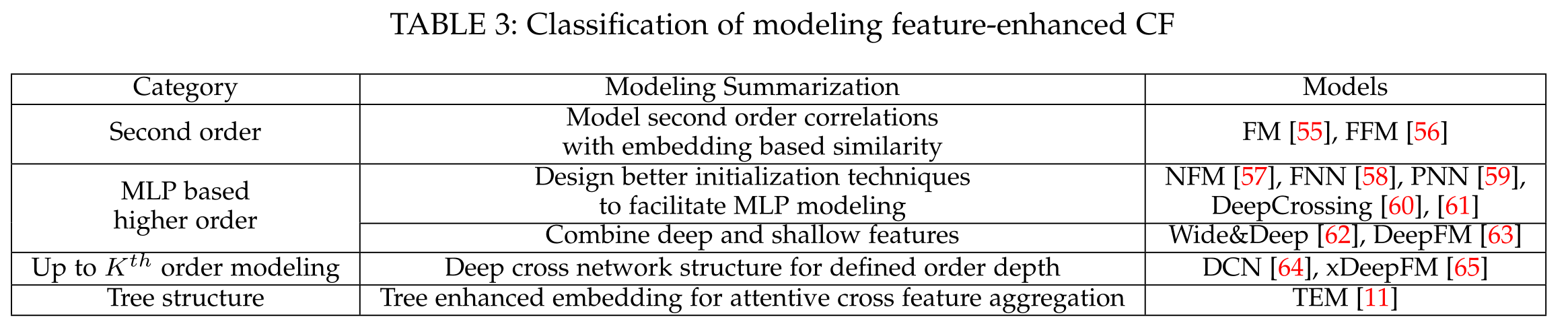
MLP based High Order Modeling.
Cross Network for K-th Order Modeling
T ree Enhanced Modeling
3.2 Modeling Textual Content
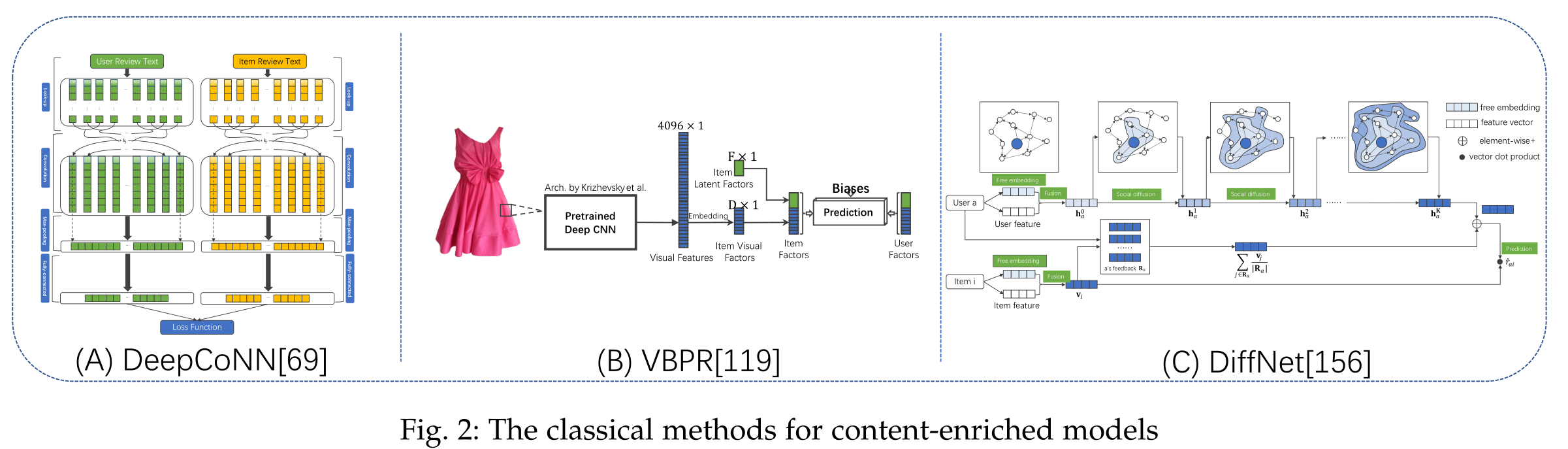
Autoencoder based Models
Leveraging Word Embeddings for Recommendation
Attention Models
T ext Explanations for Recommendation
3.3 Modeling Multimedia Content
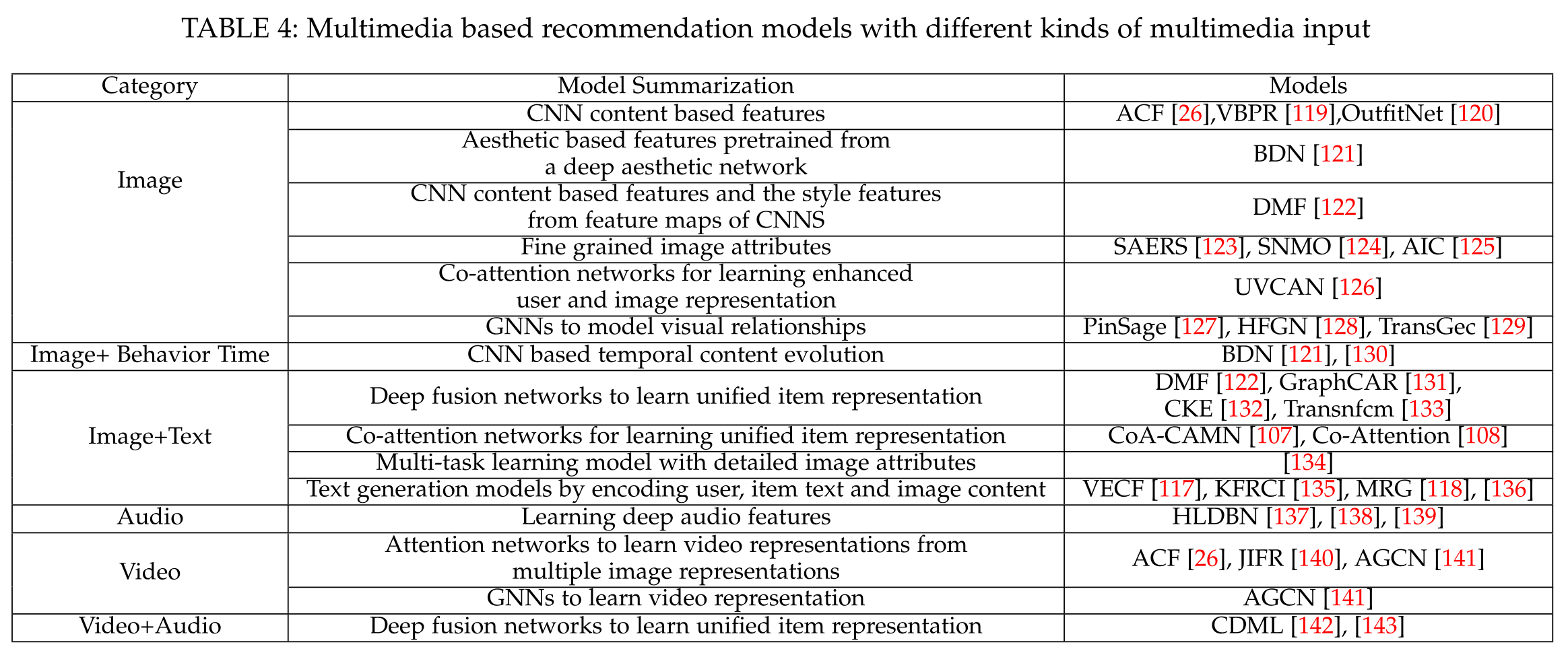
3.3.1 Modeling Image Information
Image Content based Models
Hybrid Recommendation Models
3.3.2 Video Recommendation
3.4 Modeling Social Network
Social Correlation Enhancement and Regularization.
GNN Based Approaches
3.5 Modeling Knowledge Graph
Path Based Methods
Regularization Based Methods
GNN Based Methods
4 TEMPORAL/SEQUENTIAL MODELS
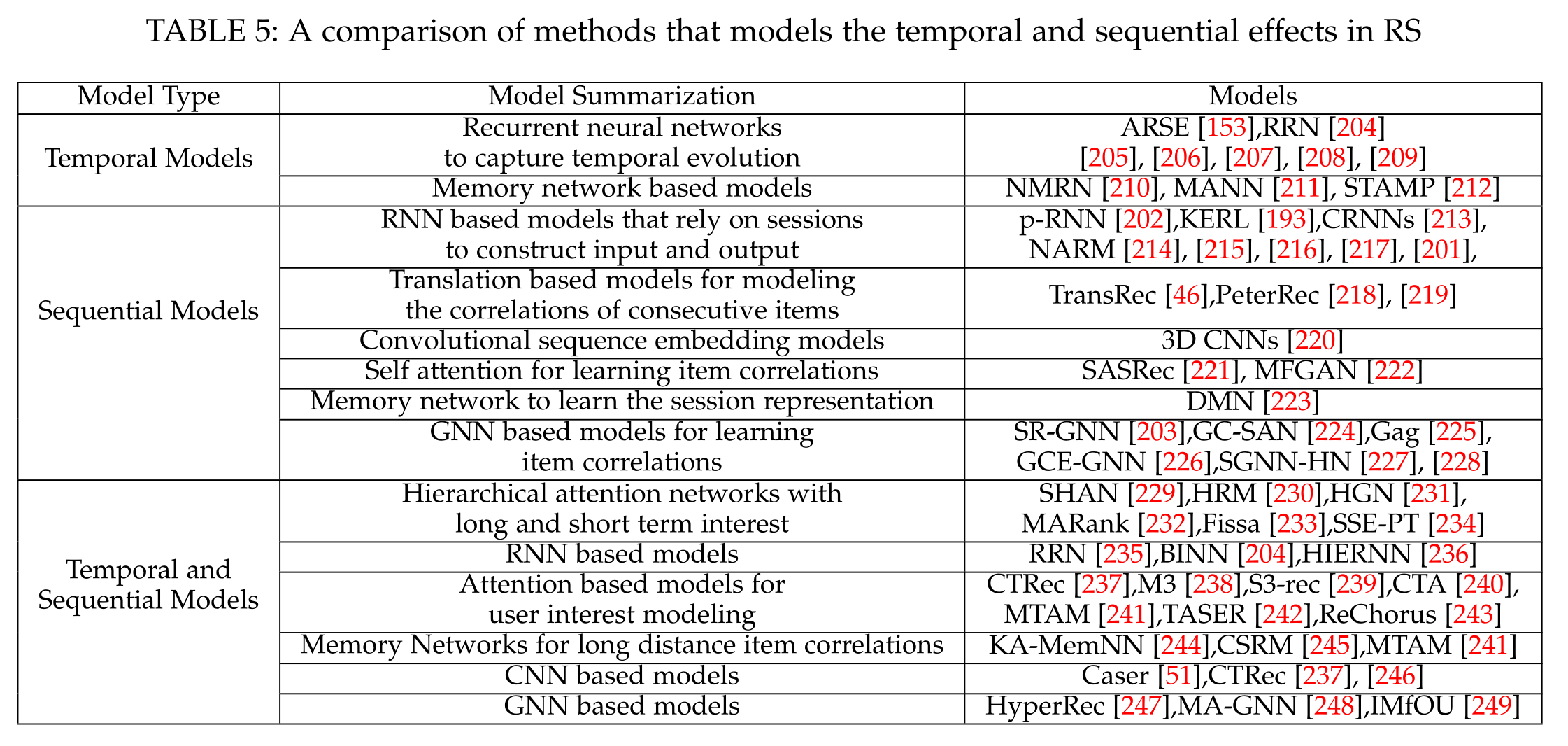
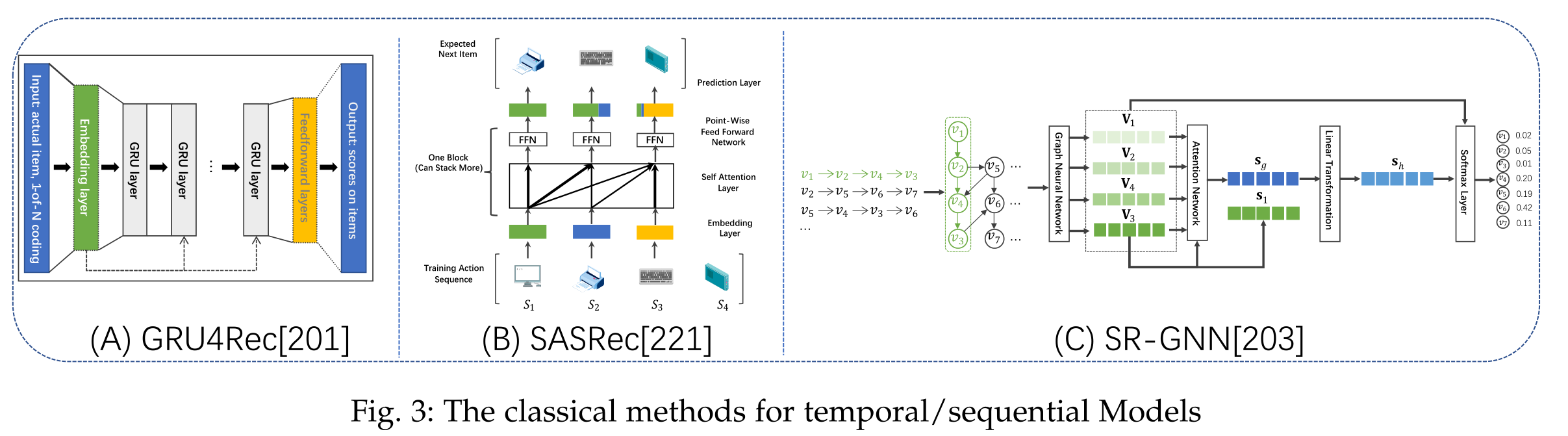
4.1 Temporal based Recommendation
4.2 Session based Recommendation
4.3 Temporal and Session based Recommendation
5 DISCUSSION AND FUTURE DIRECTIONS
Basis: Recommendation Benchmarking
Models: Graph Reasoning & Self-supervised Learning
Evaluation: Multi-Objective Goals for Social Good Recommendation.
Discussion: Reproducibility
6 CONCLUSION
版权声明:本文为weixin_46645827原创文章,遵循CC 4.0 BY-SA版权协议,转载请附上原文出处链接和本声明。