队列
数组模拟队列
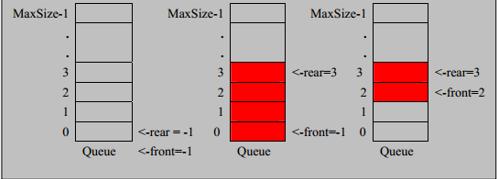
队列本身是有序列表, 若使用数组的结构 来存储队列的数据, 则队列数组的声明如下图: 其中 maxSize是该队列的最大容量
因为队列的输出, 输入分别从前后端来处理,因此需要两个变量front 及rear分别记录队列前后端的下标, front会随着数据输出而改变, 而rear则是随着数据输入而改变
当我们将数组存入队列时称为"addQueue", addQueue的处理需要有两个步骤:
代码实现:
package hello;

import java.util.Scanner;

public class Hello {
    public static void main(String[] args) {
        // 测试
        // 创建一个队列
        arrayQueue queue = new arrayQueue(3);
        char key = ' '; // 接收用户输入
        Scanner sc = new Scanner(System.in); //
        boolean loop = true;
        //输出一个菜单
        while(loop) {
            System.out.println("s(show): 显示队列");
            System.out.println("e(exit): 退出程序");
            System.out.println("a(add): 添加数据到队列");
            System.out.println("g(get): 从队列取出数据");
            System.out.println("h(head): 查看队列头的的数据");
            key = sc.next().charAt(0); // 接收一个字符
            switch (key) {
                case 's':
                    queue.showQueue();
                    break;
                case 'a':
                    System.out.println("输入一个数");
                    int value = sc.nextInt();
                    queue.addQueue(value);
                    break;
                case 'g':
                    try {
                        int res = queue.getQueue();
                        System.out.printf("取出的数据是%d\n", res);
                    } catch(Exception e) {
                        System.out.println(e.getMessage());
                    }
                    break;
                case 'h': //查看队列头的数据
                    try {
                        int res = queue.headQueue();
                        System.out.printf("队列头的数据是%d\n", res);
                    }catch (Exception e) {
                        System.out.println(e.getMessage());
                    }
                    break;
                case 'e': //退出
                    sc.close();
                    loop = false;
                    break;
                default:
                    break;
            }

        }
        System.out.println("程序退出~~");

    }
}

// 使用数组模拟队列 - 编写一个arrayQueue
class arrayQueue {
    private int maxSize; // 表示数组的最大容量
    private int front; // 队列头
    private int rear; // 队列尾
    private int[] arr; // 该数据用于存放数据, 模拟队列

    // 创建队列的构造器
    public arrayQueue(int arrMaxSize) {
        maxSize = arrMaxSize;
        arr = new int[maxSize];
        front = -1; // 指向队列头部, 分析出front 是指向队列头的前一个位置
        rear = -1; // 指向队列尾, 指向队列尾的数据(即就是队列最后一个数据)
    }
    // 判断队列是否满
    public boolean isFull() {
        return rear == maxSize - 1;
    }

    // 判断队列是否为空
    public boolean isEmpty() {
        return rear == front;
    }

    // 添加数据到队列
    public void addQueue(int n) {
        // 判断队列是否满
        if (isFull()) {
            System.out.println("队列满, 不能加入数据");
            return;
        }
        rear++; // 让rear后移
        arr[rear] = n;
    }

    // 获取队列的数据, 出队列
    public int getQueue() {
        // 判断队列是否空
        if (isEmpty()) {
            // 通过抛异常来处理
            throw new RuntimeException("队列空, 不能取数据");
        }
        front++; // front后移
        return arr[front];
    }

    //显示队列的所有数据
    public void showQueue() {
        // 遍历
        if (isEmpty()) {
            System.out.println("队列空的没有数据~~");
            return;
        }
        for (int i = 0; i < arr.length; i++) {
            System.out.printf("arr[%d] = %d\n", i, arr[i]);
        }
    }
    // 显示队列的头数据, 注意不是取出数据
    public int headQueue() {
        // 判断
        if (isEmpty()) {
//            System.out.println("队列空的,没有数据~~");
            throw  new RuntimeException("队列空的没有数据~~");
        }
        return arr[front + 1];
    }
}
问题分析并优化:
思路如下:
数组模拟环形队列
对前面的数组模拟队列的优化,充分利用数组. 因此将数组看做是一个环形的。(通过取模的方式来实现即可)
分析说明:
尾索引的下一个为头索引时表示队列满,即将队列容量空出一个作为约定,这个在做判断队列满的时候需要注意 (rear + 1) % maxSize == front [满]
rear == front [空]
分析示意图:
代码实现:
package DataStructures;

import java.util.Scanner;

public class CircleArrayQueueDemo {
    public static void main(String[] args) {

        System.out.println("测试数组模拟环形队列的案例~~~");
        // 创建一个环形队列
        CircleArray queue = new CircleArray(4);  //设置4, 其队列的有效数据最大是3
        char key = ' '; // 接收用户输入
        Scanner sc = new Scanner(System.in); //
        boolean loop = true;
        //输出一个菜单
        while(loop) {
            System.out.println("s(show): 显示队列");
            System.out.println("e(exit): 退出程序");
            System.out.println("a(add): 添加数据到队列");
            System.out.println("g(get): 从队列取出数据");
            System.out.println("h(head): 查看队列头的的数据");
            key = sc.next().charAt(0); // 接收一个字符
            switch (key) {
                case 's':
                    queue.showQueue();
                    break;
                case 'a':
                    System.out.println("输入一个数");
                    int value = sc.nextInt();
                    queue.addQueue(value);
                    break;
                case 'g':
                    try {
                        int res = queue.getQueue();
                        System.out.printf("取出的数据是%d\n", res);
                    } catch(Exception e) {
                        System.out.println(e.getMessage());
                    }
                    break;
                case 'h': //查看队列头的数据
                    try {
                        int res = queue.headQueue();
                        System.out.printf("队列头的数据是%d\n", res);
                    }catch (Exception e) {
                        System.out.println(e.getMessage());
                    }
                    break;
                case 'e': //退出
                    sc.close();
                    loop = false;
                    break;
                default:
                    break;
            }
        }
        System.out.println("程序退出~~");
    }
}
class CircleArray {
    private int maxSize; // 表示数组的最大容量
//    front 变量的含义做一个调整: front 就指向队列的第一个元素, 也就是说arr[front]就是队列的第一个元素,  front初始值= 0
    private int front; // 队列头
//    rear变量的含义做一个调整: rear指向队列的最后一个位置, 因为希望空出一个空间做为约定. rear初始值 = 0
    private int rear; // 队列尾
    private int[] arr; // 该数据用于存放数据, 模拟队列

    public CircleArray(int arrMaxSize) {
        maxSize = arrMaxSize;
        arr = new int[maxSize];
    }

    // 判断队列是否满
    public boolean isFull() {
        return (rear + 1) % maxSize == front;
    }

    // 判断队列是否为空
    public boolean isEmpty() {
        return rear == front;
    }

    // 添加数据到队列
    public void addQueue(int n) {
        // 判断队列是否满
        if (isFull()) {
            System.out.println("队列满, 不能加入数据");
            return;
        }
        arr[rear] = n; // 直接将数据加入
         // 让rear后移 这里必须考虑取模
        rear = (rear + 1) % maxSize;
    }

    // 获取队列的数据, 出队列
    public int getQueue() {
        // 判断队列是否空
        if (isEmpty()) {
            // 通过抛异常来处理
            throw new RuntimeException("队列空, 不能取数据");
        }
//        这里需要分析出front 是指向队列的第一个元素
//        1. 先把front对应的值保留到一个临时变量
//        2. 将front后移 考虑取模
//        3. 将临时保存的变量返回
        int value = arr[front];
        front = (front + 1) % maxSize;
        return value;
    }
    //显示队列的所有数据
    public void showQueue() {
        // 遍历
        if (isEmpty()) {
            System.out.println("队列空的没有数据~~");
            return;
        }
        // 从front开始遍历 遍历多少个元素
        // 动脑筋
        for (int i = 0; i < front + size(); i++) {
            System.out.printf("arr[%d] = %d\n", i % maxSize, arr[i]);
        }
    }

    // 求出当前队列有效数据的个数
    public int size() {
        return (rear + 1) % maxSize;
    }

    // 显示队列的头数据, 注意不是取出数据
    public int headQueue() {
        // 判断
        if (isEmpty()) {
//            System.out.println("队列空的,没有数据~~");
            throw  new RuntimeException("队列空的没有数据~~");
        }
        return arr[front];
    }
}
版权声明:本文为qq_52330730原创文章,遵循CC 4.0 BY-SA版权协议,转载请附上原文出处链接和本声明。