1.12、Mybatis的多表操作
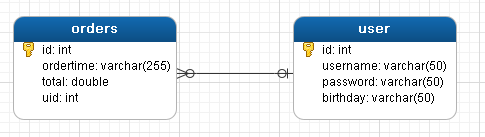
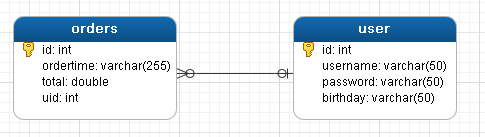
一对一查询模型:
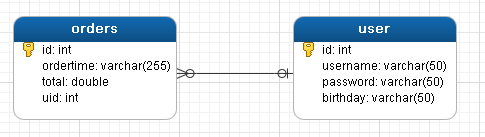
用户表和订单表的关系为,一个用户有多个订单,一个订单只从属于一个用户。
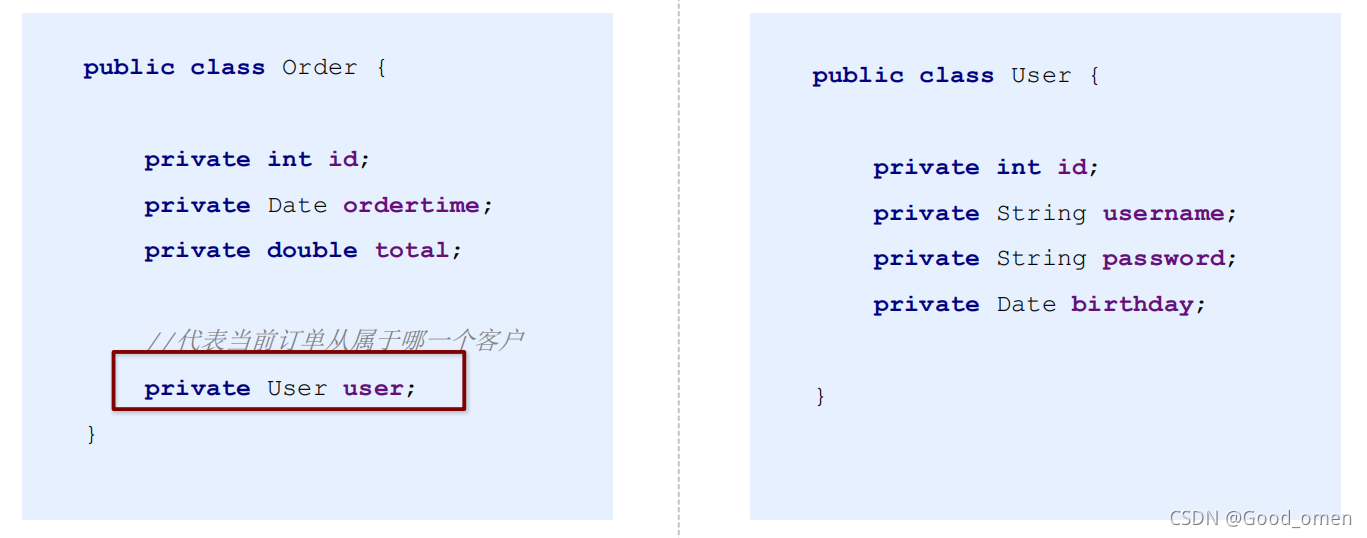
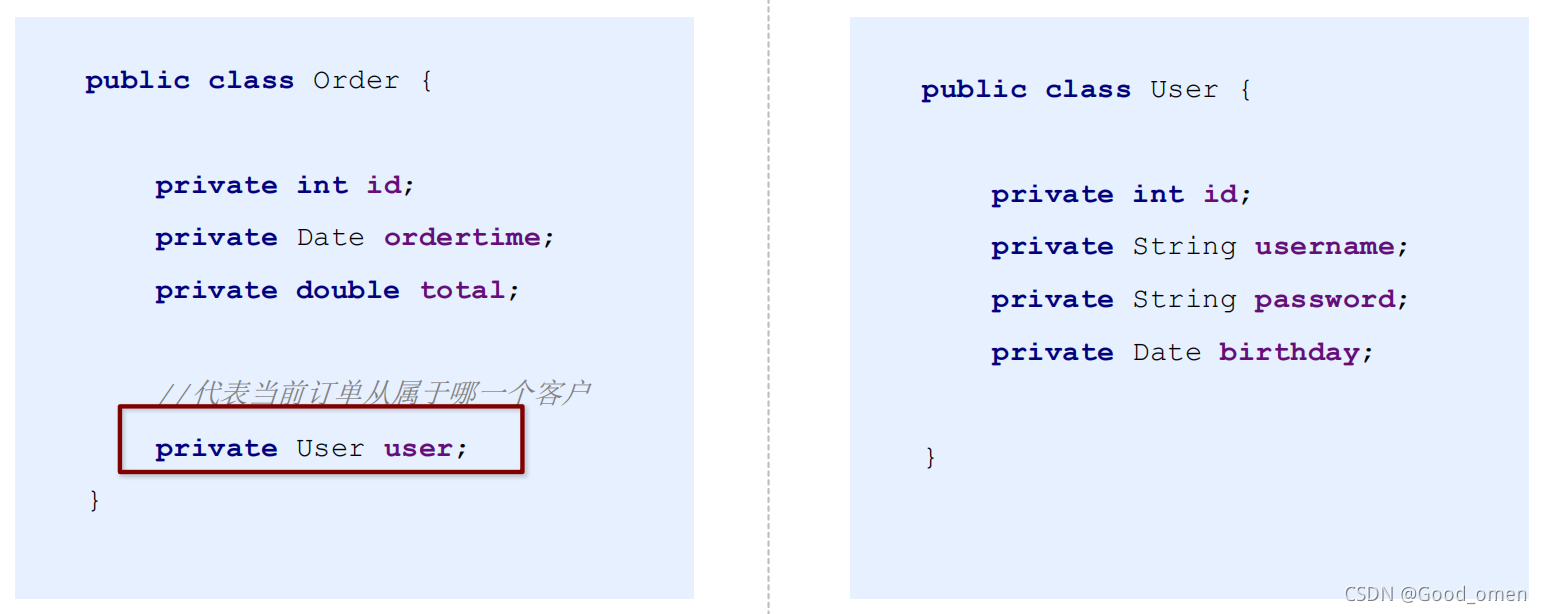
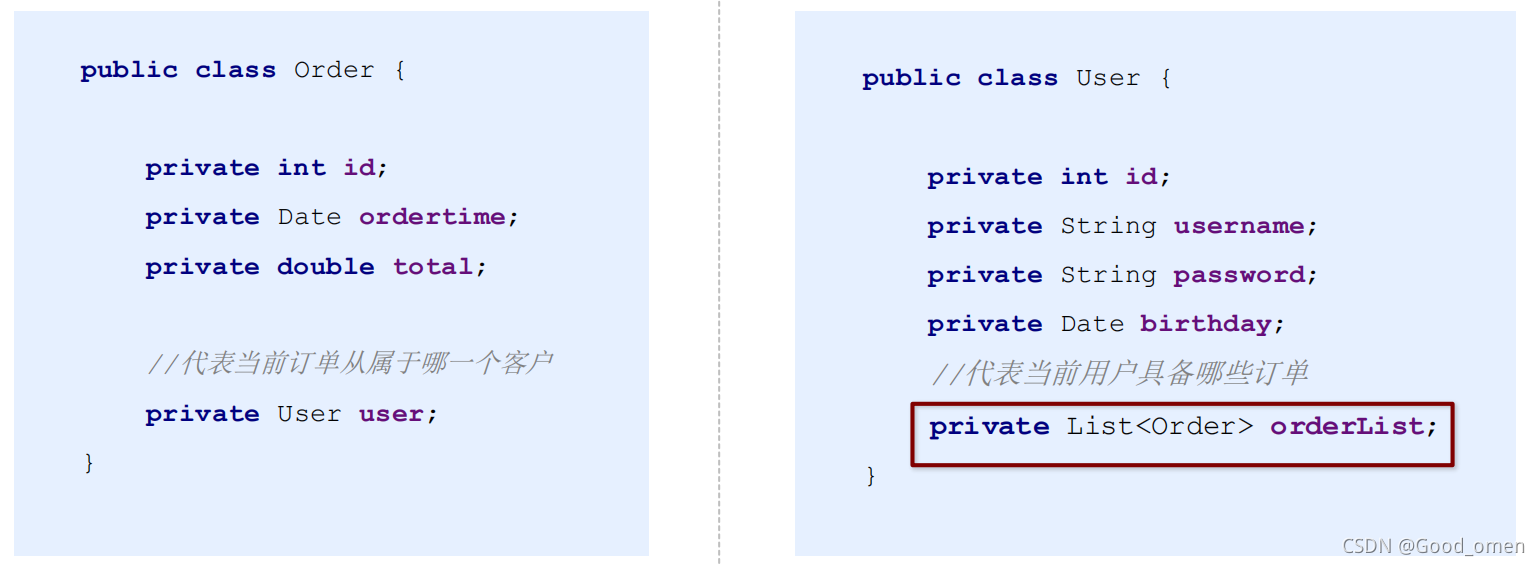
一对一查询的需求:查询一个订单,与此同时查询出该订单所属的用户
创建Order和User实体
public interface OrderMapper {

	List<Order> findAll();
}
OrderMapper.xml配置方法如下:
方法一:
<mapper namespace="com.spongebob.mapper.OrderMapper">
    <resultMap id="orderMap" type="com.spongebob.pojo.Order">
        <result column="uid" property="user.id"></result>
        <result column="username" property="user.username"></result>
        <result column="password" property="user.password"></result>
        <result column="birthday" property="user.birthday"></result>
    </resultMap>
    <select id="findAll" resultMap="orderMap">
		select * from orders o,user u where o.uid=u.id
	</select>
</mapper>
方法二:
<resultMap id="orderMap" type="com.spongebob.pojo.Order">
    <result property="id" column="id"></result>
    <result property="ordertime" column="ordertime"></result>
    <result property="total" column="total"></result>
    <association property="user" javaType="com.spongebob.pojo.User">
        <result column="uid" property="id"></result>
        <result column="username" property="username"></result>
        <result column="password" property="password"></result>
        <result column="birthday" property="birthday"></result>
</association>
</resultMap>
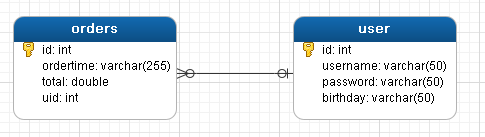
一对多查询模型
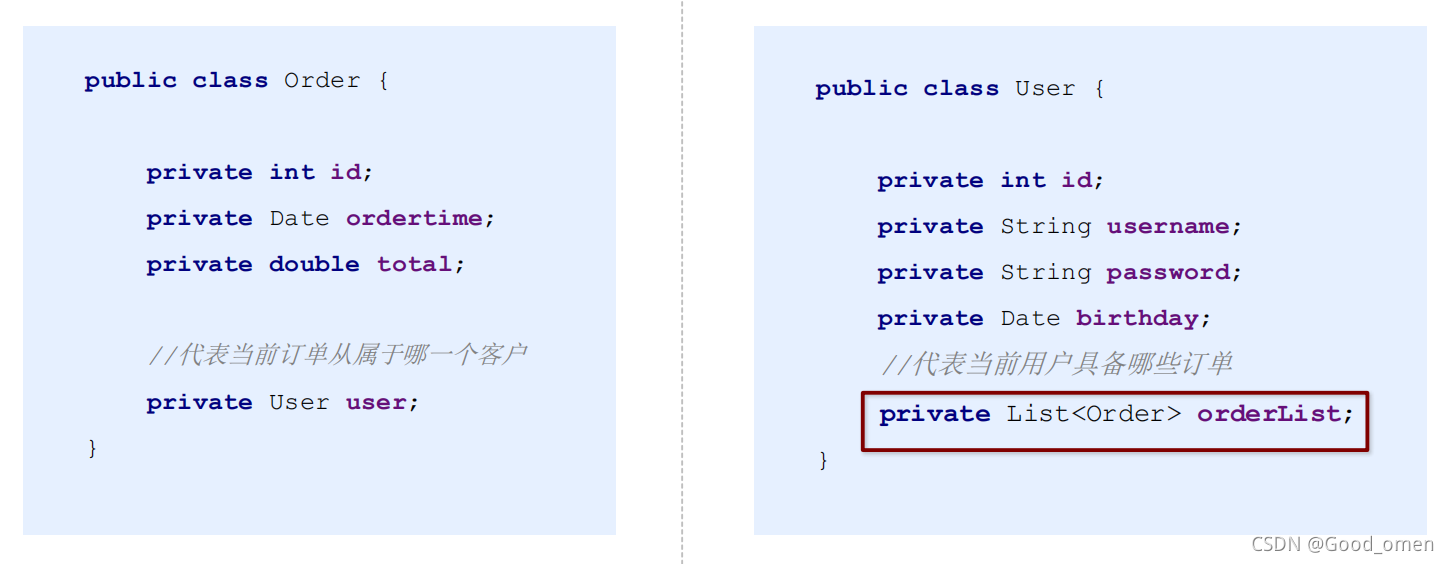
用户表和订单表的关系为,一个用户有多个订单,一个订单只从属于一个用户
一对多查询的需求:查询一个用户,与此同时查询出该用户具有的订单
public interface UserMapper {

    List<User> findAll();
}
OrderMapper.xml配置方法如下:
<mapper namespace="com.spongebob.pojo.UserMapper">
    <resultMap id="userMap" type="com.spongebob.pojo.User">
        <result column="id" property="id"></result>
        <result column="username" property="username"></result>
        <result column="password" property="password"></result>
        <result column="birthday" property="birthday"></result>
        <collection property="orderList" ofType="com.spongebob.pojo.Order"> 			<result column="oid" property="id"></result>
            <result column="ordertime" property="ordertime"></result>
            <result column="total" property="total"></result>
		</collection>
	</resultMap>
    <select id="findAll" resultMap="userMap">
		select *,o.id oid from user u left join orders o on u.id=o.uid
	</select>
</mapper>
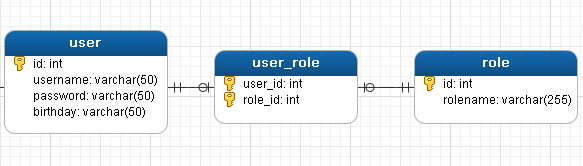
多对多查询模型
用户表和角色表的关系为,一个用户有多个角色,一个角色被多个用户使用
多对多查询的需求:查询用户同时查询出该用户的所有角色
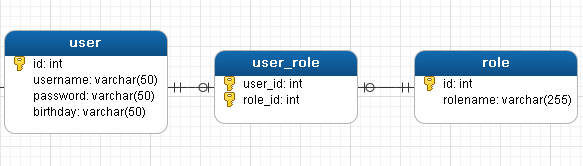
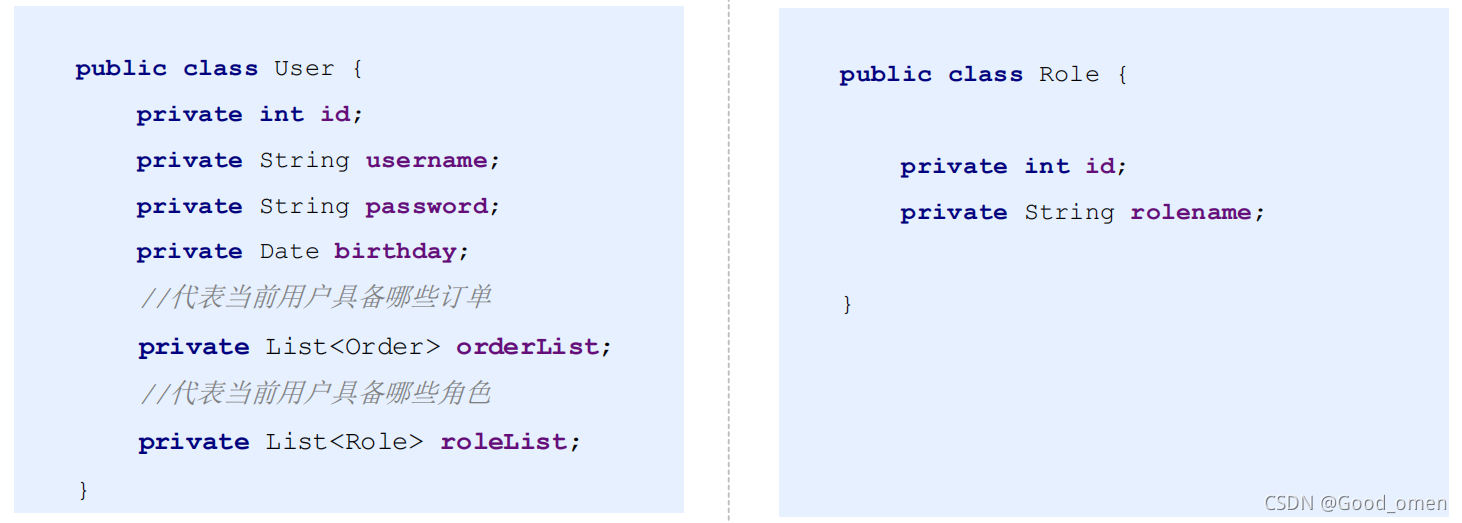
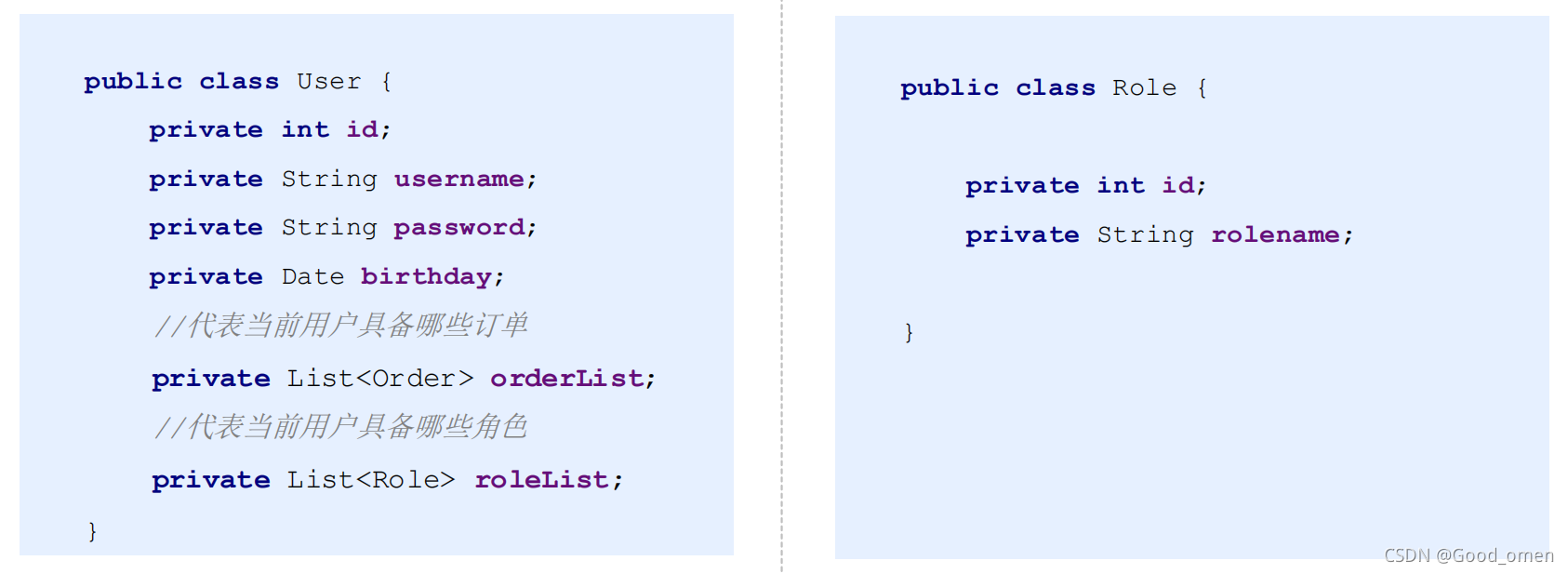
创建Role实体,修改User实体
public interface UserMapper {

    List<User> findAll();
    List<User> findAllUserAndRole();
}
<resultMap id="userRoleMap" type="com.spongebob.pojo.User">
    <result column="id" property="id"></result>
    <result column="username" property="username"></result>
    <result column="password" property="password"></result>
    <result column="birthday" property="birthday"></result>
    <collection property="roleList" ofType="com.spongebob.pojo.Role">
        <result column="rid" property="id"></result>
        <result column="rolename" property="rolename"></result>
    </collection>
</resultMap>

<select id="findAllUserAndRole" resultMap="userRoleMap">
	select u.*,r.*,r.id rid from user u left join user_role ur on
u.id=ur.user_id inner join role r on ur.role_id=r.id
</select>
知识小结:
MyBatis多表配置方式:
一对一配置:使用<resultMap>做配置
一对多配置:使用<resultMap>+<collection>做配置
多对多配置:使用<resultMap>+<collection>做配置
1.13、Mybatis注解开发
1.13.1、 MyBatis的常用注解
@Insert:实现新增
@Update:实现更新
@Delete:实现删除
@Select:实现查询
@Result:实现结果集封装
@Results:可以与@Result 一起使用,封装多个结果集
@One:实现一对一结果集封装
@Many:实现一对多结果集封装
1.13.2、 MyBatis的增删改查
public interface UserMapper {

    @Insert("insert into user values(#{id},#{username},#{password},#{birthday})")
    public void save(User user);

    @Update("update user set username=#{username},password=#{password} where id=#{id}")
    public void update(User user);

    @Delete("delete from user where id=#{id}")
    public void delete(int id);

    @Select("select * from user")
    public List<User> findAll();

    @Select("select * from user where id = #{id}")
    public User findById(int id);

}
<!--加载映射关系-->
<!--扫描使用注解的类   或者 扫描注解类所在的包-->

<mappers>
    <!--<mapper class="com.spongebob.mapper.UserMapper"></mapper>-->
	<package name="com.spongebob.mapper"></package>
</mappers>
注意:在xml文件中尽量不要使用单闭合标签,每次报错都是使用了单闭合,导致浪费大量时间。
测试:
@org.junit.Test
public void test3() throws IOException {
    User user = new User(3,"lgb","1234",null);
    InputStream resourceAsStream = Resources.getResourceAsStream("sqlMapConfig.xml");
    SqlSessionFactory build = new SqlSessionFactoryBuilder().build(resourceAsStream);
    SqlSession sqlSession = build.openSession(true);
    UserMapper mapper3 = sqlSession.getMapper(UserMapper.class);
    mapper3.save(user);

    sqlSession.commit();
    sqlSession.close();
}
@org.junit.Test
public void testUpdate() throws IOException {
    User user = new User(5,"tutu@qq.com","23456");
    InputStream resourceAsStream = Resources.getResourceAsStream("SqlMapConfig.xml");
    SqlSessionFactory sqlSessionFactory = new SqlSessionFactoryBuilder().build(resourceAsStream);
    SqlSession sqlSession = sqlSessionFactory.openSession();
    UserMapper mapper1 = sqlSession.getMapper(UserMapper.class);
    mapper1.update(user);
    sqlSession.commit();
    sqlSession.close();

}
@org.junit.Test
public void testDelete() throws IOException {
    InputStream resourceAsStream = Resources.getResourceAsStream("SqlMapConfig.xml");
    SqlSessionFactory sqlSessionFactory = new SqlSessionFactoryBuilder().build(resourceAsStream);
    SqlSession sqlSession = sqlSessionFactory.openSession();
    UserMapper mapper2 = sqlSession.getMapper(UserMapper.class);
    mapper2.delete(3);
    sqlSession.commit();
    sqlSession.close();

}
1.13.3、MyBatis的注解实现复杂映射开发
实现复杂关系映射之前我们可以在映射文件中通过配置<resultMap>来实现,使用注解开发后,我们可以使用@Results注解、@Result注解、@One注解、@Many注解组合完成复杂关系的配置。
| 注解 | 说明 |
|---|---|
| @Results | 代替的是标签<resultMap>该注解中可以使用单个@Result注解,也可以使用@Result集合。使用格式:@Results({@Result(),@Result()})或@Results(@Result()) |
| @Result | 代替了<id>标签和<result>标签;@Result中属性介绍:column:数据库的列名;property:需要装配的属性名;one:需要使用的@One 注解(@Result(one=@One)()));many:需要使用的@Many 注解(@Result(many=@many)())) |
| @One(一对一) | 代替了<assocation>标签,是多表查询的关键,在注解中用来指定子查询返回单一对象。@One注解属性介绍:select指定用来多表查询;使用格式@Result(column="",property="",one=@One(select="")) |
| @Many(多对一) | 代替了<collection>标签, 是是多表查询的关键,在注解中用来指定子查询返回对象集合。使用格式:@Result(property="",column="",many=@Many(select="")) |
一对一查询模型:
public interface UserMapper {

    @Select("select * from user where id = #{id}")
    public User findById(int id);
}
public interface OrderMapper {
    @Select("select * from orders")
    @Results({
            @Result(id=true,property = "id",column = "id"),
            @Result(property = "ordertime",column = "ordertime"),
            @Result(property = "total",column = "total"),
            @Result(property = "user",column = "uid", javaType = User.class,
                    one = @One(select ="com.spongebob.mapper.UserMapper.findById"))
    })
    List<Order> findAll();
}
一对多查询模型:
public interface OrderMapper {

    @Select("select * from orders where uid=#{uid}")
    List<Order> findByUid(int uid);
}
public interface UserMapper {

    @Select("select * from user")
    @Results({
            @Result(id = true,property = "id",column = "id"),
            @Result(property = "username",column = "username"),
            @Result(property = "password",column = "password"),
            @Result(property = "birthday",column = "birthday"),
            @Result(property = "orderList",column = "id", javaType = List.class,
                    many = @Many(select = "com.spongebob.mapper.OrderMapper.findByUid"))
        })
    List<User> findAllUserAndOrder();
}
多对多查询模型:
public interface RoleMapper {

    @Select("select * from role r user_role ur where r.id=ur.role_id and ur.user_id=#{uid}")
    List<Role> findByUid(int uid);
}
public interface UserMapper {

    @Select("select * from user")
    @Results({
            @Result(id = true,property = "id",column = "id"),
            @Result(property = "username",column = "username"),
            @Result(property = "password",column = "password"),
            @Result(property = "birthday",column = "birthday"),
            @Result(property = "roleList",column = "id", javaType = List.class,
                    many = @Many(select = "com.spongebob.mapper.RoleMapper.findByUid"))
    })
    List<User> findAllUserAndRole();

}
版权声明:本文为Good_omen原创文章,遵循CC 4.0 BY-SA版权协议,转载请附上原文出处链接和本声明。