1.若依架构自带的数据权限为以下几种:
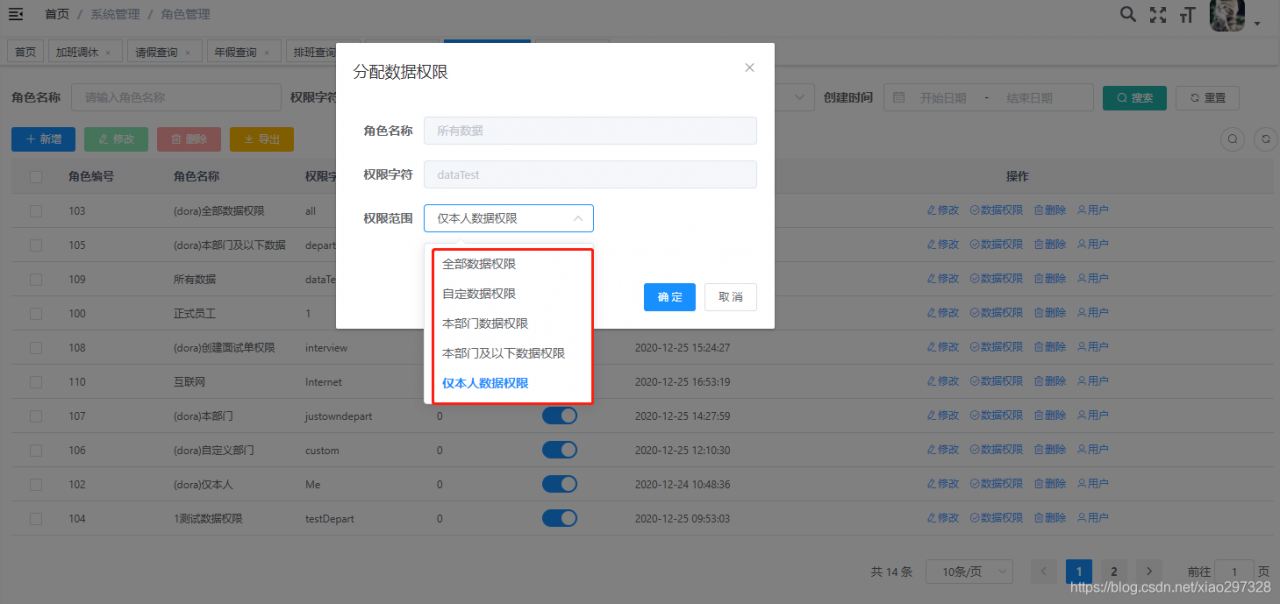
2.再功能模块给用户角色配置对应的数据权限如何让它生效
1)查看自己若依架构的
com.ruoyi.framework.aspectj.
DataScopeAspect类
/**
 * 数据过滤处理
 *
 * @author ruoyi
 */
@Aspect
@Component
public class DataScopeAspect
{
    /**
     * 全部数据权限
     */
    public static final String DATA_SCOPE_ALL = "1";

    /**
     * 自定数据权限
     */
    public static final String DATA_SCOPE_CUSTOM = "2";

    /**
     * 部门数据权限
     */
    public static final String DATA_SCOPE_DEPT = "3";

    /**
     * 部门及以下数据权限
     */
    public static final String DATA_SCOPE_DEPT_AND_CHILD = "4";

    /**
     * 仅本人数据权限
     */
    public static final String DATA_SCOPE_SELF = "5";

    /**
     * 数据权限过滤关键字
     */
    public static final String DATA_SCOPE = "dataScope";

    // 配置织入点
    @Pointcut("@annotation(com.ruoyi.common.annotation.DataScope)")
    public void dataScopePointCut()
    {
    }

    @Before("dataScopePointCut()")
    public void doBefore(JoinPoint point) throws Throwable
    {
        handleDataScope(point);
    }

    protected void handleDataScope(final JoinPoint joinPoint)
    {
        // 获得注解
        DataScope controllerDataScope = getAnnotationLog(joinPoint);
        if (controllerDataScope == null)
        {
            return;
        }
        // 获取当前的用户
        LoginUser loginUser = SpringUtils.getBean(TokenService.class).getLoginUser(ServletUtils.getRequest());
        if (StringUtils.isNotNull(loginUser))
        {
            SysUser currentUser = loginUser.getUser();
            // 如果是超级管理员,则不过滤数据
            if (StringUtils.isNotNull(currentUser) && !currentUser.isAdmin())
            {
                dataScopeFilter(joinPoint, currentUser, controllerDataScope.deptAlias(),
                        controllerDataScope.userAlias());
            }
        }
    }

    /**
     * 数据范围过滤
     *
     * @param joinPoint 切点
     * @param user 用户
     * @param userAlias 别名
     */
    public static void dataScopeFilter(JoinPoint joinPoint, SysUser user, String deptAlias, String userAlias)
    {
        StringBuilder sqlString = new StringBuilder();

        for (SysRole role : user.getRoles())
        {
            String dataScope = role.getDataScope();
            if (DATA_SCOPE_ALL.equals(dataScope))
            {
                sqlString = new StringBuilder();
                break;
            }
            else if (DATA_SCOPE_CUSTOM.equals(dataScope))
            {
                sqlString.append(StringUtils.format(
                        " or {}.id IN ( SELECT dept_id FROM sys_role_dept WHERE role_id = {} ) ", deptAlias,
                        role.getRoleId()));
            }
            else if (DATA_SCOPE_DEPT.equals(dataScope))
            {
                sqlString.append(StringUtils.format(" or {}.id = '{}' ", deptAlias, user.getDeptId()));
            }
            else if (DATA_SCOPE_DEPT_AND_CHILD.equals(dataScope))
            {
                sqlString.append(StringUtils.format(
                        /*" and {}.id IN ( SELECT id FROM sys_dept WHERE id = '{}' or find_in_set( '{}' , ancestors ) )",
                        deptAlias, user.getDeptId(), user.getDeptId()));*/
                      " or {}.id IN ( SELECT id FROM sys_dept WHERE id = '{}' or org_code like( SELECT CONCAT(org_code,'%') FROM sys_dept WHERE id = '{}' ) )",
                      deptAlias, user.getDeptId(), user.getDeptId()));
            }
            else if (DATA_SCOPE_SELF.equals(dataScope))
            {
                if (StringUtils.isNotBlank(userAlias))
                {
                   if(userAlias.contains(".")){
                      sqlString.append(StringUtils.format(" or {} = '{}' ", userAlias, user.getUserName()));
                   }else{
                      sqlString.append(StringUtils.format(" or {}.id = '{}' ", userAlias, user.getId()));
                   }

                }
                else
                {
                    // 数据权限为仅本人且没有userAlias别名不查询任何数据
                    sqlString.append(" OR 1=0 ");
                }
            }
        }

        if (StringUtils.isNotBlank(sqlString.toString()))
        {
            Object params = joinPoint.getArgs()[0];
            if (StringUtils.isNotNull(params) && params instanceof BaseEntity)
            {
                BaseEntity baseEntity = (BaseEntity) params;
                baseEntity.getParams().put(DATA_SCOPE, " AND (" + sqlString.substring(4) + ")");
            }
        }
    }

    /**
     * 是否存在注解,如果存在就获取
     */
    private DataScope getAnnotationLog(JoinPoint joinPoint)
    {
        Signature signature = joinPoint.getSignature();
        MethodSignature methodSignature = (MethodSignature) signature;
        Method method = methodSignature.getMethod();

        if (method != null)
        {
            return method.getAnnotation(DataScope.class);
        }
        return null;
    }
以上就是其实现原理,如果功能未成功,请仔细查看输出的sql看哪里不对
使用方式:
1.实体类有要当前创建人的用户id和部门id,但是这个不一定,根据你的业务需求进行合理筛选
2.再service实现类的查询方法上面添加
@DataScope(deptAlias = "t",userAlias = "t.create_name")
t就是你功能表的别名
3.再对应的功能查询的sql末尾添加
${params.dataScope}注意:实体类是继承BaseEntity
版权声明:本文为xiao297328原创文章,遵循CC 4.0 BY-SA版权协议,转载请附上原文出处链接和本声明。