spring也支持注解方式实现AOP,相对于配置文件方式,注解配置更加的轻量级,配置、修改更加方便。
1.开启AOP的注解配置方式
2.将定制的类标志为一个切面
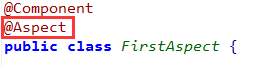
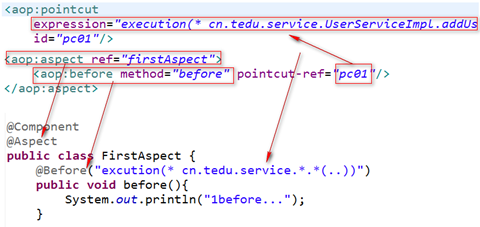
3.配置通知,指定切入点规则
前置通知 @Before
环绕通知 @Around
后置通知 @AfterReturning
异常通知 @AfterThrowing
最终通知 @After
@Before("execution(* cn.tedu.service.*.*(..))")public voidbefore(JoinPoint jp){
Class clz=jp.getTarget().getClass();
Signature signature=jp.getSignature();
String name=signature.getName();
System.out.println("before...["+clz+"]...["+name+"]...");
}
** 通过注解的配置 等价于 配置文件的配置
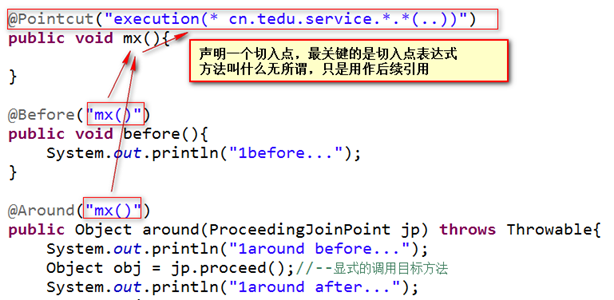
4.重复使用同一个切入点表达式
如果一个切面中多个通知 重复使用同一个切入点表达式,则可以将该切入点表达式单独定义,后续引用。
注意,在当前切面中通过注解定义的切入点只在当前切面中起作用,其他切面看不到。
5.额外配置一个returning属性
在后置通知的注解中,也可以额外配置一个returning属性,来指定一个参数名接受目标方法执行后的返回值。

6.异常通知的注解
在异常通知的注解中,也可以额外配置一个throwing属性,来指定一个参数名接受目标方法抛出的异常对象。

源码
http://www.springframework.org/schema/beans/spring-beans-3.2.xsd
http://www.springframework.org/schema/context
http://www.springframework.org/schema/context/spring-context-3.2.xsd
http://www.springframework.org/schema/aop
http://www.springframework.org/schema/aop/spring-aop-3.2.xsd "
>
packagecn.tedu.service;public interfaceUserService {publicString addUser(String name);public voidupdateUser();public voiddeleteUser();public voidquery();
}
packagecn.tedu.service;importorg.springframework.stereotype.Service;
@Service("userService")public class UserServiceImple implementsUserService {
@OverridepublicString addUser(String name) {//int i = 10/0;
System.out.println("增加用户。。");return "cjj";
}
@Overridepublic voidupdateUser() {
System.out.println("修改用户。。");
}
@Overridepublic voiddeleteUser() {
System.out.println("删除用户。。");
}
@Overridepublic voidquery() {
System.out.println("查询用户。。");
}
}
packagecn.tedu.aop;importorg.aspectj.lang.JoinPoint;importorg.aspectj.lang.ProceedingJoinPoint;importorg.aspectj.lang.Signature;importorg.aspectj.lang.annotation.After;importorg.aspectj.lang.annotation.AfterReturning;importorg.aspectj.lang.annotation.AfterThrowing;importorg.aspectj.lang.annotation.Around;importorg.aspectj.lang.annotation.Aspect;importorg.aspectj.lang.annotation.Before;importorg.aspectj.lang.annotation.Pointcut;importorg.springframework.stereotype.Component;
@Component
@Aspectpublic classFirstAspect {
@Pointcut("execution(* cn.tedu.service.*.*(..))")public voidms(){
}
@Before("ms()")public voidbefore(JoinPoint jp){
Class clz=jp.getTarget().getClass();
Signature signature=jp.getSignature();
String name=signature.getName();
System.out.println("before...["+clz+"]...["+name+"]...");
}
@Around("ms()")public Object around(ProceedingJoinPoint jp) throwsThrowable{
System.out.println("1around before...");
Object obj= jp.proceed();//--显式的调用目标方法
System.out.println("1around after...");returnobj;
}
@AfterReturning(value="ms()",returning="msg")public voidafterReturn(String msg){
System.out.println("1 -- afterReturn..." +msg);
}
@AfterThrowing(value="ms()",throwing="e")public voidaftrThrow(Throwable e){
System.out.println("1 -- afterThrow..." +e.getMessage());
}
@After("ms()")public voidafter(){
System.out.println("1 -- after..");
}
}
packagecn.tedu.test;importorg.junit.Test;importorg.springframework.context.ApplicationContext;importorg.springframework.context.support.ClassPathXmlApplicationContext;importcn.tedu.service.UserService;public classAOPTest {
@Testpublic voidtest01(){
ApplicationContext context= new ClassPathXmlApplicationContext("applicationContext.xml");
UserService userService= (UserService) context.getBean("userService");
userService.addUser("cjj"); //一个连接点
}
}