Internet Protocol or IP is designed to create a worldwide network to connect every computer to each other. OSI reference model creates a model where different protocols and networks can be defined and IP is used for the Network layer. There are two main versions of the IP protocol named IPv4 and IPv6. We will compare these IPv4 and IPv6 in this tutorial in detail.
Internet协议或IP旨在创建一个全球网络,以将每台计算机彼此连接。 OSI参考模型创建一个模型,可以在其中定义不同的协议和网络,并且IP用于Network层。 IP协议有两个主要版本,分别称为IPv4和IPv6 。 我们将在本教程中详细比较这些IPv4和IPv6。
Internet协议v4或IPv4 (Internet Protocol v4 or IPv4)
Internet Protocol version 4 or IPv4 is created to connect multiple networks and hosts together in a standard way. IPv4 is generally named IP because of its popularity and the rare usage of the IPv6. IPv4 is standardized with the RFC 791 in 1981. The main idea behind the IPv4 was creating a packet-switched network with consistent addressing. IP addressed are used to address and identify the hosts and networks. We use IP addresses like 192.168.1.1, 8.8.8.8 to access remote hosts and services like modem interface, Google DNS, etc.
创建Internet协议版本4或IPv4以标准方式将多个网络和主机连接在一起。 由于IPv4的流行程度和IPv6的罕见用法,其通常被称为IP 。 IPv4在1981年通过RFC 791进行了标准化。IPv4的主要思想是创建一个具有一致地址的数据包交换网络。 IP寻址用于寻址和识别主机和网络。 我们使用IP地址像192.168.1.1 , 8.8.8.8访问远程主机和服务,如调制解调器接口,谷歌DNS等。
IPv4 uses 32 bit for address space. With 32 bit 4.3 billion addresses can be defined which seem very high but in practice very little. Example IPv4 address can be like below.
IPv4使用32位作为地址空间。 通过32位,可以定义43亿个地址,这看起来很高,但实际上很少。 IPv4地址示例如下所示。
192.168.1.1
Internet协议v6或IPv6 (Internet Protocol v6 or IPv6)
IPv4 was so popular which resulted on the internet. The world is connected via the internet by using IPv4. IPv4 uses the IP address to address every host and network on the internet. With the popularity of the internet, all the IPv4 IP addresses will be consumed completely. Internet requires new IP address where it needs more address space. IPv6 mainly designed to extend the IPv4 from different points like performance, IP address count. IPv6 is standards are defined with a lot of different RFC’s. But the first RFC’s are published in 1995 with number 1809, 1881, 1883, etc.
IPv4如此流行,从而在互联网上流行。 使用IPv4通过Internet连接世界。 IPv4使用IP地址寻址Internet上的每个主机和网络。 随着Internet的普及,所有IPv4 IP地址将被完全消耗掉。 Internet需要更多的地址空间,因此需要新的IP地址。 IPv6主要用于从性能,IP地址数量等不同方面扩展IPv4。 IPv6是由许多不同的RFC定义的标准。 但是第一个RFC于1995年发布,编号为1809、1881、1883等。
IPv6 uses 128 bit for addressing. With the 128 bit, 3.4×10^38 addresses can be specified. This address count is enough for a long time to address everything in the world. Example IPv6 address can be like below.
IPv6使用128位进行寻址。 使用128位,可以指定3.4×10 ^ 38个地址。 此地址数量足以在很长一段时间内解决世界上的所有问题。 IPv6地址示例如下所示。
2001:0db8:85a3:0000:0000:8ade:0370:2335
IPv4和IPv6的相似之处 (Similarities For IPv4 and IPv6)
In this part, we will list the similarities of the IPv4 and IPv6.
在这一部分中,我们将列出IPv4和IPv6的相似之处。
- Both support manual IP assignment.两者都支持手动IP分配。
- Both can provide security features inbuilt or optionally.两者都可以提供内置或可选的安全功能。
- Both have the Packet Header part.两者都有数据包头部分。
- Both can transmit fragmented packets.两者都可以传输分片的数据包。
- Both can have broadcasting, multicasting related features.两者都可以具有广播,多播相关的功能。
IPv4和IPv6的差异 (Differences For IPv4 and IPv6)
Well, there are a lot of differences between IPV4 and IPv6 even IPv6 is the successor of the IPV4. Here we will list the differences IPv4 and IPv6.
好吧,即使IPv6是IPV4的后继产品,IPV4和IPv6也有很多区别。 在这里,我们将列出IPv4和IPv6的区别。
- IPv4 has 32-bit address space where IPv6 has 128-bit address spaceIPv4具有32位地址空间,其中IPv6具有128位地址空间
- IPv4 can provide 4.29×10^9 address where IPv6 can provide 3.4×10^38 addressesIPv4可以提供4.29×10 ^ 9地址,而IPv6可以提供3.4×10 ^ 38地址
- IPv4 supports DHCP Address configuration where IPv6 supports auto and renumbering address configurationIPv4支持DHCP地址配置,其中IPv6支持自动和重编号地址配置
- IPv4 does not provide end to end connection integrity where IPv6 can provide end to end connection integrityIPv4不提供端到端连接完整性,而IPv6可以提供端到端连接完整性
- IPv4 provides optional security features where IPv6 inbuilt IPSEC securityIPv4提供了可选的安全功能,其中IPv6内置了IPSEC安全性
- IPv4 addresses are represented as decimal like 192.168.1.1 where IPv6 addresses represented as hexadecimal like 2001:0db8:85a3:0000:0000:8a2e:0370:7334IPv4地址以192.168.1.1之类的十进制表示,而IPv6地址以2001:0db8:85a3:0000:0000:8a2e:0370:7334之类的十六进制表示
- IPv4 packet fragmentation can be done by sender or routers where IPv6 only sender can fragment the IP packetIPv4数据包分段可以由发送方或路由器完成,其中仅IPv6发送方可以对IP数据包进行分段
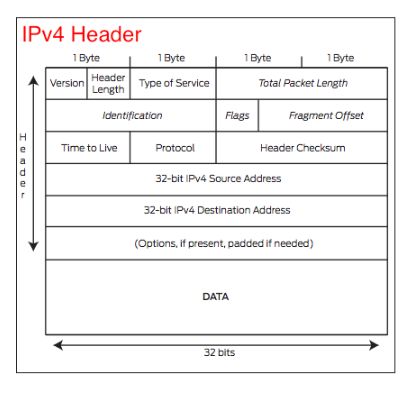
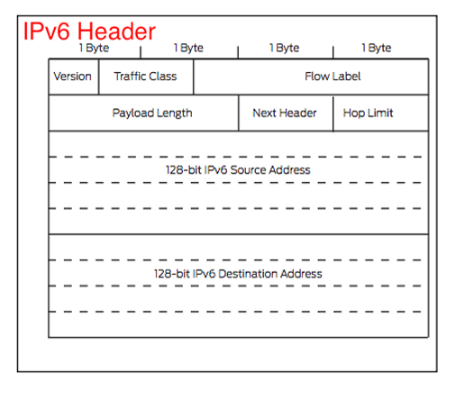
- IPv4 does not have packet identification whee IPv6 has packet identification and flow label can be usedIPv4没有数据包识别符IPv6有数据包识别符和流标签可以使用
- IPv4 has checksum field for packet integrity where IPv6 does not have a checksum fieldIPv4具有校验和字段以确保数据包完整性,其中IPv6没有校验和字段
- IPv4 supports broadcast transmission where IPv6 supports multicast and anycast transmissionIPv4支持广播传输,其中IPv6支持多播和任播传输
- IPv4 has optional IPSEC for authentication and encryption where IPv6 provides built-in authentication and encryptionIPv4具有用于身份验证和加密的可选IPSEC,其中IPv6提供了内置的身份验证和加密
- Ipv4 has 12 Header fields where IPv6 has 8 Header fieldsipv4具有12个标头字段,其中IPv6具有8个标头字段
- IPv4 header fields total size is 20 byte where IPv6 header fields size is 40 byteIPv4标头字段的总大小为20个字节,其中IPv6标头字段的大小为40个字节
- IPv4 has IP address classes like A, B, C, D, E where IPv6 does not have IP address classesIPv4具有IP地址类别,例如A,B,C,D,E,其中IPv6没有IP地址类别
- IPv4 supports Virtual Length Subnet Mask(VLSM) where IPv6 does not support VLSM because it does not require itIPv4支持虚拟长度子网掩码(VLSM),其中IPv6不支持VLSM,因为它不需要
- IPv4 is supported by the RIP routing protocol where IPv6 is not supported by the RIP instead static routing is usedRIP路由协议支持IPv4,而RIP不支持IPv6,而是使用静态路由
- IPv4 generally requires Network Address Translation (NAT) for routing where IPv6 does not require NAT because vast of address spaceIPv4通常需要网络地址转换(NAT)进行路由,而IPv6则不需要NAT,因为地址空间很大
- IPv4 requires Address Mask in order to access Gateway where IPv6 does not require Address Mask to access GatewayIPv4需要地址掩码才能访问网关,而IPv6不需要地址掩码来访问网关
- IPv4 does support by SNMP protocol where IPv6 does not support by SNMPSNMP协议支持IPv4,而SNMP不支持IPv6
- IPv4 uses DNS A records to map the IP address to domain name where IPv6 uses AAAA DNS records to map the IP address to a domain nameIPv4使用DNS A记录将IP地址映射到域名,而IPv6使用AAAA DNS记录将IP地址映射到域名
- IPv4 uses Broadcast ARP for IP to MAC resolution where IPv6 uses Multicast Neighbour Solicitation for IP to MAC resolutionIPv4使用广播ARP进行IP到MAC的解析,而IPv6使用多播邻居请求进行IP到MAC的解析
- IPv4 has optional header fields where IPv6 do not have optional fields but has extensionsIPv4具有可选的标头字段,其中IPv6没有可选的字段,但是具有扩展名
IPv4的优势 (Advantages of IPv4)
IPv4 is the most used IP version and provides some advantages with its usage percentage like below.
IPv4是最常用的IP版本,其使用百分比如下所示,具有一些优势。
- The familiarity between network professionals and administrators网络专业人员和管理员之间的熟悉程度
- Easy configuration with the less complex IP address structureIP地址结构简单,配置简单
- Supported by all of the devices by default默认情况下受所有设备支持
- Well tested for a long time经过长时间测试
IPv6的优势(Advantages of IPv6)
Although there are some difficulties to use IPv6 there are also some advantages to use IPv6 too.
尽管使用IPv6有一些困难,但是使用IPv6也有一些优点。
- More efficiency and performance with less fragmentation更高的效率和性能,更少的碎片
- Big address spaces which are far more than the current requirement大地址空间,远远超出当前要求
- No need to the NAT with the extended IP address space不需要具有扩展IP地址空间的NAT
- Network layer security is builtin内置网络层安全性
- Stateless IP address auto-configuration for simple and easier network administration无状态IP地址自动配置可简化网络管理
禁用IPv6(Disable IPv6)
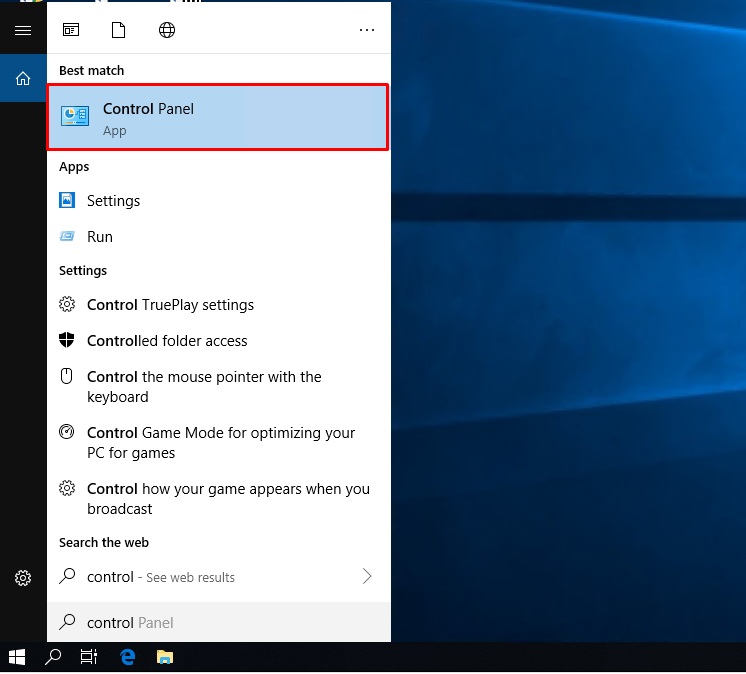
We will use the Network and Sharing Center in order to disable IPv6. First, we will open the Control Panel from the start menu by searching Control Panel.
我们将使用Network and Sharing Center来禁用IPv6。 首先,我们将通过搜索“ Control Panel从开始菜单中打开“控制面板”。
In the Control Panel, we will open the Network and Sharing Center like below.
在控制面板中,我们将打开Network and Sharing Center如下所示。

In the following screen, the network interfaces will be listed those can be more than one. In this example, we will click to the Ethernet0 in order to manage this interface configuration.
在以下屏幕中,将列出那些可以不止一个的网络接口。 在此示例中,我们将单击“ Ethernet0以管理此接口配置。
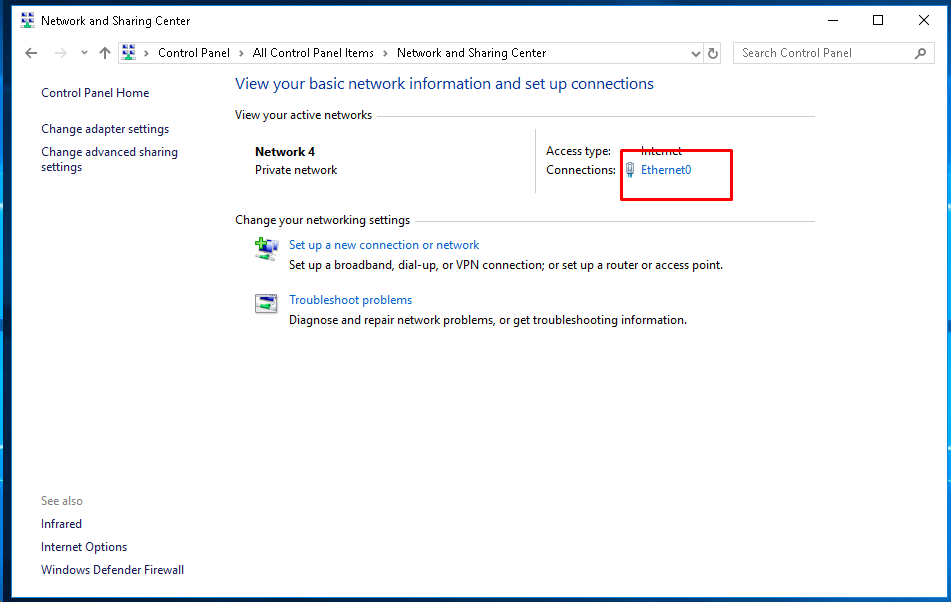
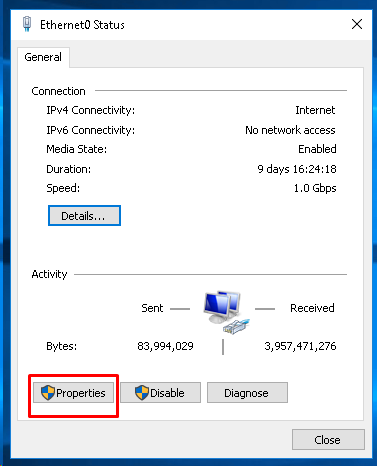
The Ethernet0 Status screen we will open the Properties windows by clicking it.
单击Ethernet0 Status屏幕,我们将打开Properties窗口。
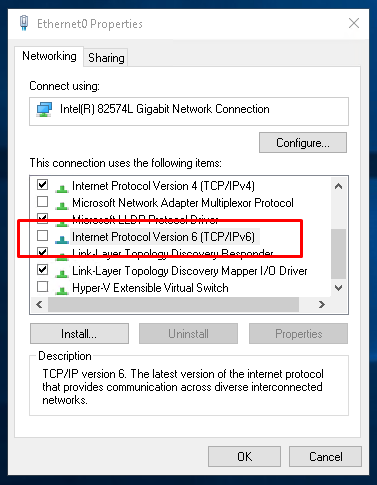
In the Ethernet0 Properties screen we will see some modules and features enabled and disabled. IPv6 is also a feature which can be enabled and disabled. We just uncheck Internet Protocol Version 6 (TCP/IP6) which will unload this module and disable IPv6 on this network interface.
在“ Ethernet0 Properties屏幕中,我们将看到一些启用和禁用的模块和功能。 IPv6也是可以启用和禁用的功能。 我们只是取消选中Internet Protocol Version 6 (TCP/IP6) ,它将卸载此模块并在此网络接口上禁用IPv6。
翻译自: https://www.poftut.com/ipv4-vs-ipv6-what-are-similarities-and-differences/