原文出处:https://blog.csdn.net/wolfcode_cn/article/details/80660515
原创文章,转载请注明出处。
本节中,我们来看看Spring针对反射提供的工具类:ReflectionUtils。反射在容器中使用是非常频繁的了,ReflectionUtils中也提供了想当多的有用的方法,一起来看看。
在ReflectionUtils中提供了一些专门用于处理在反射中异常相关的方法,这些方法一般在Spring框架内部使用,当然,出于规范考虑,我们在开发中涉及到反射的异常,也可以使用这些方法。我们按照这些方法的调用链来看代码:
void handleReflectionException(Exception ex)
处理反射中的异常,我们直接看代码:
public static void handleReflectionException(Exception ex) {
if (ex instanceof NoSuchMethodException) {
throw new IllegalStateException("Method not found: " + ex.getMessage());
}
if (ex instanceof IllegalAccessException) {
throw new IllegalStateException("Could not access method: " + ex.getMessage());
}
if (ex instanceof InvocationTargetException) {
handleInvocationTargetException((InvocationTargetException) ex);
}
if (ex instanceof RuntimeException) {
throw (RuntimeException) ex;
}
throw new UndeclaredThrowableException(ex);
}
可以看到,代码把NoSuchMethodException,IllegalAccessException,InvocationTargetException等反射中的检查异常(Exception)直接包装为对应的运行时异常(RuntimeException);这里我们可以先看一下反射中的异常:
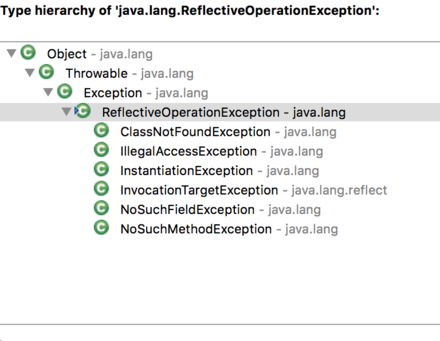
可以看到,反射中的异常,都继承了ReflectiveOperationException(反射操作异常),而该异常继承了Exception;旗下再是ClassNotFoundException等具体的反射操作异常;
在方法中,如果遇到的是InvocationTargetException异常,交给handleInvocationTargetException方法处理:
public static void rethrowRuntimeException(Throwable ex) {
if (ex instanceof RuntimeException) {
throw (RuntimeException) ex;
}
if (ex instanceof Error) {
throw (Error) ex;
}
throw new UndeclaredThrowableException(ex);
}
可以看到,该方法只是判断了运行时异常和Error;并原样抛出;怎么理解这个方法的调用?原因很简单,InvocationTargetException是在method.invoke的时候抛出的,方法在执行的过程中,方法本身的执行可能抛出RuntimeException或者Error,其余方法本身抛出的Exception异常直接包装为UndeclaredThrowableException(RuntimeException)处理;
统一下来,可以这样理解,除了在反射执行过程中遇到的Error,其余所有的Exception,都被统一转成了RuntimeException;
接下来进入正常方法
Field findField(Class> clazz, String name, Class> type)
根据类型,字段名称和字段类型查询一个字段;该方法会遍历的向父类查询字段,查询到的是所有字段;我们可以简单看一下实现:
public static Field findField(Class> clazz, String name, Class> type) {
Class> searchType = clazz;
while (Object.class != searchType && searchType != null) {
Field[] fields = getDeclaredFields(searchType);
for (Field field : fields) {
if ((name == null || name.equals(field.getName())) &&
(type == null || type.equals(field.getType()))) {
return field;
}
}
searchType = searchType.getSuperclass();
}
return null;
}
代码实现比较简单,向上查询字段,直到Object类型;注意,其中调用了一句代码:
Field[] fields = getDeclaredFields(searchType);
我们来看看该代码实现:
private static Field[] getDeclaredFields(Class> clazz) {
Field[] result = declaredFieldsCache.get(clazz);
if (result == null) {
result = clazz.getDeclaredFields();
declaredFieldsCache.put(clazz, (result.length == 0 ? NO_FIELDS : result));
}
return result;
}
可以看到,实际上,在该工具类中,对类型和字段做了缓存,保存到了declaredFieldsCache中,来看看这个cache的声明:
private static final Map, Field[]> declaredFieldsCache =
new ConcurrentReferenceHashMap, Field[]>(256);
因为是工具类,被声明为ConcurrentReferenceHashMap也是能够理解;
这种缓存机制也存在于方法的查询;
该方法还有一个简单的版本:
Field findField(Class> clazz, String name)
void setField(Field field, Object target, Object value)
在指定对象(target)中给指定字段(field)设置指定值(value);
Object getField(Field field, Object target)
在指定对象(target)上得到指定字段(field)的值;
以上两个方法的实现都非常简单,分别调用了field.set和field.get方法;并处理了对应的异常;选一个实现看看:
public static void setField(Field field, Object target, Object value) {
try {
field.set(target, value);
}
catch (IllegalAccessException ex) {
handleReflectionException(ex);
throw new IllegalStateException(
"Unexpected reflection exception - " + ex.getClass().getName() + ": " + ex.getMessage());
}
}
使用了handleReflectionException方法来统一处理异常;
Method findMethod(Class> clazz, String name, Class>… paramTypes)
在类型clazz上,查询name方法,参数类型列表为paramTypes;
public static Method findMethod(Class> clazz, String name, Class>... paramTypes) {
Class> searchType = clazz;
while (searchType != null) {
Method[] methods = (searchType.isInterface() ? searchType.getMethods() : getDeclaredMethods(searchType));
for (Method method : methods) {
if (name.equals(method.getName()) &&
(paramTypes == null || Arrays.equals(paramTypes, method.getParameterTypes()))) {
return method;
}
}
searchType = searchType.getSuperclass();
}
return null;
}
可以看到,该仍然可以向上递归查询方法,并且查询到的是所有方法。
该方法也有一个简单的版本:
Method findMethod(Class> clazz, String name)
Object invokeMethod(Method method, Object target, Object… args)
在指定对象(target)上,使用指定参数(args),执行方法(method);
该方法的实现也非常简单:
public static Object invokeMethod(Method method, Object target, Object... args) {
try {
return method.invoke(target, args);
}
catch (Exception ex) {
handleReflectionException(ex);
}
throw new IllegalStateException("Should never get here");
}
可以看到,就只是调用了method.invoke方法,并统一处理了调用异常;
该方法也有一个简单版本:
Object invokeMethod(Method method, Object target)
boolean declaresException(Method method, Class> exceptionType)
判断一个方法上是否声明了指定类型的异常;
boolean isPublicStaticFinal(Field field)
判断字段是否是public static final的;
boolean isEqualsMethod(Method method)
判断方法是否是equals方法;
boolean isHashCodeMethod(Method method)
判断方法是否是hashcode方法;
boolean isToStringMethod(Method method)
判断方法是否是toString方法;
可能有童鞋记得,在AopUtils中也有这几个isXXX方法,是的,其实AopUtils中的isXXX方法就是调用的ReflectionUtils的这几个方法的;
boolean isObjectMethod(Method method)
判断方法是否是Object类上的方法;
void makeAccessible(Field field)
将一个字段设置为可读写,主要针对private字段;
void makeAccessible(Method method)
将一个方法设置为可调用,主要针对private方法;
void makeAccessible(Constructor> ctor)
将一个构造器设置为可调用,主要针对private构造器;
void doWithLocalMethods(Class> clazz, MethodCallback mc)
针对指定类型上的所有方法,依次调用MethodCallback回调;
首先来看看MethodCallback接口声明:
public interface MethodCallback {
/**
* 使用指定方法完成一些操作.
*/
void doWith(Method method) throws IllegalArgumentException, IllegalAccessException;
}
其实就是一个正常的回调接口;来看看doWithLocalMethods实现:
public static void doWithLocalMethods(Class> clazz, MethodCallback mc) {
Method[] methods = getDeclaredMethods(clazz);
for (Method method : methods) {
try {
mc.doWith(method);
}catch (IllegalAccessException ex) {
throw new IllegalStateException("...");
}
}
}
其实实现很简单,就是得到类上的所有方法,然后执行回调接口;这个方法在Spring针对bean的方法上的标签处理时大量使用,比如@Init,@Resource,@Autowire等标签的预处理;
该方法有一个增强版:
void doWithMethods(Class> clazz, MethodCallback mc, MethodFilter mf)
该版本提供了一个方法匹配(过滤器)MethodFilter;
我们来看看MethodFilter的接口声明:
public interface MethodFilter {
/**
* 检查一个指定的方法是否匹配规则
*/
boolean matches(Method method);
}
该接口就声明了一个匹配方法,用于匹配规则;
再返回来看看doWithMethods方法的实现:
public static void doWithMethods(Class> clazz, MethodCallback mc, MethodFilter mf) {
// Keep backing up the inheritance hierarchy.
Method[] methods = getDeclaredMethods(clazz);
for (Method method : methods) {
if (mf != null && !mf.matches(method)) {
continue;
}
try {
mc.doWith(method);
}catch (IllegalAccessException ex) {
throw new IllegalStateException("...");
}
}
if (clazz.getSuperclass() != null) {
doWithMethods(clazz.getSuperclass(), mc, mf);
}else if (clazz.isInterface()) {
for (Class> superIfc : clazz.getInterfaces()) {
doWithMethods(superIfc, mc, mf);
}
}
}
该方法实现就很明确了,首先得到类上所有方法,针对每一个方法,调用MethodFilter实现匹配检查,如果匹配上,调用MethodCallback回调方法。该方法会递归向上查询所有父类和实现的接口上的所有方法并处理;
void doWithLocalFields(Class> clazz, FieldCallback fc)
那很明显,该方法就是针对所有的字段,执行的对应的回调了,这里的FieldCallback就类似于前面的MethodCallback:
public interface FieldCallback {
/**
* 给指定的字段执行操作;
*/
void doWith(Field field) throws IllegalArgumentException, IllegalAccessException;
}
该方法的实现就类似于doWithLocalMethods的实现了:
public static void doWithLocalFields(Class> clazz, FieldCallback fc) {
for (Field field : getDeclaredFields(clazz)) {
try {
fc.doWith(field);
}catch (IllegalAccessException ex) {
throw new IllegalStateException("...");
}
}
}
得到类上所有的字段,并执行回调;同理,该方法在Spring中主要用于预处理字段上的@Autowire或者@Resource标签;
void doWithFields(Class> clazz, FieldCallback fc, FieldFilter ff)
和doWithMethods的加强版相同,针对字段,也提供了一个拥有字段匹配(过滤)的功能方法;我们就只简单看下FieldFilter实现即可:
public interface FieldFilter {
/**
* 检查给定字段是否匹配;
*/
boolean matches(Field field);
}
小结
总的来说,ReflectionUtils提供的功能还算完整,其实想要实现这样的一个工具类,也不是什么难事,更多的建议大家多看看Spring的实现,还是有不少收获。当然,这里我们看的是Spring4.X的代码,相信在Spring5中完全使用Java8的代码,会更优雅。