1. 部署api
server1:192.168.17.1
- 安装
yum install -y salt-api
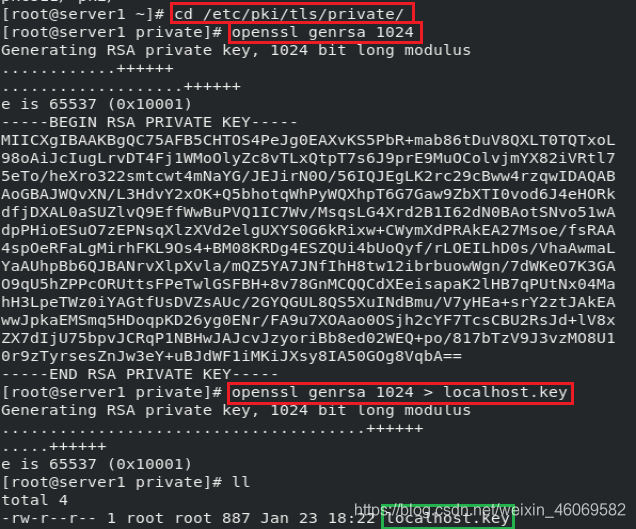
- 生成SSL证书私钥
cd /etc/pki/tls/private/
openssl genrsa 1024
openssl genrsa 1024 > localhost.key
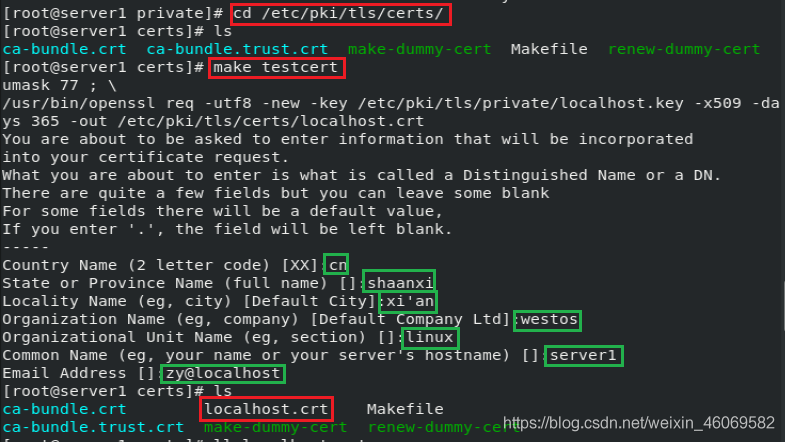
- 生成SSL证书
cd /etc/pki/tls/certs/
make testcert
- 编辑主配置文件
vim /etc/salt/master.d/api.conf
rest_cherrypy:##调用的模块
  port: 8000##监听端口
  ssl_crt: /etc/pki/tls/certs/localhost.crt##ssl证书路径
  ssl_key: /etc/pki/tls/private/localhost.key##SSL证书私钥的路径
vim /etc/salt/master.d/auth.conf
external_auth:
  pam:
    saltapi: #用户
      - .*
      - '@wheel'
      - '@runner'
      - '@jobs'
- 创建用户
useradd saltapi
echo westos | passwd --stdin saltapi
- 开启服务
systemctl restart salt-master
systemctl enable --now salt-api

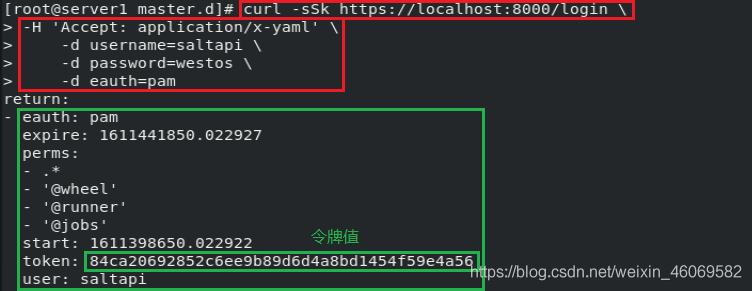
- 生成令牌
[root@server1 master.d]# curl -sSk https://localhost:8000/login \
> -H 'Accept: application/x-yaml' \
>     -d username=saltapi \
>     -d password=westos \
>     -d eauth=pam
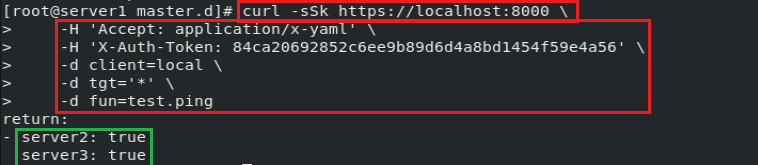
- 使用令牌值发送请求
[root@server1 master.d]# curl -sSk https://localhost:8000 \
>     -H 'Accept: application/x-yaml' \
>     -H 'X-Auth-Token: 84ca20692852c6ee9b89d6d4a8bd1454f59e4a56' \
>     -d client=local \
>     -d tgt='*' \
>     -d fun=test.ping
2. 测试
- 编写好python类
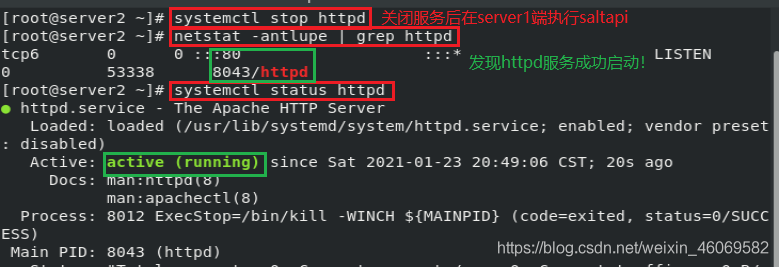
- 在minion端关闭Apache服务
- 在master端执行此python
- 在minion端发现httpd服务成功开启

# -*- coding: utf-8 -*-

import urllib2,urllib
import time
import ssl
ssl._create_default_https_context = ssl._create_unverified_context
try:
    import json
except ImportError:
    import simplejson as json

class SaltAPI(object):
    __token_id = ''
    def __init__(self,url,username,password):
        self.__url = url.rstrip('/')
        self.__user = username
        self.__password = password

    def token_id(self):
        ''' user login and get token id '''
        params = {'eauth': 'pam', 'username': self.__user, 'password': self.__password}
        encode = urllib.urlencode(params)
        obj = urllib.unquote(encode)
        content = self.postRequest(obj,prefix='/login')
        try:
                self.__token_id = content['return'][0]['token']
        except KeyError:
                raise KeyError

    def postRequest(self,obj,prefix='/'):
        url = self.__url + prefix
        headers = {'X-Auth-Token'   : self.__token_id}
        req = urllib2.Request(url, obj, headers)
        opener = urllib2.urlopen(req)
        content = json.loads(opener.read())
        return content

    def list_all_key(self):
        '''
        获取包括认证、未认证salt主机
        '''
        params = {'client': 'wheel', 'fun': 'key.list_all'}
        obj = urllib.urlencode(params)
        self.token_id()
        content = self.postRequest(obj)
        minions = content['return'][0]['data']['return']['minions']
        minions_pre = content['return'][0]['data']['return']['minions_pre']
        return minions,minions_pre

    def delete_key(self,node_name):
        '''
        拒绝salt主机,删除主机
        '''
        params = {'client': 'wheel', 'fun': 'key.delete', 'match': node_name}
        obj = urllib.urlencode(params)
        self.token_id()
        content = self.postRequest(obj)
        ret = content['return'][0]['data']['success']
        return ret

    def accept_key(self,node_name):
        '''
        接受salt主机
        '''
        params = {'client': 'wheel', 'fun': 'key.accept', 'match': node_name}
        obj = urllib.urlencode(params)
        self.token_id()
        content = self.postRequest(obj)
        ret = content['return'][0]['data']['success']
        return ret

    def remote_noarg_execution(self,tgt,fun):
        '''
        执行命令没有参数
        tgt:目标主机
        fun: 执行模块,例如“test.ping”
        '''
        params = {'client': 'local', 'tgt': tgt, 'fun': fun}
        obj = urllib.urlencode(params)
        self.token_id()
        content = self.postRequest(obj)
        ret = content['return'][0].values()
        return ret

    def remote_execution(self,tgt,fun,arg):
        ''' 执行命令有参数 '''
        params = {'client': 'local', 'tgt': tgt, 'fun': fun, 'arg': arg}
        obj = urllib.urlencode(params)
        self.token_id()
        content = self.postRequest(obj)
        ret = content['return'][0][tgt]
        return ret

    def target_remote_execution(self,tgt,fun,arg):
        ''' 异步执行远程命令,执行模块 '''
        params = {'client': 'local', 'tgt': tgt, 'fun': fun, 'arg': arg, 'expr_form': 'nodegroup'}
        obj = urllib.urlencode(params)
        self.token_id()
        content = self.postRequest(obj)
        jid = content['return'][0]['jid']
        return jid

    def deploy(self,tgt,arg):
        ''' 状态管理 '''
        params = {'client': 'local', 'tgt': tgt, 'fun': 'state.sls', 'arg': arg}
        obj = urllib.urlencode(params)
        self.token_id()
        content = self.postRequest(obj)
        return content

    def async_deploy(self,tgt,arg):
        ''' 异步状态管理 '''
        params = {'client': 'local_async', 'tgt': tgt, 'fun': 'state.sls', 'arg': arg}
        obj = urllib.urlencode(params)
        self.token_id()
        content = self.postRequest(obj)
        jid = content['return'][0]['jid']
        return jid


def main():
    sapi = SaltAPI(url='https://192.168.17.1:8000',username='saltapi',password='westos')
    #sapi.token_id()
    #print sapi.list_all_key()
    #sapi.delete_key('test-01')
    #sapi.accept_key('test-01')
    sapi.deploy('server2','apache')
    #print sapi.remote_noarg_execution('test','grains.items')

if __name__ == '__main__':
    main()
版权声明:本文为weixin_46069582原创文章,遵循CC 4.0 BY-SA版权协议,转载请附上原文出处链接和本声明。